The online casino industry has changed dramatically over the last decade. What was once a simple experience of logging in, spinning reels, or placing bets has evolved into something far more immersive and interactive. Today’s digital casinos increasingly resemble video games, borrowing proven mechanics that keep players engaged for longer periods and encourage repeat visits. This approach, known as gamification, has become one of the most powerful tools in modern online gambling.
Gamification in online casinos uses familiar elements from video games: missions, experience points (XP), leveling systems, achievement badges, and reward tracks to transform gambling into a structured journey rather than a series of isolated bets. These systems don’t just make casinos more entertaining; they fundamentally change how players interact with gambling platforms.
In this article, we’ll explore how gamification works, why it’s so effective at increasing session time and player retention, and how players can benefit from these features while also understanding the risks if they’re not used mindfully.
What Is Gamification in Online Casinos?
Gamification is the application of game-design elements in non-game environments. In online casinos, it means layering structured challenges and progression systems on top of traditional gambling games like slots, blackjack, roulette, and live dealer tables.
Instead of simply wagering money and hoping for wins, players are encouraged to:
- Complete daily or weekly missions
- Earn XP for playing different games
- Unlock new levels or tiers
- Collect achievement badges
- Progress through loyalty programs
These systems create a sense of advancement that goes beyond financial outcomes. Even if a player loses money in a session, they might still “win” by completing a mission, leveling up, or unlocking a new reward, an important psychological shift that keeps engagement high.
Daily Missions: Turning Gambling Into a Routine
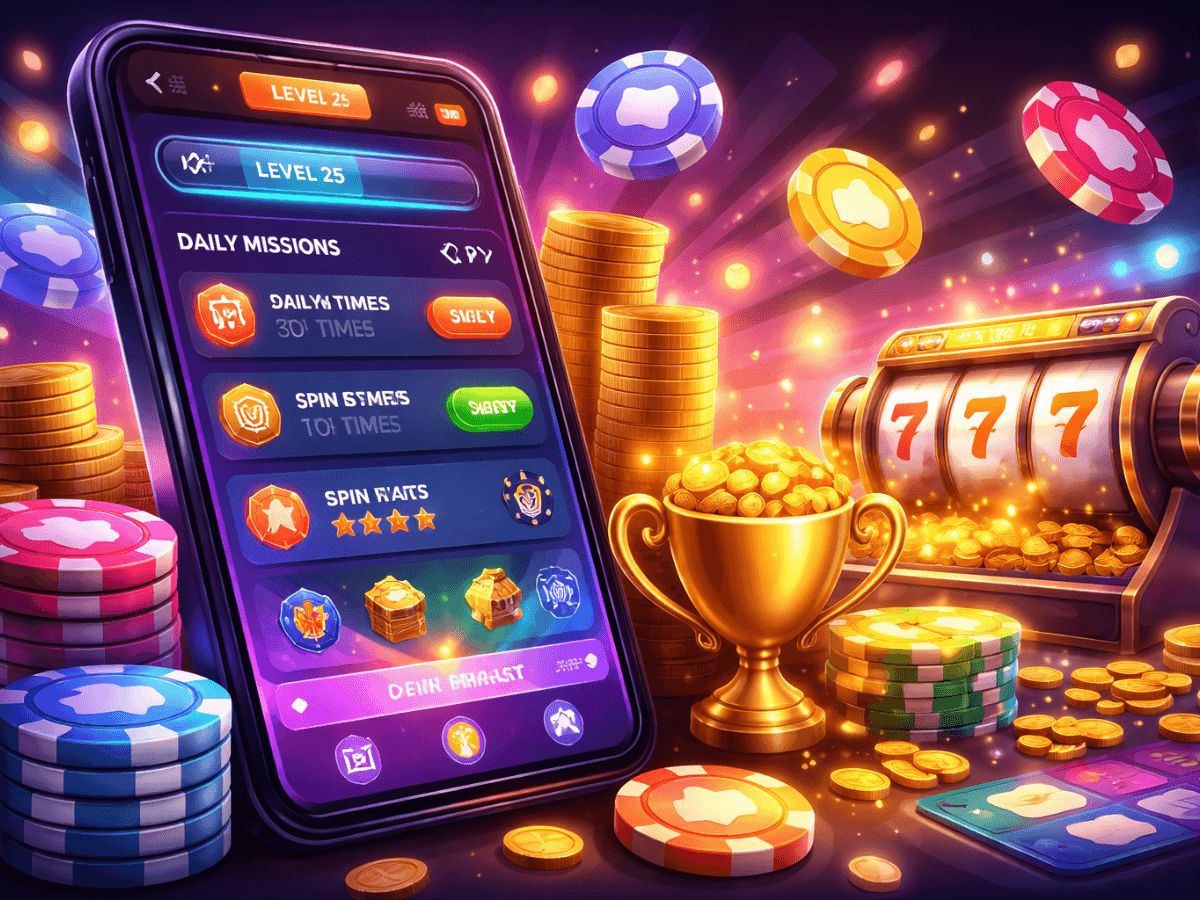
Daily missions are one of the most common gamification tools in online casinos. These challenges might include tasks such as:
- Spin a specific slot 20 times
- Place a bet on three different game categories
- Wager a certain amount within 24 hours
- Try a new game for the first time
On the surface, these missions seem harmless and often they are. They provide direction, variety, and a sense of purpose, especially for casual players who might otherwise feel overwhelmed by the sheer number of games available.
However, daily missions are also designed to encourage habitual play. By resetting every 24 hours, they create a subtle sense of urgency: log in today, or miss out. This taps into the same psychology used by mobile games and fitness apps, where streaks and daily goals keep users coming back consistently.
XP Systems and Levels: Progress Without Cash Wins
Experience points (XP) and leveling systems are another powerful gamification mechanic borrowed directly from role-playing games and online multiplayer titles. Every wager earns XP, and enough XP allows players to level up.
What makes this so effective is that XP is guaranteed progress, regardless of whether a player wins or loses money. In traditional gambling, losing means walking away empty-handed. With gamification, losing sessions can still feel productive because progress bars move forward.
Leveling systems often unlock:
- Bonus credits or free spins
- Access to exclusive games or tournaments
- Higher loyalty tiers
- Personalized promotions
This creates a long-term engagement loop. Players are no longer focused solely on immediate outcomes; they’re invested in a broader journey, where every session contributes to an ongoing sense of advancement.
Achievement Badges: Recognition and Status
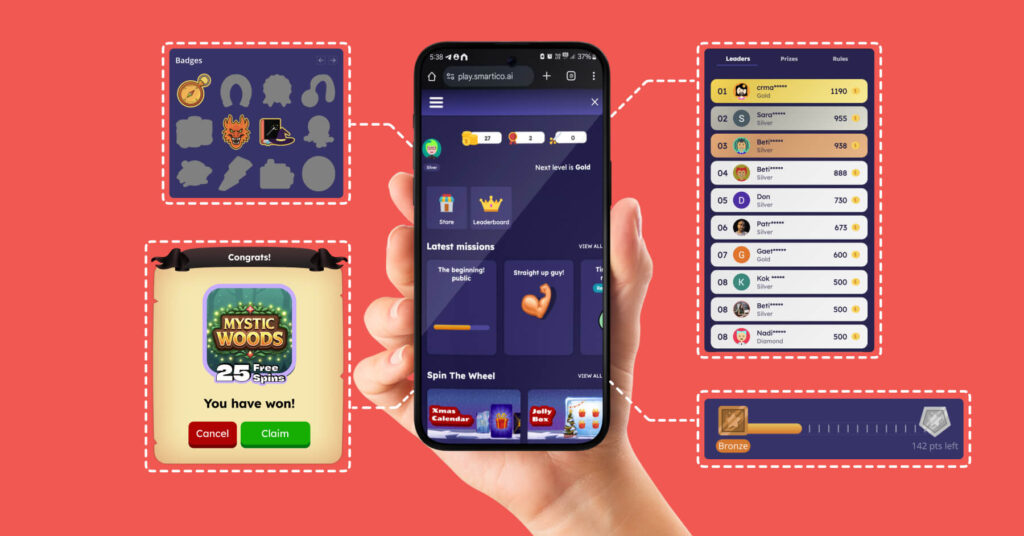
Achievement badges add another layer of motivation by rewarding specific behaviors. Examples include:
- “First Big Win”
- “100 Spins Completed”
- “Table Game Explorer”
- “Weekend Warrior”
Badges don’t usually have monetary value, but they offer something just as powerful: recognition. They validate a player’s activity and create a sense of identity within the platform.
Some casinos display badges publicly on player profiles or leaderboards, introducing a mild social element. Even without direct competition, players often feel motivated to “complete the collection,” a phenomenon known in psychology as the completion bias.
Loyalty Levels and VIP Programs: Long-Term Retention
Loyalty programs are where gamification and business strategy intersect most clearly. These programs use tiered systems, often with names like Bronze, Silver, Gold, Platinum, and Diamond, to reward ongoing play.
The higher the tier, the greater the perks:
- Faster withdrawals
- Higher cashback percentages
- Dedicated account managers
- Exclusive bonuses and gifts
From a casino’s perspective, loyalty levels are incredibly effective at retaining high-value players. From a player’s perspective, they can feel rewarding and prestigious, but they also create a sunk-cost effect. The more progress someone has made toward a higher tier, the harder it becomes to walk away.
Why Gamification Increases Session Time and Retention
Gamification works because it aligns perfectly with how the human brain processes motivation and rewards. Several psychological principles are at play:
- Variable rewards: Missions and bonuses don’t always give the same outcome, keeping anticipation high, similar to the effect explained in why almost winning feels so powerful.
- Goal-gradient effect: The closer players get to completing a mission or leveling up, the more motivated they become.
- Loss aversion: Missing a daily reward feels worse than never having it at all.
- Progress illusion: XP and badges create a sense of achievement independent of financial results.
Together, these mechanisms encourage players to stay longer, return more frequently, and explore more games.
This is where the conversation naturally connects with responsible play, because as engagement increases, awareness and self-regulation become more important than ever.

How Players Can Benefit From Gamification
Gamification isn’t inherently harmful. In fact, when used wisely, it can enhance the casino experience in several positive ways:
- Structured play: Missions can help players avoid aimless betting.
- Variety: Challenges encourage trying different games instead of sticking to one.
- Non-monetary rewards: Progress and achievements can reduce the focus on chasing losses.
- Entertainment value: Gamified casinos often feel more engaging and fun, especially for casual players.
For many users, these systems transform gambling from a purely transactional activity into an interactive form of entertainment closer to a video game than a financial risk.
The Risk of Overplay: When Fun Turns Automatic
The downside of gamification is that it can blur the line between entertainment and compulsion. Because progress is constant, players may lose track of time, money, or both.
Some warning signs include:
- Playing “just to finish a mission” rather than for enjoyment
- Increasing session length to reach the next level
- Feeling frustrated when unable to log in and complete daily tasks
- Prioritizing rewards over budget limits
Gamification reduces natural stopping points. In traditional gambling, a win or loss might signal the end of a session. With missions and XP bars always active, there’s always “one more thing” to do.
Playing Smart in a Gamified Casino
To enjoy gamification without falling into overplay, players can adopt a few mindful habits:
- Set time and spending limits before starting a session
- Treat missions as optional, not obligations
- Avoid chasing progress late at night or while stressed
- Take breaks after completing major milestones
- Use built-in reality checks and reminders
Gamification should enhance enjoyment does not override personal control.
The Future of Gamification in Online Gambling
As technology advances, gamification in online casinos is likely to become even more sophisticated. We’re already seeing early experiments with:
- Personalized missions based on play style
- Seasonal “battle pass” systems similar to video games
- Narrative-driven casino experiences
- Integration with responsible gambling tools that adjust challenges dynamically
The challenge for the industry will be balancing engagement with player well-being, a topic increasingly central to the future of online gambling.
Conclusion: Engagement With Awareness
Gamification has reshaped online casinos by borrowing the most effective engagement mechanics from video games. Missions, XP systems, achievement badges, and loyalty levels keep players interested, motivated, and coming back for more.
Used responsibly, these features can make gambling more entertaining and structured. Used without awareness, they can encourage longer sessions and higher risk than intended.
Understanding how gamification works is the first step toward enjoying it on your own terms. When players recognize the mechanics behind the fun, they’re better equipped to stay in control playing for enjoyment, not obligation.
In the end, the real win isn’t just leveling up in a casino, it’s knowing when to pause, step back, and keep the experience balanced and enjoyable.
Sources: