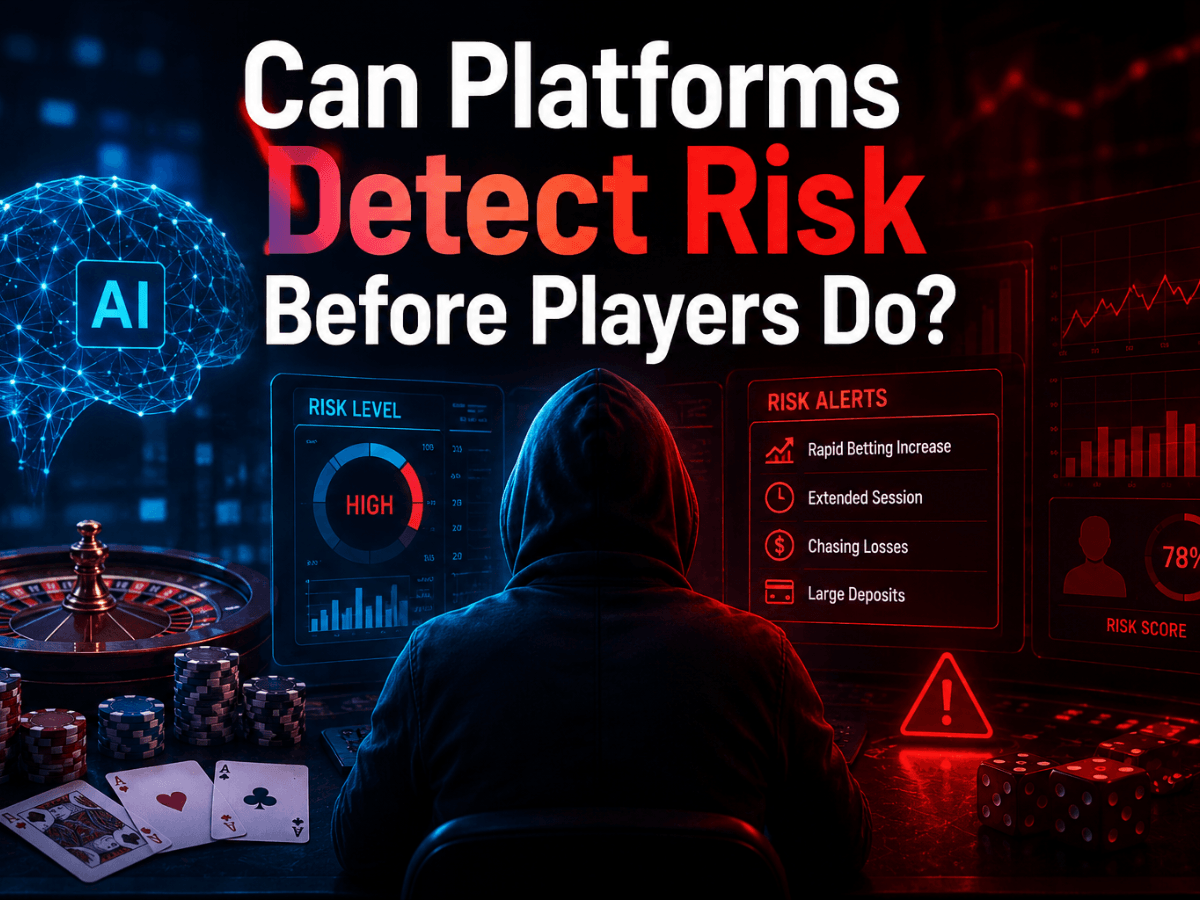
Online gambling has become faster, smarter, and more personalized than ever before. Modern platforms can recommend games based on your preferences, adjust promotions to match your play style, and even predict what type of content might keep you engaged longer. But in 2026, a far more important question is emerging:
Can gambling platforms predict risky behavior before players themselves realize there’s a problem?
This idea sits at the center of one of the biggest technological and ethical shifts happening in the gambling industry today, predictive responsible gambling. Instead of waiting for players to self-report problems or hit crisis points, operators are increasingly exploring systems that analyze behavioral signals in real time to identify potential gambling harm early.
Supporters believe this could revolutionize player protection. Critics worry it could create privacy concerns, false positives, and automated systems that misunderstand human behavior.
The reality is likely somewhere in between.
As artificial intelligence and behavioral analytics become more advanced, predictive responsible gambling may soon become a standard part of digital gambling ecosystems worldwide.
The question is not whether the technology exists.
The question is how responsibly it will be used.
What Is Predictive Responsible Gambling?
Traditional responsible gambling tools are mostly reactive.
Players:
- set deposit limits
- activate self-exclusion
- request cooling-off periods
- contact support after problems appear
Predictive responsible gambling flips this model entirely.
Instead of waiting for users to ask for help, platforms analyze player behavior continuously and attempt to detect warning signs automatically.
These systems use machine learning, behavioral analytics, and risk-scoring models to identify patterns associated with harmful gambling behavior.
The goal is early intervention.
Rather than stepping in after severe losses or addiction symptoms emerge, platforms aim to recognize elevated risk before it escalates.
This creates a proactive system rather than a reactive one.

How Platforms Detect Risk Patterns
Modern gambling platforms collect enormous amounts of behavioral data.
Every action generates signals:
- bet frequency
- session duration
- deposit patterns
- withdrawal behavior
- game switching
- emotional betting tendencies
- login times
- loss chasing
- rapid stake increases
Individually, these actions may mean very little.
But when combined, AI systems can identify patterns linked to risky gambling behavior.
This same behavioral tracking technology is already heavily used for personalized promotions and game recommendations, as discussed in AI-Powered Personalization in Online Casinos – How Platforms Learn Your Play Style, showing how closely personalization and predictive protection are becoming connected.
For example, a predictive system might flag:
- sudden increases in deposit frequency
- extended late-night sessions
- repeated canceled withdrawals
- aggressive wagering after losses
- unusual emotional volatility
- dramatic shifts in betting size
The system then assigns a risk score.
If the score crosses certain thresholds, the platform may trigger interventions automatically.
What Behavioral Signals Matter Most?
Researchers and operators are increasingly focusing on several key indicators.
1. Chasing Losses
One of the clearest warning signs is when players rapidly increase bets after losing.
This behavior often reflects emotional rather than rational decision-making.
AI systems can detect:
- larger wagers immediately after losses
- rapid redepositing
- escalating risk tolerance
- shortened breaks between sessions
2. Session Length and Intensity
Long gambling sessions are not automatically problematic. But sudden increases in intensity can indicate elevated risk.
Examples include:
- marathon overnight sessions
- reduced pause frequency
- nonstop gameplay without breaks
- rapid-fire betting behavior
Some systems now monitor not just total playtime, but changes in behavioral rhythm.
3. Financial Instability Signals
Platforms may detect:
- increasing deposit amounts
- multiple failed payment attempts
- borrowing behavior patterns
- repeated small deposits after balance depletion
These can indicate financial stress or impaired control.
4. Emotional and Impulsive Play
AI models increasingly attempt to identify emotionally driven gambling.
Behavioral markers include:
- rapid switching between games
- erratic betting patterns
- emotionally reactive wagering
- repeated attempts to recover losses quickly
These patterns may signal frustration, desperation, or impulsive behavior.
How Automated Interventions Work
Once risk is detected, platforms can respond in multiple ways.
Soft Interventions
These are subtle nudges designed to encourage reflection without disrupting gameplay aggressively.
Examples include:
- reality check reminders
- session time notifications
- spending summaries
- cooling-off suggestions
- personalized responsible gambling messages
These interventions aim to create awareness rather than restriction.
Many of these tools are already becoming part of mainstream responsible gaming systems, as explored in Responsible Gambling in Action: Real Stories & Tools That Work in 2025, where AI monitoring, spending alerts, and self-exclusion technologies are reshaping player protection.
Medium-Level Interventions
If risk levels rise further, platforms may:
- recommend deposit limits
- temporarily restrict bonuses
- suggest breaks
- limit session duration
- prompt affordability checks
Some operators also offer direct outreach from responsible gambling teams.
Strong Interventions
In higher-risk situations, systems may trigger:
- temporary account freezes
- mandatory cooling-off periods
- withdrawal delays
- self-exclusion recommendations
- account reviews
In regulated jurisdictions, some interventions may soon become mandatory.

Why Predictive Systems Could Be a Major Breakthrough
Supporters argue that predictive responsible gambling could become one of the most important consumer protection tools ever introduced.
1. Early Detection Saves People
One of the biggest challenges with gambling harm is that many players do not recognize risky behavior early enough.
Addictive patterns often develop gradually.
By the time users seek help:
- financial damage may already exist
- emotional stress may be severe
- habits may be deeply entrenched
Predictive systems aim to intervene before situations spiral.
2. Humans Miss Patterns AI Can See
A player may not realize:
- they’re depositing more frequently
- their sessions are getting longer
- emotional betting is increasing
But AI systems can detect subtle shifts across thousands of behavioral variables simultaneously.
This creates opportunities for intervention long before visible crises emerge.
3. Responsible Gambling Becomes Personalized
Traditional responsible gambling tools are generic.
Predictive systems can tailor interventions based on individual behavior.
For example:
- casual players may receive gentle reminders
- high-risk users may face stronger restrictions
- vulnerable patterns may trigger faster support escalation
This creates more adaptive protection systems.
The Privacy Debate
Despite the potential benefits, predictive gambling systems raise major privacy concerns.
Many players are uncomfortable with the idea of platforms monitoring behavior so closely.
Critics argue that these systems effectively create:
- behavioral surveillance
- emotional profiling
- psychological tracking
- financial monitoring
Some worry gambling operators may know more about a player’s emotional state than the player themselves.
This creates difficult ethical questions.
How much monitoring is acceptable?
Where is the line between protection and intrusion?
Data Collection Concerns
Predictive systems rely heavily on extensive data collection.
Platforms may track:
- spending patterns
- emotional responses
- session timing
- behavioral changes
- interaction speed
- betting rhythm
- device usage patterns
Combined together, this creates highly detailed behavioral profiles.
Players increasingly ask:
- who owns this data?
- how securely is it stored?
- could it be misused?
- could it affect financial profiling or insurance systems someday?
As predictive gambling evolves, data governance will become one of the industry’s biggest challenges.
The Problem of False Positives
Another major concern is accuracy.
Not every unusual gambling pattern indicates harm.
For example:
- a player may gamble heavily during vacation
- sports fans may increase activity during major tournaments
- high-income users may comfortably afford larger bets
- experienced players may naturally play longer sessions
AI systems can misinterpret context.
This creates the risk of false positives:
players being flagged unfairly.
If interventions become too aggressive, users may feel:
- judged
- restricted unfairly
- misunderstood
- frustrated by automation
Balancing protection with player freedom will be extremely difficult.
Can Casinos Truly Be Trusted to Police Risk?
Perhaps the biggest criticism is structural.
Casinos profit when users stay active longer.
Critics therefore question whether operators can truly act objectively when player protection conflicts with revenue generation.
This creates an uncomfortable tension:
the same systems optimizing engagement may also claim to reduce harm.
Skeptics worry predictive systems could become:
- performative compliance tools
- public relations shields
- selective intervention mechanisms
Others fear operators may intervene only when legal risk increases, not necessarily when player well-being declines.
This is why independent regulation and transparency are becoming increasingly important.
Regulators Are Paying Attention
Governments and regulators worldwide are already moving toward stricter oversight of predictive systems.
Emerging regulatory discussions include:
- mandatory intervention thresholds
- transparency requirements
- explainable AI models
- independent auditing
- ethical data usage rules
- player rights regarding automated profiling
Some jurisdictions may eventually require gambling platforms to maintain predictive risk systems as part of licensing compliance.
The future likely involves standardized frameworks rather than voluntary adoption.
The Future of Predictive Responsible Gambling
Looking ahead, predictive systems will likely become far more advanced.
Future technologies may include:
Real-Time Emotional Analysis
AI may eventually analyze:
- gameplay rhythm
- voice tone
- typing behavior
- biometric stress signals
This could allow systems to detect emotional distress instantly.
Personalized Risk Dashboards
Players may receive live behavioral insights such as:
- risk scores
- spending health summaries
- emotional pattern tracking
- session intensity reports
Responsible gambling may become more transparent and data-driven for users themselves.
Cross-Platform Monitoring
In heavily regulated markets, future systems could potentially monitor behavior across multiple operators.
This would prevent users from simply switching platforms after restrictions.
However, this raises even bigger privacy concerns.
AI Responsible Gambling Assistants
Some platforms may introduce AI companions designed to:
- recommend breaks
- explain spending patterns
- suggest healthy limits
- provide emotional support resources
These systems may eventually act almost like digital wellness coaches.
Will Predictive Systems Become Standard?
Very likely, yes.
The combination of:
- regulatory pressure
- AI advancement
- public scrutiny
- responsible gambling expectations
makes predictive systems increasingly unavoidable.
The real issue is not whether they will exist.
It is whether they will remain:
- transparent
- ethical
- fair
- privacy-conscious
- independently monitored
If designed responsibly, predictive gambling systems could reduce harm dramatically.
If designed poorly, they could become invasive behavioral surveillance systems that undermine trust entirely.
Final Thoughts
Predictive responsible gambling represents one of the most important transformations in the modern gambling industry.
For the first time, platforms may be able to identify risky behavior before players themselves fully recognize it. Through behavioral analytics, machine learning, and automated interventions, gambling ecosystems are moving toward proactive protection rather than reactive damage control.
The potential benefits are enormous:
- earlier support
- reduced harm
- smarter interventions
- safer gambling environments
But the concerns are equally serious:
- privacy invasion
- false positives
- over-monitoring
- ethical conflicts
- excessive automation
The future of predictive responsible gambling will ultimately depend on balance.
Technology alone cannot solve gambling harm.
But used carefully, transparently, and ethically, it may become one of the most powerful tools ever developed for player protection.
And in an industry increasingly driven by artificial intelligence, perhaps the most important challenge will not be teaching machines how to detect risk.
It will be deciding how much power we want those systems to have in the first place.
Sources: