
Online casino libraries have never been bigger.
A modern platform can offer thousands of slots, live games, table games, crash titles, jackpots, and instant-win products from dozens of different providers. From a player’s perspective, this sounds like an obvious advantage. More games should mean more choice, more variety, and a better chance of finding something enjoyable.
But there is a problem.
As casino libraries continue expanding, choosing what to play can actually become more difficult.
Players open a lobby and encounter hundreds of colorful thumbnails competing for attention. Similar themes appear repeatedly. Familiar mechanics are repackaged across different titles. “New” sections grow every week, while “Popular” categories often feature many of the same recognizable games.
The industry has solved the problem of game availability. Now it faces a different challenge: game discovery.
Having thousands of games is useful only if players can find the ones that actually match their preferences.
More Choice Is Not Always Better
Choice is generally considered positive.
If one casino offers 200 games and another offers 5,000, the second platform appears to provide considerably more value.
In theory, every type of player should be able to find something suitable.
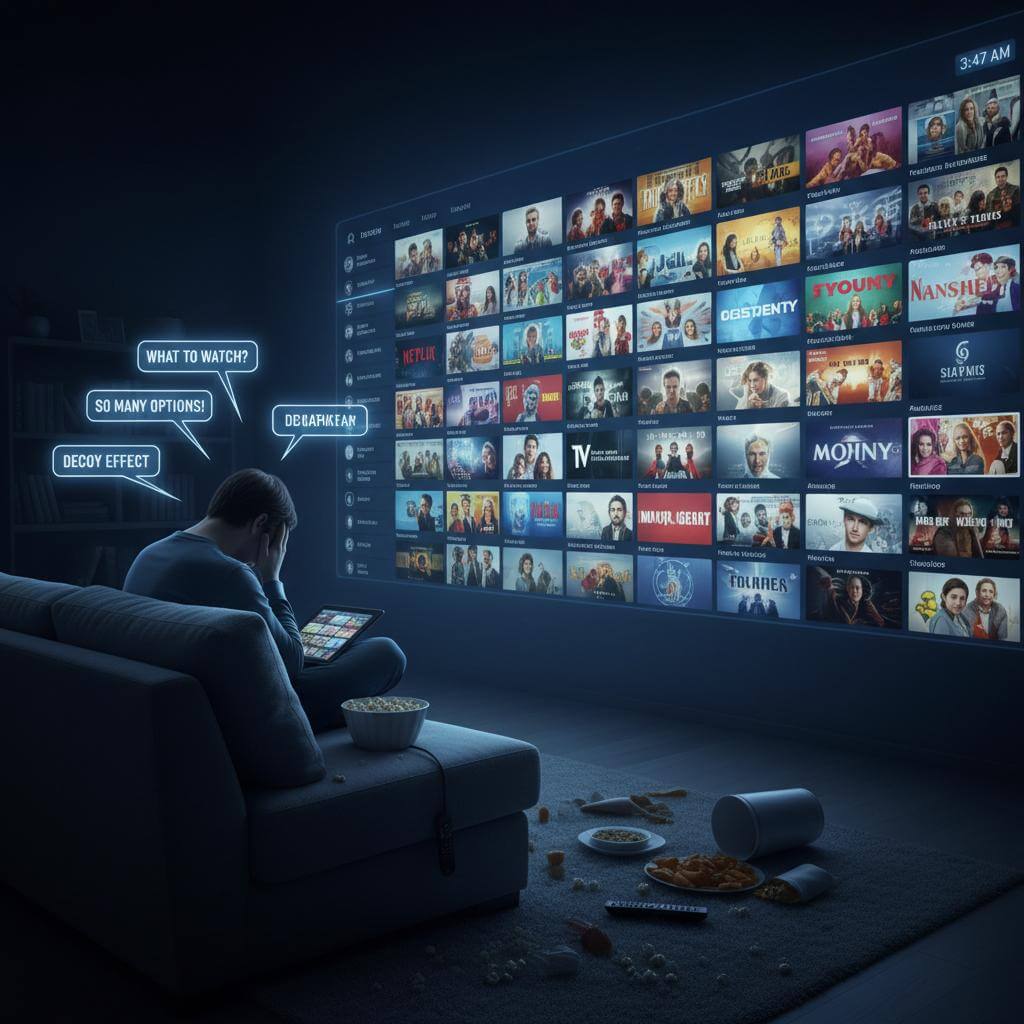
In practice, extremely large libraries introduce what is often described as the paradox of choice.
When there are too many alternatives, evaluating them becomes difficult.
Imagine opening a lobby containing 4,000 games.
Where do you begin?
You could browse the newest releases, search by provider, look at popular games, scroll through recommendations, or simply choose whichever thumbnail catches your attention.
The larger the library becomes, the less realistic it is for a player to evaluate even a small percentage of what is available.
More choice therefore creates a new problem: filtering that choice into something manageable.

Why Casino Lobbies Can Start Looking Identical
Large casino libraries often share significant amounts of content.
One reason is that operators frequently work with the same major game providers and aggregation networks.
As a result, completely unrelated platforms can offer many of the same titles.
Part of the reason can be found behind the scenes. Casino Aggregators Explained – Why Thousands of Games Can Sit Under One Roof explores how aggregation technology connects operators with dozens of providers, helping explain why different casino platforms can end up with significantly overlapping game libraries.
Open Casino A and you may see familiar games from major studios.
Open Casino B and many of them appear again.
Casino C may have a larger overall catalog, but its most visible titles can still look remarkably similar.
This means the number of available games does not necessarily translate into meaningful differentiation.
Two casinos can advertise thousands of titles while offering broadly similar experiences to the average player.
Themes Are Repeated Constantly
The similarities extend beyond identical games appearing across multiple casinos.
Themes themselves are frequently repeated.
Players browsing slot libraries regularly encounter variations of:
- ancient civilizations
- mythology
- fruits
- treasure
- gold
- fantasy
- animals
- adventure
- luxury
- classic casino imagery
There is nothing inherently wrong with familiar themes. They are familiar precisely because players understand them quickly.
But repetition can make enormous libraries feel smaller than they actually are.
A player may scroll through 50 different titles while feeling as though they have seen the same concept several times.
The artwork changes.
The name changes.
The underlying experience may not feel dramatically different.
Mechanics Can Feel Familiar Too
Visual themes are only part of the issue.
Game mechanics also tend to follow successful patterns.
When a particular feature becomes popular, variations often appear across multiple providers.
Players may repeatedly encounter:
- multipliers
- cascading reels
- expanding symbols
- free-spin rounds
- collectible symbols
- progress meters
- bonus buys
- jackpot mechanics
Again, repetition does not necessarily indicate poor design.
Familiar mechanics can make games easier to understand.
The problem appears when the combination of familiar themes and familiar mechanics makes browsing feel repetitive.
A player looking for something genuinely different may struggle to identify it from the lobby alone.
Game Thumbnails Have to Compete for Attention
Casino discovery is heavily visual.
Before players understand a game’s mechanics, mathematics, or bonus structure, they usually see a thumbnail.
That thumbnail may have only a fraction of a second to attract attention.
This creates intense competition between games.
Providers use:
- recognizable characters
- bright typography
- dramatic symbols
- large numbers
- gold elements
- expressive faces
- high-contrast artwork
The result can be visually overwhelming.
When every game tries to stand out, the entire lobby can become noisy.
Ironically, aggressive differentiation at the individual game level can create similarity at the platform level.
Everything is competing for attention in approximately the same way.
The “New” Section Is Becoming Crowded
The New Games category should theoretically solve discovery.
Players who want something different can simply see what has recently launched.
But the speed of game releases creates another challenge.
A title can be “new” for only a short period before dozens of additional releases arrive.
For players, this means the New section can become another enormous catalog rather than a carefully selected discovery tool.
It also raises an important question:
Does “new” mean genuinely different?
A newly released game may still use familiar themes and mechanics.
Release date alone does not necessarily tell a player whether the experience matches what they want.
“Popular” Can Create a Feedback Loop
The Popular section is another common discovery tool.
It makes sense.
If many other players are choosing a game, someone browsing the lobby may assume it is worth trying.
But popularity rankings can reinforce themselves.
A game becomes popular.
The casino gives it greater visibility.
More players see it.
More players select it.
Its popularity increases further.
This creates a feedback loop where already successful games receive even more exposure.
Meanwhile, less familiar titles can remain buried deeper in the library.
For providers, this makes visibility extremely valuable.
For players, it can mean the Popular section repeatedly presents the safest, most established choices rather than helping them discover something unexpected.
Search Is Becoming More Important
As libraries expand, search functionality becomes essential.
Basic title search is useful when a player already knows what they want.
But what happens when they do not?
Searching for a game by name solves retrieval, not discovery.
This shift is explored further in Casino Search Engines – How Players Will Discover Games Differently in 2026, which looks at how volatility filters, provider sorting, personalized search, and smarter navigation could change the way players explore increasingly large game libraries.
Better casino search systems increasingly need to understand characteristics rather than just titles.
Players might want to find:
- low-volatility games
- high-volatility games
- particular themes
- specific mechanics
- certain providers
- jackpot games
- quick games
- classic slots
- recently released titles
The more precisely a platform can describe its games, the easier it becomes to turn thousands of options into a manageable selection.
Filters Can Turn Quantity Into Useful Choice
Filters are one of the simplest solutions to choice overload.
Instead of showing 5,000 games, a casino could allow a player to progressively narrow the library.
For example:
Slots → Low Volatility → Adventure → Provider X
Suddenly, thousands of choices might become 20.
That is much easier to browse.
Filters can potentially include:
- provider
- game type
- volatility
- theme
- features
- release date
- jackpot availability
The challenge is keeping these tools simple.
Too few filters make them ineffective.
Too many filters recreate the complexity they are supposed to solve.
Good discovery design requires balance.
Recommendation Systems Are Becoming the New Lobby
Personalization offers another solution.
Instead of asking every player to browse the same enormous catalog, casinos can recommend smaller selections based on previous behavior.
If someone frequently chooses certain providers or mechanics, the platform can surface similar titles.
This is already familiar from other entertainment industries.
Streaming platforms do not expect users to browse their entire content libraries manually.
Music services do not show every available song equally.
They create personalized pathways through enormous catalogs.
Casino platforms are moving toward a similar model.
The future lobby may be less of a universal storefront and more of a personalized selection.
But Recommendations Can Become Repetitive
Personalization introduces its own problem.
If an algorithm learns that a player likes a particular type of game, it may continue recommending similar titles.
This improves relevance but can reduce discovery.
A player who regularly chooses mythology-themed slots might receive increasingly more mythology-themed slots.
Eventually, the personalized lobby becomes another form of repetition.
Effective recommendation systems therefore need to balance two goals:
relevance and exploration.
They should understand what players already like while occasionally introducing something genuinely different.
Otherwise, personalization can create a bubble around existing preferences.
Providers Matter More Than Many Players Realize
Some players develop preferences for particular studios without initially realizing it.
They may repeatedly enjoy games because a provider uses:
- familiar mathematics
- specific visual styles
- particular bonus structures
- recognizable interfaces
Provider filters can therefore be surprisingly useful.
Instead of searching for individual titles, players can explore the catalog of a studio whose previous games they enjoyed.
This creates another form of discovery based on design identity rather than theme alone.
As casino libraries grow, recognizable provider identities may become increasingly important.
Volatility Could Become a Major Discovery Tool
One of the most useful game characteristics is also one that traditional casino lobbies have not always emphasized clearly: volatility.
Two visually similar slots can provide very different experiences depending on their mathematical structure.
One may deliver smaller, more frequent outcomes.
Another may be designed around less frequent but potentially larger outcomes.
For players who understand volatility, this information can be more useful than theme.
A person might care less about whether a game features Vikings or ancient Egypt and more about how the game actually behaves.
Future casino discovery systems may therefore organize games increasingly around experience rather than appearance.
Mood-Based Discovery Could Be Next
Game discovery could eventually become even more intuitive.
Instead of selecting technical filters, players might choose the kind of experience they want.
For example:
Something Relaxed
Something Fast
Something Familiar
Something Different
Something Strategic
Surprise Me
This resembles how entertainment platforms increasingly organize content around mood and context.
It could make casino discovery more accessible to players who do not understand technical terminology such as volatility or game mathematics.
Smaller Curated Collections Could Beat Huge Libraries
The industry has spent years competing on library size.
But the next competitive advantage may be curation.
A casino with 8,000 games is impressive.
A casino that can instantly show a player the 15 games most relevant to them may be more useful.
Curated collections could focus on:
- editor picks
- hidden gems
- unusual mechanics
- new providers
- short-session games
- classic experiences
- seasonal themes
This transforms the casino from a warehouse into a guide.
The difference is important.
A warehouse gives users everything.
A guide helps them decide.
Discovery Is Becoming Part of Casino UX
Historically, casino UX discussions often focused on registration, deposits, withdrawals, and mobile usability.
Game discovery deserves the same attention.
Players spend significant time navigating the lobby before deciding what to play.
Poor discovery can create frustration before a game even begins.
Strong discovery can make a large library feel smaller, clearer, and more personalized.
This means search, recommendations, categories, and filters are no longer secondary interface features.
They are becoming central parts of the casino experience.
Does Every Casino Need Thousands of Games?
The growth of casino libraries raises a broader question.
How many games does a player actually need?
Few users will explore thousands of titles.
Many will repeatedly return to a relatively small selection of favorites while occasionally trying something new.
This suggests that library size may eventually become a less meaningful marketing metric.
The more useful question might be:
How easily can players find games they actually enjoy?
That changes the competitive focus from quantity to relevance.
The Future: Less Browsing, Better Matching
Casino libraries are unlikely to become smaller anytime soon.
Providers continue releasing new games, aggregators make distribution easier, and operators want broad catalogs.
The solution will therefore probably not be reducing supply.
It will be improving navigation.
Future casino lobbies may rely increasingly on:
- smarter search
- behavioral recommendations
- better metadata
- advanced filters
- curated collections
- provider preferences
- mood-based discovery
- personalized homepages
Players may see fewer games at once even though the underlying catalog becomes larger.
That could ultimately make enormous libraries feel simpler.
Final Thoughts
Online casinos have succeeded in creating extraordinary amounts of choice.
Now they need to make that choice useful.
Thousands of games from dozens of providers can create impressive libraries, but quantity alone does not guarantee variety from the player’s perspective.
Repeated themes, familiar mechanics, overlapping provider catalogs, crowded New sections, and popularity feedback loops can make different casino platforms feel surprisingly similar.
The next phase of competition is therefore likely to focus on discovery.
Search needs to become smarter.
Filters need to become more useful.
Recommendations need to balance familiarity with exploration.
And casinos may need to stop treating library size as the ultimate measure of variety.
For players, the best casino lobby may not be the one that shows the most games.
It may be the one that makes finding the right game feel effortless.
Sources: