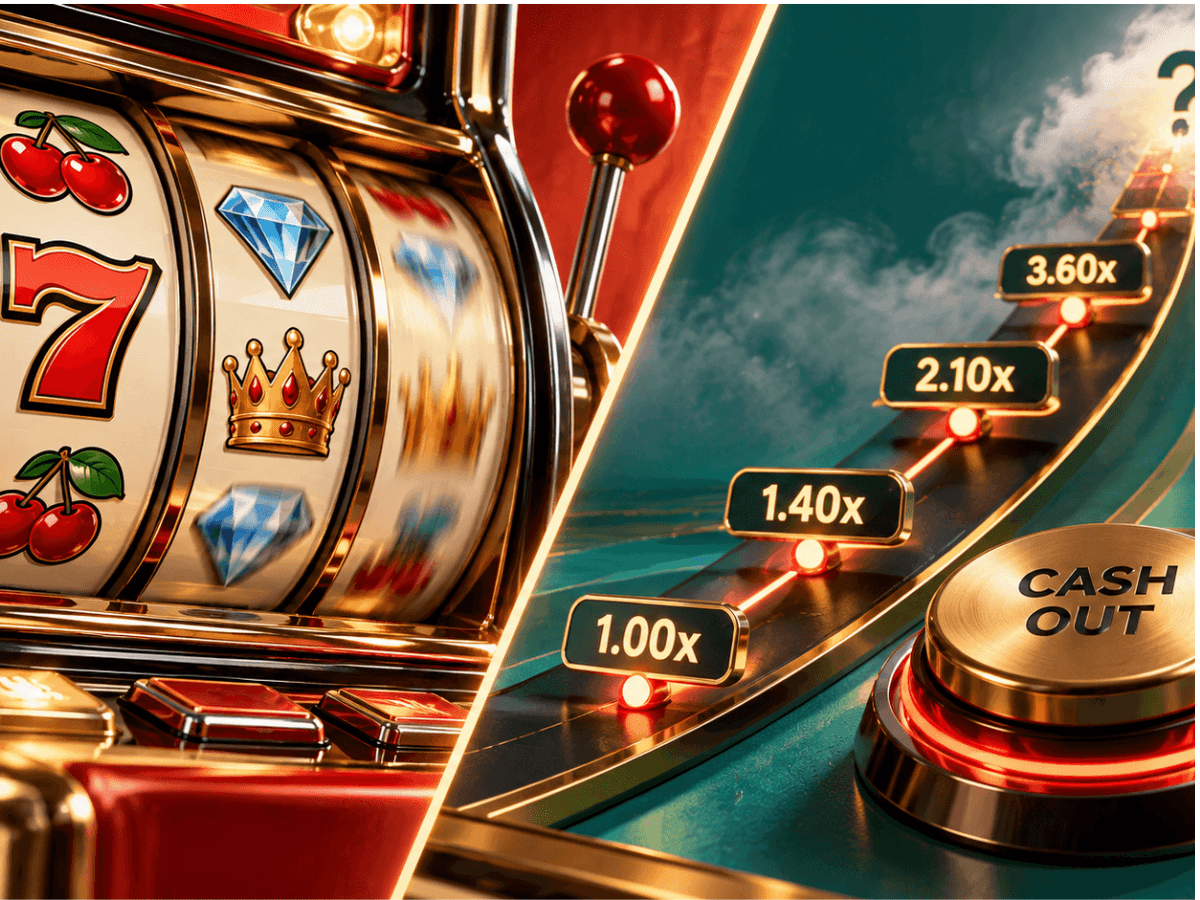
For years, online slots have been one of the most recognizable forms of casino gaming.
You choose a game, set a stake, press spin, and wait for the reels to determine the result. Themes, bonus rounds, paylines, multipliers and special symbols can make the experience more elaborate, but the basic interaction remains familiar.
Crash games take a noticeably different approach.
Instead of watching reels spin, players typically watch a multiplier increase from a starting point such as 1.00x. The multiplier continues climbing until an unpredictable crash occurs. The player must decide whether to cash out before that happens.
Games such as Aviator and JetX have helped make this format highly visible across online gambling platforms.
At first glance, the difference appears simple:
Slots ask you to spin. Crash games ask you when to leave.
But that small change creates a very different player experience. It affects pacing, perceived control, risk decisions and even how players interpret wins and losses.
So why are players exploring crash games alongside traditional slots, and does the ability to choose when to cash out actually give players more control over the result?
How Traditional Online Slots Work
Traditional online slots generally revolve around individual spins.
The player selects a stake and initiates a round. The game’s random number generator determines the outcome according to the game’s underlying mathematical design.
Modern slots can be considerably more complicated than the classic three-reel machines they evolved from.
Depending on the title, a game might contain:
- paylines or ways-to-win systems
- wild and scatter symbols
- free spins
- cascading reels
- expanding symbols
- progressive multipliers
- bonus games
- jackpots
- feature purchases where permitted
Despite these differences, the fundamental interaction remains relatively straightforward.
The player initiates the spin, but does not decide when that spin becomes a win or loss.
Once the round starts, its outcome is determined by the game’s rules and randomization system.
How Crash Games Work
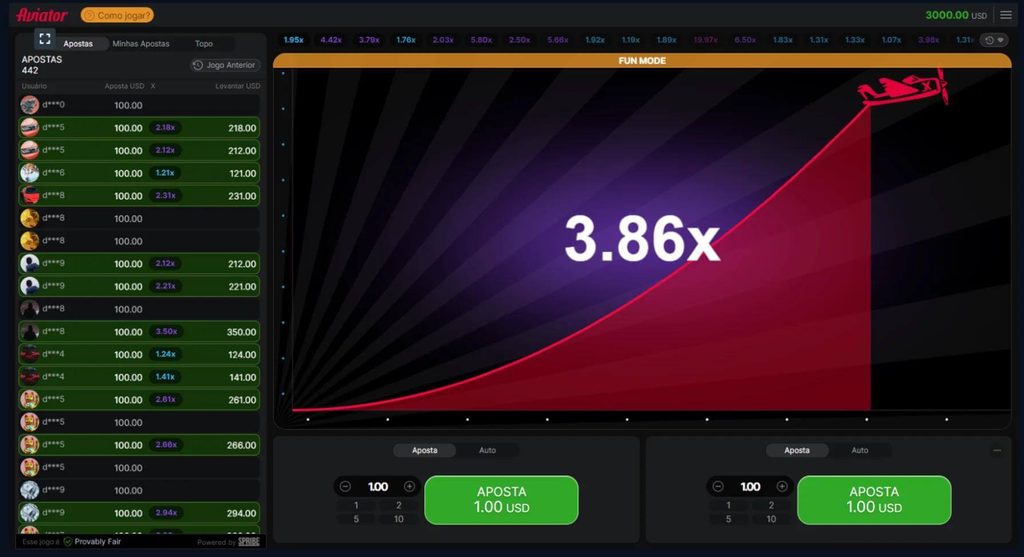
Crash games remove the reels entirely.
Instead, the central element is usually an increasing multiplier.
A round might begin at:
1.00x → 1.17x → 1.52x → 2.04x → 3.60x…
The multiplier keeps increasing until the game crashes.
If the player cashes out before the crash, the payout is calculated using the multiplier at the time of cash-out.
For example, a €10 wager cashed out at 2.00x would produce a €20 return, including the original stake where that is how the game displays payouts.
If the game crashes before the player cashes out, the wager is lost.
Different crash games present this basic mechanism in different ways. Aviator uses an aircraft-themed presentation, while JetX uses a jet travelling upward as the multiplier rises.
The graphics are different, but the core tension is similar:
Cash out now, or wait for a potentially higher multiplier?
The Biggest Difference Is the Decision Point
This is where crash games feel fundamentally different from slots.
In a conventional slot, most player decisions happen before the spin.
You choose the game.
You choose the stake.
You press spin.
After that, there may be little or nothing to decide until the result appears, although bonus features in some slots can introduce additional choices.
Crash games place an important-looking decision inside the round itself.
The multiplier is moving.
The potential payout is changing.
And the player can decide when to cash out.
That creates a stronger feeling of active participation.
This shift toward more interactive mechanics is part of a wider change in casino game design, explored in Beyond the Spin: The Game Mechanics Hooking Players in 2025, where features increasingly extend beyond simply pressing a button and waiting for a result.
But there is an important distinction between controlling when you cash out and controlling the underlying random outcome.
They are not the same thing.
Does Cashing Out Give Players More Control?
In one sense, yes.
Players can control their cash-out decision.
Someone might decide:
“I always cash out at 1.5x.”
Another player might wait for 2x.
Someone else might manually cash out depending on what is happening on screen.
Those are genuine player decisions.
What the player generally cannot control is when the crash itself occurs.
This distinction is crucial.
Suppose a player decides to wait until 3x.
If the round crashes at 2.91x, the decision to wait longer does not somehow influence the game into reaching 3x.
Similarly, cashing out at 1.5x during several consecutive rounds does not mean the next round is more likely to reach a particular multiplier.
The player controls their action.
The game determines whether the random outcome allows that action to succeed.
Why Crash Games Can Feel More Predictable
Humans naturally look for patterns.
Crash games provide plenty of information that can appear meaningful.
A player might see a sequence such as:
1.21x
1.08x
1.43x
7.82x
2.16x
18.50x
It can be tempting to interpret the sequence.
Perhaps several low crashes mean a high multiplier is “due.”
Perhaps a very high multiplier means another one is unlikely to appear soon.
Perhaps the player believes they have identified a rhythm.
But in a properly implemented chance-based game where rounds are independently generated, previous outcomes do not provide a reliable prediction of the next independent result.
This is related to a familiar gambling misconception known as the gambler’s fallacy.
Past random results can look like clues even when they do not change the probability of the next independent outcome.
Some online games also use cryptographic systems designed to make outcomes independently verifiable. Provably Fair Gambling Explained – Can Players Really Verify the Result Themselves? looks at how these systems work and, importantly, what verification does and does not prove.
Strategy Is Not the Same as Prediction
Crash players often develop rules for themselves.
For example:
Cash out automatically at 1.5x.
Or:
Never chase multipliers above 3x.
Those rules can change how much risk a player accepts.
They can also change the distribution of their individual wins and losses.
But they should not be confused with predicting the crash point.
A cash-out strategy answers:
“At what multiplier am I willing to exit?”
It does not necessarily answer:
“At what multiplier will this round crash?”
That distinction is one of the most important concepts for understanding crash games.
How Multipliers Change the Experience
Multipliers exist in traditional slots too.
A bonus feature might multiply a win by 2x, 5x, 10x or considerably more.
But in many slots, the multiplier is part of the result.
Crash games make the multiplier the central visual event.
Players watch it increase continuously.
Every increase can represent a larger potential payout.
At 1.2x, the player could cash out.
At 1.5x, the available amount is larger.
At 2x, larger again.
As the number rises, the decision becomes increasingly visible.
This creates a tension that traditional reel-based games often generate through different mechanisms, such as anticipation animations, bonus triggers or cascading wins.
Crash Games Make Risk Visible
Slots can contain complicated probability structures that are difficult to understand simply by watching the screen.
Crash games often present risk in a more visually direct way.
There is one number climbing.
If you leave before the crash, you secure the displayed multiplier.
If you do not, you can lose the stake.
This simplicity does not necessarily mean the underlying mathematics are simple.
But the decision interface is easy to understand.
That accessibility may be one reason the format has attracted attention.
A new player can usually understand the basic objective after watching only a few rounds.
Slots Offer a Different Kind of Variety
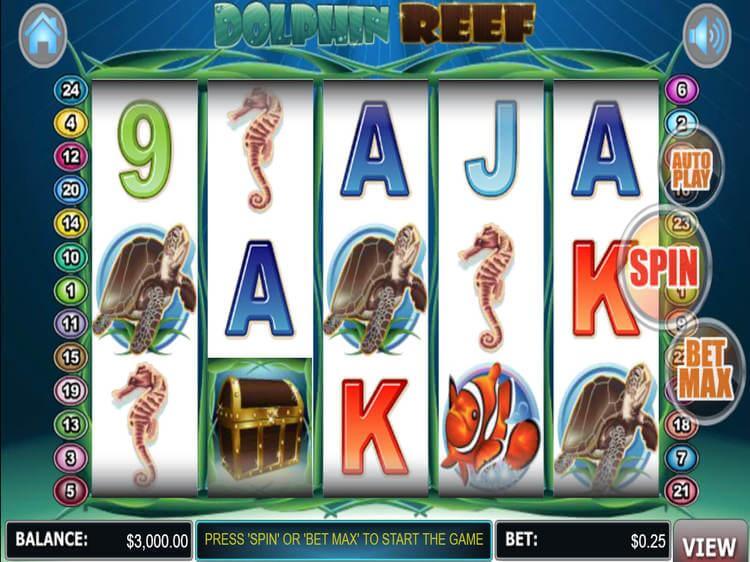
Crash games may have simple core mechanics, but slots compete heavily through content variety.
One slot might take place in ancient Egypt.
Another might use mythology.
Another could be built around fishing, fantasy, fruit machines, adventure or branded entertainment.
Game providers can also combine these themes with dramatically different mechanics.
A player browsing a large slot library might therefore choose games based on:
- theme
- provider
- volatility
- RTP
- bonus features
- jackpot potential
- visual style
- familiarity
Crash games generally place less emphasis on complex themes and more emphasis on the central multiplier mechanic.
This makes the two formats appealing for different reasons.
What About Volatility?
Volatility describes how the risk and reward pattern of a casino game is distributed.
A high-volatility slot may produce relatively infrequent wins but offer the possibility of larger payouts.
A lower-volatility slot may produce smaller wins more frequently.
Crash games create their own risk spectrum through the cash-out mechanic.
Waiting for a relatively low multiplier can create more frequent successful cash-outs than consistently targeting very high multipliers.
But lower targets also produce smaller returns when successful.
Waiting for extremely high multipliers creates the opposite trade-off.
The potential payout increases, but the probability of reaching the chosen target generally decreases.
This creates a simple relationship:
Higher target → potentially larger payout → lower likelihood of reaching it.
That does not mean players can eliminate the house advantage by selecting the “correct” cash-out point.
The mathematical edge is built into the game’s design.
Auto Cash-Out Changes the Interaction Again
Many crash games offer an automatic cash-out option.
A player can select a target before the round begins.
For example:
Auto cash-out: 1.75x
If the multiplier reaches 1.75x, the game automatically processes the cash-out according to its rules.
This removes the need to react manually.
It can also reveal something important about the game.
If a player believes they have a “strategy” of always leaving at a specific multiplier, auto cash-out can automate that behavior.
But automation does not make the crash point predictable.
It simply executes the player’s predefined decision consistently.
Slots Can Also Create an Illusion of Control
Perceived control is not unique to crash games.
Slot players sometimes develop rituals around when they spin, which games they choose, how they change stake sizes or how long they remain on one machine.
Those decisions can affect the amount wagered and the player’s exposure to risk.
They do not necessarily influence randomly generated outcomes.
Crash games make the distinction particularly interesting because the cash-out button really does affect the player’s payout.
The player’s action matters.
But it matters within the boundaries created by a chance-based result.
That combination of real decision-making and uncontrollable randomness is a defining feature of the format.
Why Are Crash Games Attractive to Some Players?
There probably is no single explanation.
Part of the appeal may come from simplicity.
The player does not need to understand dozens of paylines, symbols or bonus mechanics.
The central objective is immediately visible.
Another factor is pacing.
Rounds can be short, which suits players accustomed to fast digital entertainment.
There is also the interactive element.
Watching a multiplier increase while deciding whether to cash out can feel more participatory than waiting for reels to stop.
Finally, crash games are highly watchable.
Other players’ bets, cash-outs or multiplier results may sometimes be displayed alongside the game, depending on the platform and title.
This can make the experience feel more social than a traditional single-player slot.
Why Do Traditional Slots Remain Popular?
The rise of another format does not make slots obsolete.
Slots offer something crash games generally do not: enormous variety.
Thousands of titles can coexist because providers continually experiment with themes, mathematics, bonus systems and visual styles.
Some players enjoy complex bonus rounds.
Others prefer familiar classic slots.
Some look for specific providers.
Others enjoy exploring new releases.
Slots can therefore function almost like a content library, while a crash game often revolves around mastering one immediately recognizable interaction.
The experiences overlap, but they are not interchangeable.
Crash Games vs Traditional Slots
| Crash Games | Traditional Slots | |
| Main mechanic | Rising multiplier | Reels/symbol combinations |
| Player action | Choose when to cash out | Initiate spin |
| Core tension | Leave now or wait | Wait for spin result |
| Presentation | Usually simple and multiplier-focused | Wide range of themes and mechanics |
| Round length | Often short | Varies by game |
| Multipliers | Central to gameplay | Often part of features or wins |
| Player control | Controls cash-out decision | Usually controls stake and spin initiation |
| Randomness | Crash point remains chance-based | Spin result remains chance-based |
| Common misconception | Cash-out timing can predict outcomes | Previous spins influence future spins |
| Content variety | Usually mechanic-focused | Extremely broad |
Neither format inherently gives a player the ability to predict random outcomes.
They simply package risk and randomness differently.
Are Crash Games Becoming a New Type of Casino Entertainment?
Crash games are part of a broader movement toward casino products that do not necessarily resemble traditional slots.
Players can now encounter mines-style games, Plinko-inspired titles, instant games, crash games and other formats alongside conventional reels and table games.
The boundary between casino gaming and other forms of interactive digital entertainment is becoming less visually obvious.
Instead of recreating a physical casino machine, many newer games are designed around interfaces that feel native to smartphones and modern web platforms.
Crash games are a particularly clear example.
There are no physical reels that need to be simulated.
The interface exists because the game was designed for a digital environment.
The Important Difference Between Choice and Control
Crash games demonstrate an interesting principle about gambling design.
Giving players more decisions does not necessarily give them more control over randomness.
A player can choose:
- how much to wager
- whether to participate
- what cash-out target to use
- whether to use auto cash-out
- when to stop playing
Those choices are meaningful.
But they do not make an unpredictable crash point predictable.
This is where understanding the game mechanics matters.
The interface can make a player feel more involved without changing the fundamental role of chance.
Final Thoughts
Crash games and traditional slots offer two very different ways of presenting casino gameplay.
Slots generally emphasize themes, symbols, bonus mechanics and large content libraries.
Crash games strip the experience down to a rising multiplier and one central decision: when should I cash out?
That decision makes crash games feel interactive and can create a stronger perception of control.
But the distinction between decision-making and prediction is essential.
Choosing a cash-out point can change the risk a player accepts. It does not mean the player knows when the game will crash.
That is ultimately what makes the comparison interesting.
Crash games have not removed randomness from casino gaming.
They have simply found a different way to let players interact with it.
Sources: