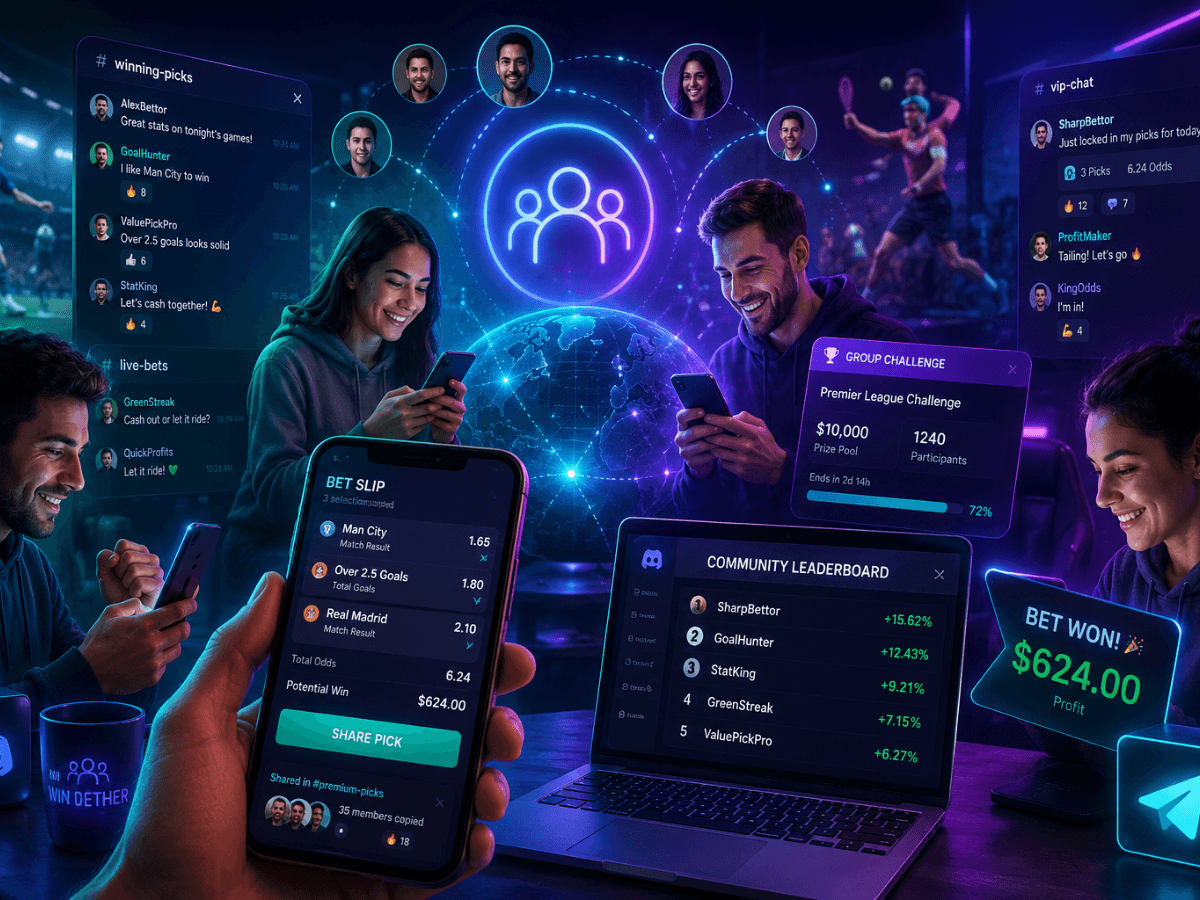
Online gambling was once a largely solitary activity. A player would visit a sportsbook, place a wager, spin a slot, or join a poker table with little interaction beyond the game itself. Decisions were often made independently, guided by personal intuition, experience, or perhaps a quick glance at statistics.
In 2026, that reality looks very different.
Modern gambling increasingly takes place within communities. Players discuss bets in Telegram groups, share predictions in Discord servers, celebrate wins on social media, follow streamer recommendations, participate in community jackpots, and copy successful betting strategies from others. The gambling experience is becoming more social, collaborative, and interconnected than ever before.
For some, this evolution has enhanced entertainment and created stronger communities. For others, it has introduced new risks, including peer pressure, herd behavior, and the amplification of poor decision-making.
The rise of betting communities represents one of the most significant cultural shifts in modern gambling. The question is no longer whether gambling is social.
The question is how social influences are changing the way people gamble.
The Shift From Individual Play to Community Participation
Technology has transformed almost every form of entertainment into a social experience.
Streaming platforms include watch parties.
Gaming includes multiplayer modes and community hubs.
Social media encourages sharing every experience.
It was only a matter of time before gambling followed the same path.

Today’s players rarely operate in isolation. Instead, many participate in communities built around:
- sports betting
- casino bonuses
- slot recommendations
- esports wagering
- crypto gambling
- poker strategy
- arbitrage betting
- value betting
These communities exist across multiple platforms, including:
- Discord
- Telegram
- Facebook groups
- X (formerly Twitter)
- WhatsApp groups
- dedicated betting forums
For many players, these communities have become as important as the gambling platforms themselves.
Why Players Seek Gambling Communities
The rise of gambling communities is not simply about sharing tips.
It reflects several deeper human motivations.
Social Connection
Gambling can sometimes feel isolating.
Community spaces provide:
- conversation
- shared excitement
- collective experiences
- emotional support
A big win feels more rewarding when shared with others.
A difficult loss often feels easier when discussed with people who understand.
Validation and Confidence
Many players seek reassurance before placing bets.
Communities provide a sense of confirmation.
The growing importance of player-to-player interaction reflects a wider industry shift discussed in The Next Frontier: Social Betting Communities & Player-to-Player Interaction, where gambling increasingly revolves around shared experiences rather than individual play.
When dozens of people support a prediction, members often feel more confident in their decisions.
This creates a perception of collective intelligence.
Whether that confidence is justified is another question entirely.
Learning and Education
New players frequently join communities to learn.
Experienced members often share:
- betting strategies
- bankroll management tips
- casino reviews
- bonus opportunities
- game recommendations
For beginners, communities can significantly reduce the learning curve.
Discord and Telegram Have Changed Everything
Among all platforms, Discord and Telegram have become dominant forces.
These platforms allow communities to operate in real time.
Members can instantly share:
- picks
- odds changes
- injury news
- betting opportunities
- casino promotions
- jackpot alerts
This speed creates a highly dynamic environment.
Some betting groups now function almost like financial trading communities, where information moves rapidly and decisions are made collectively.
Premium betting groups have also emerged, offering subscription-based access to predictions and analysis.
This has created an entirely new economy around gambling expertise.
Shared Bet Slips and Copy Betting
One of the biggest trends in community gambling is the sharing of bet slips.
Players frequently post:
- accumulators
- parlays
- same-game bets
- esports predictions
- live betting opportunities
Others can instantly copy these wagers.
This mirrors trends seen in financial markets, where social trading platforms allow users to follow successful investors.
The appeal is obvious.
Rather than researching every bet independently, players can leverage community knowledge.
For newcomers, this feels efficient and reassuring.
However, it also introduces important risks.
The Psychology of Social Validation
Human beings are naturally influenced by groups.
Psychologists refer to this as social proof.
When many people appear to support a decision, individuals become more likely to follow.
This mechanism affects:
- investing
- politics
- shopping
- entertainment
- gambling
In betting communities, social proof can be extremely powerful.
A player may initially doubt a wager.
But seeing hundreds of community members backing the same outcome often increases confidence dramatically.
This creates an emotional sense of safety.
Unfortunately, popularity does not necessarily improve accuracy.
Large groups can still be wrong.
Community Jackpots and Group Challenges
Operators have increasingly embraced social gambling mechanics.
Many platforms now offer:
- community jackpots
- team challenges
- leaderboard competitions
- group tournaments
- collective reward pools
These features transform gambling from an individual activity into a shared experience.
Players feel part of something larger than themselves.
This increases engagement while also creating stronger platform loyalty.
The social layer becomes part of the entertainment value.
Streamers and Influencers Amplify Community Behavior
Modern gambling communities are heavily influenced by content creators.
Popular streamers often attract:
- thousands of viewers
- dedicated fan communities
- active Discord servers
- social media followings
Many players now discover games, casinos, and betting strategies through creators rather than traditional advertising.
This creates powerful influence networks.
A single streamer recommendation can drive enormous traffic toward:
- specific slots
- betting markets
- promotions
- providers
Influencers increasingly function as community leaders within gambling ecosystems.

This influence extends far beyond entertainment, as explored in Streaming Influencers and Gambling – How Content Creators Shape Player Choices, where creators increasingly shape player preferences, platform choices, and betting behavior.
The Positive Side of Gambling Communities
Not all social influence is harmful.
In many cases, communities provide meaningful benefits.
Better Information Sharing
Members often exchange useful insights.
This includes:
- bonus warnings
- scam alerts
- withdrawal experiences
- platform reviews
- regulatory updates
Communities can help players avoid poor decisions.
Improved Learning
Experienced players frequently teach newcomers.
Topics often include:
- bankroll management
- betting discipline
- game mechanics
- RTP understanding
- responsible gambling practices
Educational communities can create smarter players.
Emotional Support
Gambling inevitably involves losses.
Community support can help reduce:
- frustration
- isolation
- emotional stress
Many responsible gambling discussions now happen inside community spaces.
The Dark Side of Group Influence
Despite the benefits, gambling communities create significant risks.
Herd Behavior
When groups move together, independent thinking often decreases.
Players may stop asking:
- Is this bet actually good?
- Does this fit my bankroll?
- Have I done my own research?
Instead, they simply follow the crowd.
This phenomenon is known as herd behavior.
It can lead to irrational decision-making.
Fear of Missing Out
Communities often generate FOMO, Fear Of Missing Out.
Members constantly see:
- winning slips
- jackpot screenshots
- success stories
- large payouts
This creates pressure to participate.
Players may place bets they would otherwise avoid simply because everyone else appears involved.
Selective Visibility
Most people share wins more frequently than losses.
As a result, communities often present distorted realities.
Members see:
- winning tickets
- successful predictions
- jackpot celebrations
But they rarely see:
- losing streaks
- failed systems
- long-term negative results
This can create unrealistic expectations.
Can Communities Encourage Riskier Behavior?
Research increasingly suggests that social environments can influence risk-taking.
In community gambling spaces:
- larger bets become normalized
- aggressive strategies gain visibility
- high-risk parlays attract attention
- extreme wins receive disproportionate engagement
Over time, community norms may shift player behavior.
Someone who initially preferred small bets may gradually become more aggressive after repeated exposure to risk-seeking groups.
This effect is subtle but powerful.
Responsible Gambling in Community Spaces
Many communities are becoming more aware of these risks.
Responsible moderators increasingly encourage:
- bankroll management
- realistic expectations
- loss transparency
- responsible gambling resources
- healthy discussion
Some communities actively remove:
- misleading win claims
- fraudulent tipsters
- unrealistic promises
This reflects growing maturity within gambling ecosystems.
The Future of Social Gambling
The social layer of gambling will likely expand significantly over the next few years.
Future developments may include:
- integrated community feeds
- in-app betting groups
- live discussion channels
- shared prediction pools
- AI-moderated communities
- collaborative tournaments
- social reputation systems
Casinos and sportsbooks increasingly view community features as retention tools.
Players who build relationships are more likely to remain active.
The future casino may look less like a gambling platform and more like a social network with wagering functionality built in.
Will Solo Gambling Disappear?
Probably not.
Many players still prefer:
- privacy
- independence
- personal analysis
- distraction-free experiences
Solo gambling will always have a place.
However, community participation is becoming increasingly common, especially among younger audiences who grew up with social media and online gaming.
For these users, sharing experiences feels natural.
The expectation of social interaction is becoming part of the product itself.
Final Thoughts
The rise of betting communities marks one of the most important cultural shifts in modern gambling.
Players are no longer isolated participants making decisions entirely on their own. Instead, they increasingly operate within networks of peers, influencers, streamers, tipsters, and community groups that shape how they think, what they play, and where they place their bets.
This evolution brings significant benefits:
- stronger communities
- better information sharing
- educational opportunities
- increased entertainment value
- emotional support
But it also introduces meaningful risks:
- herd behavior
- peer pressure
- FOMO
- misinformation
- unrealistic expectations
As gambling becomes more social, the challenge for both players and operators will be maintaining a balance between community engagement and independent decision-making.
Because while communities can make gambling more enjoyable, the most successful players will likely remain those who can learn from the crowd without blindly following it.