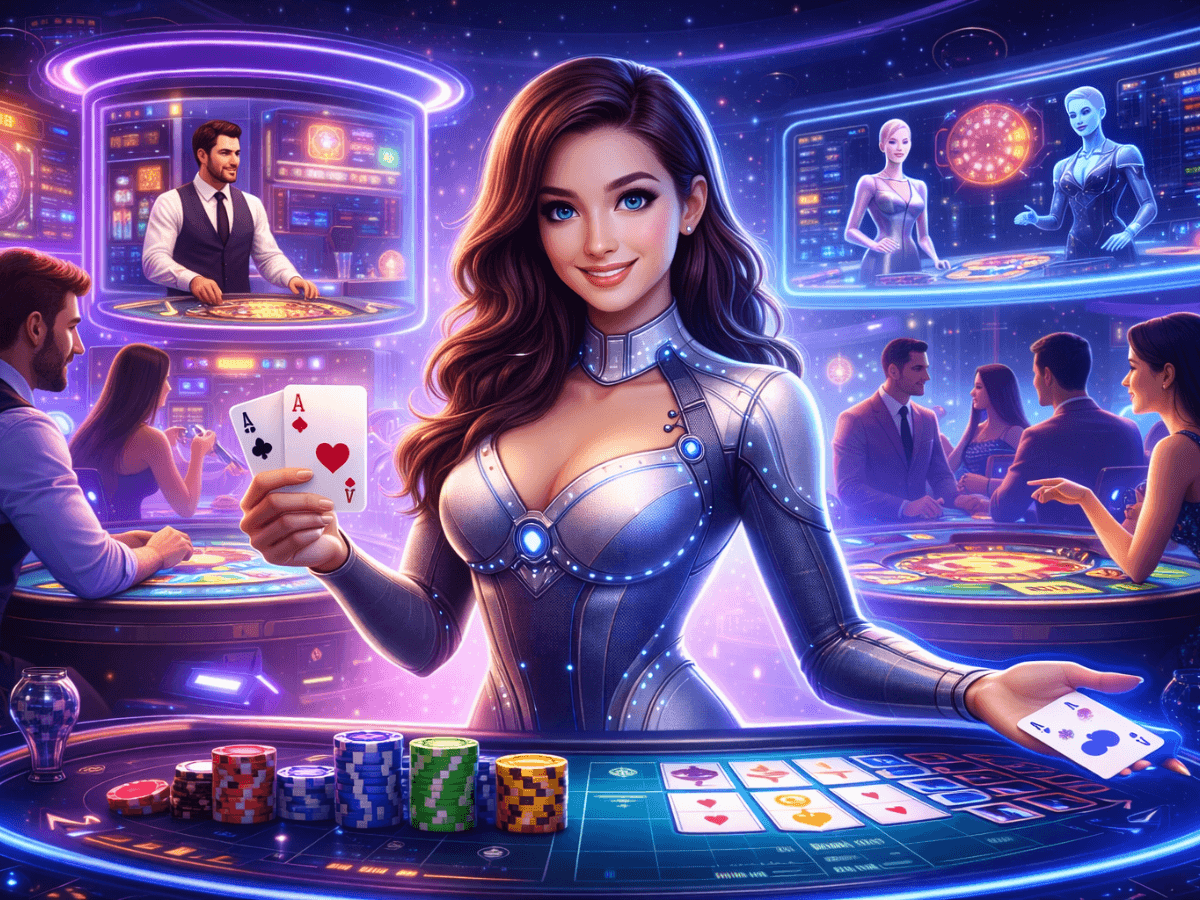
The live casino revolution transformed online gambling by bringing real human dealers into players’ homes. It bridged the gap between digital convenience and real-world authenticity, offering interaction, trust, and a sense of presence that traditional RNG games could never fully replicate.
But in 2025 and beyond, a new evolution is quietly taking shape: AI-powered dealers.
No longer limited to static animations or scripted bots, modern artificial intelligence is beginning to create lifelike hosts capable of speaking, reacting, and even adapting to player behavior in real time. This raises a compelling question:
Will AI replace live casino hosts or enhance them into something entirely new?
Let’s explore how AI dealers are emerging, what they offer, where they fall short, and what the future of casino hosting might look like.
From Human Dealers to Intelligent Systems
Live dealer casinos were originally built on a simple premise: trust through visibility.
Players could see real cards, real roulette wheels, and real people managing the game. This transparency helped overcome skepticism about fairness and created a more engaging experience.
AI dealers, however, represent a shift from physical trust to digital intelligence.
Instead of streaming a human host from a studio, AI systems can generate:
- Realistic 3D avatars
- Natural voice interactions
- Facial expressions and gestures
- Real-time responses to player actions
These systems are powered by advances in machine learning, natural language processing, and real-time rendering – technologies already used in gaming, virtual assistants, and even customer service.
The result? A dealer that doesn’t just deal cards – but communicates, adapts, and evolves.
AI-Generated Dealers & Avatars
At the core of this shift are AI-generated hosts – digital characters designed to look and behave like real dealers.
What They Can Do Today
Modern AI avatars can:
- Greet players by name
- Explain rules dynamically
- Respond to voice or chat input
- Adjust tone and personality
- Maintain consistent behavior across sessions
Some systems are already capable of emotional simulation, meaning they can react differently depending on player outcomes – celebrating wins or offering encouragement after losses.
Why This Matters
Unlike human dealers, AI avatars:
- Never get tired
- Can operate 24/7
- Can instantly switch languages
- Deliver consistent performance
This creates a scalable and globally accessible hosting system that traditional live casinos struggle to match.
However, realism is still a challenge. Even the most advanced avatars can sometimes fall into the “uncanny valley,” where they feel almost human, but not quite.
Voice Interaction & Personalization
One of the biggest breakthroughs in AI dealers is natural voice interaction.
Instead of clicking buttons or typing in chat, players can:
- Speak commands (“Hit,” “Stand,” “Bet 10”)
- Ask questions (“What’s the payout?”)
- Receive real-time explanations
Personalized Experiences
AI systems also allow for deep personalization:
- Preferred language and tone
- Game pacing (fast vs relaxed)
- Customized recommendations
- Tailored promotions
Imagine a dealer who remembers:
- Your favorite games
- Your betting habits
- Your preferred style of play
This transforms the casino from a static environment into a responsive, player-centered experience.
Human + AI Hybrid Hosting

Rather than replacing human dealers outright, many operators are exploring hybrid models.
How Hybrid Systems Work
- A real human dealer hosts the game
- AI enhances the experience with overlays, prompts, and automation
- Certain interactions (like FAQs or instructions) are handled by AI
- Bonus features or side mechanics are RNG-driven
This approach combines:
- Human authenticity
- AI efficiency and scalability
For example, a live dealer might run a blackjack table while AI:
- Tracks player behavior
- Suggests bets
- Explains rules to beginners
- Manages multilingual communication
This approach combines human authenticity with AI efficiency, creating a layered experience that feels both real and scalable. In fact, this shift toward blended systems is already visible in modern casino design, where live interaction and automated logic increasingly overlap – as explored in Hybrid Games in 2025: When Live Meets RNG.
Why Hybrids Make Sense
Hybrid systems solve a key problem:
Players want human interaction, but also expect speed, personalization, and convenience.
AI acts as a support layer, not a replacement.
The Pros of AI Dealers
1. Unlimited Scalability
AI dealers can host thousands of tables simultaneously without additional staffing. This dramatically reduces operational costs for casinos.
2. 24/7 Availability
No scheduling, no downtime, no shift changes. AI hosts are always available, regardless of time zone.
3. Instant Personalization
Each player can have a unique experience:
- Different language
- Different tone
- Different pacing
This level of customization is impossible with human-only systems.
4. Consistency & Accuracy
AI doesn’t make mistakes, forget rules, or misdeal cards. Every interaction is precise and controlled.
5. Integration with Advanced Features
AI dealers can seamlessly integrate with:
- Gamification systems
- Real-time analytics
- Responsible gambling tools
- Dynamic difficulty adjustments
This creates a more interactive and intelligent environment.
The Cons: Trust & Authenticity Concerns
Despite the advantages, AI dealers face significant challenges.
1. Trust Issues
Live casinos gained popularity because players could see real-world actions. AI dealers, by contrast, are entirely digital.
Even if the underlying system is fair, players may ask:
- Is the game truly random?
- Can the AI manipulate outcomes?
- Is the experience transparent?
Trust, once built through human presence, must now be earned through technology.
2. Loss of Human Connection
For many players, the appeal of live casinos is human interaction:
- Small talk with dealers
- Reading body language
- Feeling part of a shared experience
AI, no matter how advanced, may struggle to replicate genuine human warmth and spontaneity.
3. The “Uncanny Valley” Effect
If AI avatars look almost human but not perfectly natural, they can feel unsettling.
Achieving the right balance between realism and comfort is one of the biggest UX challenges in AI-driven environments.
4. Ethical and Behavioral Concerns
AI personalization can be powerful, but also potentially problematic.
Highly adaptive systems might:
- Encourage longer sessions
- Tailor incentives too effectively
- Blur the line between entertainment and manipulation
This raises questions about responsible design and player protection.
Trust has always been the foundation of live casino success, and replacing visible human interaction with AI introduces new psychological challenges. Players don’t just evaluate fairness logically – they respond to how a platform feels, a concept explored in The Psychology of Casino UX – Why Some Platforms Feel More Trustworthy.
Fully Virtual Live Tables: The Next Step?
Looking ahead, the concept of a “live casino” may evolve into something entirely new.
Fully Virtual Environments
Imagine entering a fully virtual casino space where:
- Dealers are AI-driven
- Other players appear as avatars
- Tables exist in immersive 3D environments
- Interaction happens via voice and gestures
This blends elements of:
- Gaming
- Social platforms
- Gambling
Into a single, unified experience.
AI as a Host, Not Just a Dealer
Future AI systems may go beyond dealing cards:
- Acting as hosts or guides
- Running tournaments
- Managing social interactions
- Creating narrative-driven experiences
The dealer becomes part of a broader entertainment ecosystem, not just a functional role.
The Likely Outcome: Replacement or Enhancement?
So, will AI replace live casino hosts?
Probably not completely.
Instead, we’re likely to see a layered ecosystem:
Short Term (Now–2 Years)
- AI supports human dealers
- Hybrid systems dominate
- Personalization increases
Medium Term (3–5 Years)
- AI dealers become mainstream in certain formats
- Fully virtual tables gain traction
- Players choose between human and AI experiences
Long Term
- AI and humans coexist
- The definition of “live” evolves
- Social, immersive environments become standard
What This Means for Players
For players, AI dealers bring both opportunities and responsibilities.
Benefits
- More flexible gameplay
- Faster access
- Personalized experiences
- Greater variety
Considerations
- Stay aware of how personalization influences behavior
- Choose platforms that prioritize transparency
- Balance convenience with mindful play
Final Thoughts: A New Kind of Casino Experience
AI dealers represent more than just a technological upgrade – they signal a shift in how we think about gambling itself.
The future isn’t about choosing between:
- Live dealers
- RNG games
It’s about blending intelligence, interaction, and immersion into something entirely new.
Human dealers brought trust.
AI brings adaptability.
Together, they’re shaping a casino experience that is:
- More dynamic
- More personalized
- More connected
But also more complex.
In the end, the question isn’t whether AI will replace human hosts.
It’s whether the next generation of players will even see a difference and whether that difference will matter.
Sources: