
Imagine opening an online slot for the first time.
You have never played it before, so you select demo mode. The game gives you a virtual balance, you choose your stake, and the reels begin spinning.
Within a few minutes, you trigger a bonus round. A multiplier appears, followed by a surprisingly large win. Your virtual balance is now several times higher than when you started.
The game feels promising.
So you switch to real-money mode.
The same reels appear. The symbols look identical. The bonus features are still there. Even the betting options may seem unchanged.
But something important has changed.
The money is now real, and so are the financial consequences of every spin.
That difference affects much more than your account balance. It can influence your decisions, expectations, emotions and perception of risk.
Understanding what demo mode can and cannot teach you is essential before interpreting a successful practice session as evidence of what might happen when actual money is involved.
What Is Demo Mode in Online Casino Games?
Demo mode, sometimes called free play or practice mode, allows players to experience a casino game without wagering real money.
Instead of depositing funds, players receive a virtual balance that can be used to place simulated wagers.
A demo slot might begin with 10,000 virtual credits. Players can adjust the stake, spin the reels, trigger features and explore the game’s interface.
Depending on the title, demo mode may provide access to most or all of the mechanics available in the real-money version.
For example, players may be able to experience:
- Base-game spins and winning combinations
- Wild and scatter symbols
- Free-spin rounds
- Multipliers and cascading reels
- Bonus features
- Different stake settings
- Game animations and sound effects
The main limitation is straightforward: virtual winnings generally cannot be withdrawn as real money.
Demo mode is therefore a way to explore how a game operates, not an opportunity to earn a cash payout.
What Changes When You Switch to Real Money?
The most obvious difference is the source of the balance.
In demo mode, a losing spin reduces virtual credits.
In real-money mode, the same losing spin reduces funds with actual financial value.
That changes the significance of every outcome.
Consider two identical situations.
In the first, a player loses 50 virtual credits during a demo session.
In the second, the player loses €50 of deposited money.
The numerical loss may appear similar on the screen, but the consequences are not comparable.
The demo loss has no direct financial cost.
The real-money loss reduces money the player could otherwise spend, save or withdraw.
This distinction can influence how long someone continues playing, how they respond to losing streaks and whether they feel tempted to increase their stake.
Are RTP and Game Mechanics the Same in Demo Mode?
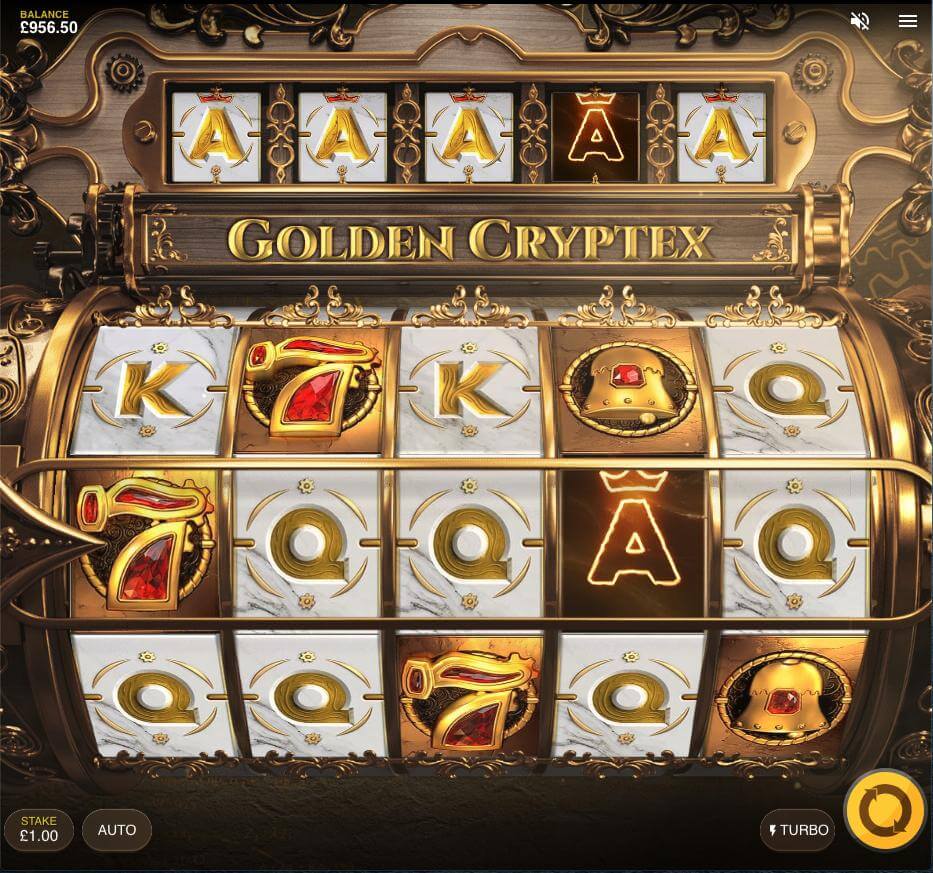
This is one of the most important questions players should ask.
In an authentic demo version of the same game configuration, the underlying mechanics and theoretical RTP should generally match the real-money version. However, that should not be assumed for every game or platform.
RTP stands for Return to Player.
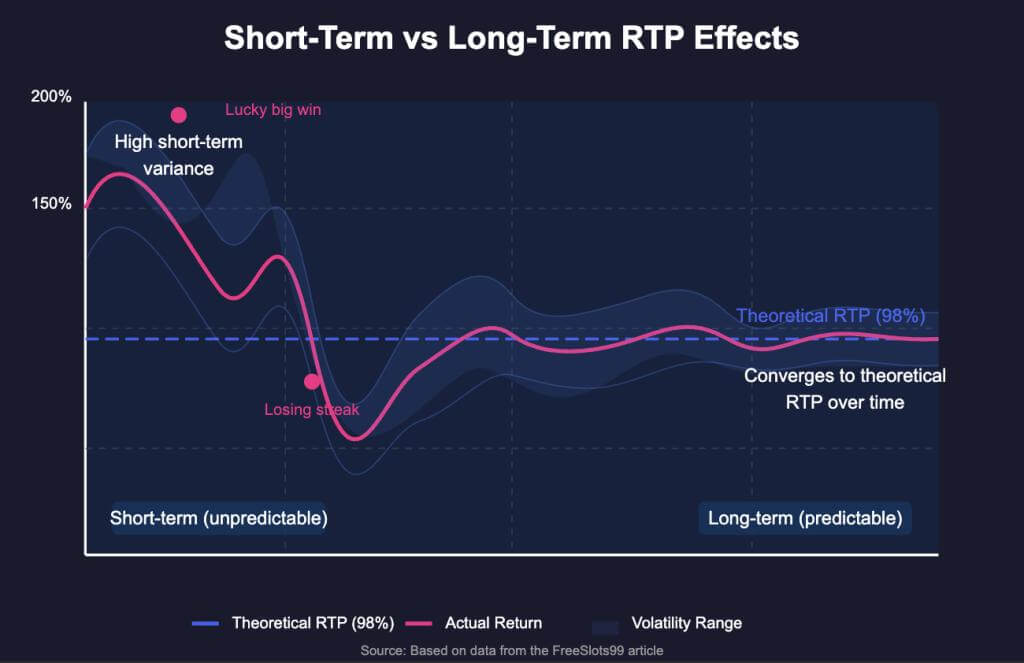
It describes the theoretical percentage of wagered money a game is designed to return to players over a very large number of rounds.
For example, a slot with a theoretical RTP of 96% is designed to return an average of €96 for every €100 wagered across its mathematical model over extensive play.
That does not mean an individual player will receive €96 after wagering €100.
Short-term results can differ dramatically from the theoretical average.
Understanding this distinction is especially important when comparing games with different theoretical returns. Our guide to high-RTP casino games explains why a higher RTP describes long-term mathematical expectations rather than guaranteeing better results in an individual session.
Some game providers offer multiple RTP configurations for the same slot title. A casino might use one approved configuration while another operator uses a different one.
Consequently, two versions that look identical may not necessarily have the same theoretical return.
Before treating demo results as representative of a particular real-money game, players should check the published RTP, game rules and available information about the specific version.
Why Identical Graphics Do Not Guarantee Identical Mathematics
Casino games are software products.
Their visual appearance is only one part of the experience.
Behind the interface are mathematical models governing outcomes, symbol distributions, bonus frequencies, payouts and other characteristics.
A game might have the same name, graphics and bonus features across several platforms while supporting different mathematical configurations.
This does not automatically mean anything improper is happening.
Different approved RTP versions can exist as legitimate commercial configurations, subject to the requirements of the relevant jurisdiction.
The important point is transparency.
Players should not assume that two visually identical versions have identical settings simply because their reels and symbols look the same.
For a meaningful comparison, the demo and real-money versions should use the same underlying configuration.
Does Volatility Stay the Same?
Volatility describes the distribution of a game’s potential payouts.
A relatively low-volatility slot may produce smaller wins more frequently.
A high-volatility slot may deliver longer periods without significant returns, with the possibility of larger payouts when certain features occur.
If the demo and real-money versions use the same mathematical configuration, their theoretical volatility should also be the same.
But volatility can be difficult to judge from a short demo session.
Suppose you play a high-volatility slot for 50 spins and trigger a large bonus.
You might conclude that the game regularly produces substantial wins.
Another player could complete 200 spins without experiencing anything similar.
Neither short session necessarily provides a reliable picture of the game’s long-term behavior.
This is particularly important with games where a large proportion of potential payouts is concentrated in relatively rare bonus features.
A brief demo session may show what is possible without showing how uncommon that outcome might be.
Why a Successful Demo Session Predicts Nothing About the Next Session
Imagine you start with 1,000 virtual credits.
After 100 spins, your balance has increased to 2,500 credits.
You have more than doubled your starting balance.
It may feel natural to think:
“This game is paying well. Maybe I should switch to real money.”
But a successful demo session does not establish that the next session will be similarly successful.
In a properly implemented game using independent random outcomes, the results of previous spins do not determine what the next spin will produce.
Winning frequently during practice does not mean the game has entered a profitable period.
Likewise, losing repeatedly in demo mode does not mean a large real-money win is due.
This misunderstanding is closely related to the gambler’s fallacy, the belief that previous independent random events change the likelihood of future ones.
Demo mode can demonstrate a game’s mechanics. It cannot reliably forecast your future winnings.
Is Demo Mode Sometimes More Generous?
Players occasionally report that games appear to pay more frequently in demo mode.
A few successful practice sessions can reinforce this impression.
However, personal experience is not sufficient evidence that a demo version uses more favorable mathematics.
Random variation can produce unusually successful or unsuccessful sessions even when the underlying game configuration remains unchanged.
At the same time, players should not assume every product labeled “demo” is an exact simulation of the real-money game.
Some promotional previews, tutorials or demonstration environments may use predetermined outcomes or simplified mechanics.
These should be distinguished from genuine free-play versions using the same mathematical model as the live game.
The most useful approach is to check the game’s rules and provider information rather than assuming that all free-play experiences operate identically.
The Biggest Difference Is Psychological
Even when the mathematics are identical, the experience of playing with real money can feel completely different.
In demo mode, a player can experiment freely.
They might choose a large stake, try an unfamiliar feature or continue after a losing streak without worrying about the financial consequences.
Real-money play introduces financial pressure.
A player may become more cautious after a loss.
They may feel excited when their balance increases.
They may become frustrated when a bonus fails to appear.
And they may start interpreting outcomes differently because money is involved.
This psychological difference is one reason demo mode cannot perfectly reproduce the real-money experience.
The way players respond to rewards, losses and game feedback is explored further in The Psychology of Gambling Design – What Keeps Players Coming Back?, which examines how casino interfaces and reward systems can influence the gambling experience.
It simulates the game, but not necessarily the emotional consequences.
Why Losses Feel Different With Real Money
Behavioral economics has long explored the idea of loss aversion.
Broadly speaking, people often experience the pain of losing something more strongly than the pleasure associated with an equivalent gain.
That tendency can become relevant when gambling with real money.
Losing €20 may feel more significant than gaining €20 feels satisfying.
In demo mode, the same numerical change may produce little emotional response.
This difference can influence decisions.
A player who calmly accepts ten consecutive demo losses might become frustrated after several real-money losses.
They might increase their stake in an attempt to recover.
Or they might continue playing longer than originally planned.
These reactions are not guaranteed, but they illustrate why identical game mechanics do not necessarily produce identical behavior.
Demo Mode Can Create Unrealistic Confidence
A successful practice session can make a game feel familiar.
That familiarity can be useful.
Players may learn how the interface works, what the symbols mean and when bonus features occur.
However, familiarity with a game’s presentation should not be confused with an ability to predict its outcomes.
A player might spend an hour exploring a slot and feel that they understand its patterns.
But knowing the animations, bonus symbols and payout structure does not provide control over the random number generator.
This distinction is especially important for games that encourage players to make decisions during play.
For example, a crash game may allow players to choose when to cash out.
Demo mode can help them understand the cash-out interface.
It cannot establish a reliable method for predicting when an independently generated crash will occur.
What Demo Mode Is Actually Good For
Despite its limitations, demo mode can be useful.
Its strongest value is educational.
Players can explore a game without immediately risking real money.
They can understand how the interface works, discover available features and decide whether they enjoy the format.
For example, someone unfamiliar with a Megaways-style slot might use demo mode to understand how the number of ways to win changes.
Another player might explore a cascading-reels game to see how consecutive wins are processed.
Someone trying a crash game for the first time could learn the difference between manual and automatic cash-out.
These are practical benefits.
Demo mode is particularly useful for understanding how a game functions, rather than determining whether playing it will be profitable.
What Demo Mode Cannot Teach You Reliably
Demo mode has several important limitations.
It cannot reliably tell you how much money you will win or lose in a future real-money session.
It cannot establish a game’s true volatility from a handful of rounds.
It cannot reproduce the financial pressure associated with risking personal funds.
And it cannot turn random outcomes into predictable patterns.
A demo session may also omit aspects of the real-money environment, including account verification, deposit limits, withdrawal requirements, promotional conditions and jurisdiction-specific restrictions.
These elements are part of the wider gambling experience even though they do not necessarily appear inside the game itself.
The Difference Between Virtual Credits and Real Balances
Demo balances are usually designed to be convenient.
If a player runs out of credits, the game may allow them to reset the balance and continue practicing.
That makes experimentation easy.
Real-money balances operate differently.
Deposited funds and winnings are subject to the platform’s payment rules, applicable verification requirements and other account conditions.
A player cannot simply reset a real-money balance after losing it.
This difference can make demo mode feel much less restrictive.
It can also create unrealistic expectations about how long a particular balance might last.
A virtual balance can be replenished without consequence.
A real balance cannot.
Does Betting Size Affect the Experience?
Yes, although not necessarily the underlying probability of an outcome.
In many slots, changing the stake adjusts the monetary value of wins and losses while leaving the game’s mathematical structure unchanged.
However, some games contain stake-dependent features, eligibility thresholds or different betting configurations.
Players should therefore check the rules rather than assume every stake level operates identically.
The psychological effect can also be significant.
A €0.20 spin and a €20 spin may look almost identical on the screen.
But the potential financial consequences are very different.
In demo mode, the distinction may feel insignificant because neither wager uses real money.
With real funds, the difference can become central to the player’s experience.
Does RTP Become More Important With Real Money?
RTP is relevant in both modes, but its practical significance becomes clearer when real funds are involved.
In demo mode, theoretical return helps explain the game’s mathematical design.
In real-money mode, the same percentage describes a long-run expectation associated with actual wagering.
Consider two hypothetical games:
| Game | Theoretical RTP | Theoretical house edge |
| Slot A | 96% | 4% |
| Slot B | 94% | 6% |
All else being equal, Slot A has a lower theoretical house edge.
But that does not guarantee Slot A will produce a better result during an individual session.
A player could lose quickly on the higher-RTP game and win on the lower-RTP game.
The theoretical percentages describe long-run mathematics, not guaranteed short-term returns.
And even a relatively high RTP does not remove the possibility of losing the entire amount wagered.
How Demo Mode Fits Into Modern Casino Game Discovery
Online casinos now offer enormous game libraries.
A single platform may contain thousands of slots and other casino products from numerous providers.
Demo mode can make those libraries easier to explore.
Instead of committing money to every unfamiliar title, players can inspect the game and decide whether its mechanics or presentation interest them.
This is particularly relevant as casino game discovery becomes more complicated.
Two games might have similar themes but very different bonus structures.
A visually simple game might contain unusually high volatility.
A game with elaborate graphics might use familiar mathematical mechanics.
Demo play can help users distinguish these experiences before making a financial decision.
However, the convenience of switching between games can also encourage prolonged browsing and play. Free-play availability does not automatically make the surrounding product design risk-free.
What Should Players Check Before Switching to Real Money?
The most useful questions are not whether the demo session was profitable.
They concern the game and the financial conditions of real-money play.
Players should understand the published RTP and whether multiple configurations exist.
They should know how the game’s volatility and bonus features work.
They should check minimum and maximum stakes.
They should also review the operator’s deposit, withdrawal, verification and responsible-gambling tools.
Most importantly, they should understand that money used for gambling can be lost.
A successful demo session should not be treated as a reason to increase stakes or assume that future outcomes will be favorable.
Can Demo Mode Encourage Riskier Behavior?
Potentially.
Demo play removes the immediate financial consequences of losing.
That can make large wagers and extended sessions feel harmless.
Some players may become accustomed to betting amounts they would not comfortably risk with real money.
Others may develop confidence after a short series of successful practice rounds.
When switching to real-money play, those expectations may not match the financial reality.
This does not mean every player will respond in the same way.
It means demo mode should be understood as a limited simulation, not a complete rehearsal for real-money gambling.
Is Real-Money Play More Exciting?
For some players, the financial stakes may increase emotional intensity.
A winning spin can feel more meaningful when the payout has actual monetary value.
A losing spin can also feel more frustrating.
But greater emotional intensity is not necessarily a benefit.
Financial consequences can contribute to stress, impulsive decisions and attempts to recover losses.
Demo mode may be a more suitable option for someone who simply wants to explore a game’s design or mechanics without risking money.
There is no requirement to move from free play to real-money betting in order to understand or enjoy the mechanics of a casino game.
Demo Mode vs Real-Money Play: The Key Differences
| Feature | Demo Mode | Real-Money Play |
| Balance | Virtual credits | Actual funds |
| Financial risk | No direct wagering loss | Real money can be lost |
| Withdrawable winnings | Generally no | Subject to operator rules |
| Game mechanics | Often the same | Actual configured game |
| RTP | Should match if configuration is identical | Depends on configured version |
| Volatility | Same if mathematics are identical | Depends on configured version |
| Emotional pressure | Usually lower | Often higher |
| Balance reset | Frequently available | Not available after losses |
| Predictive value | Cannot forecast future outcomes | Outcomes remain uncertain |
| Main purpose | Explore and learn mechanics | Wager real funds |
The table highlights an important distinction.
The game may look and behave similarly in both modes, but the surrounding experience changes substantially when money becomes involved.
The Future of Demo Gaming
As casino platforms develop more sophisticated discovery tools, demo mode may become increasingly integrated into how players explore games.
Instead of searching only by title or provider, users may eventually compare games by mechanics, volatility, bonus structure or preferred session style.
Interactive previews could help explain complicated features before someone starts playing.
Providers might also offer clearer information about RTP configurations and mathematical characteristics.
These developments could make demo mode more useful as an educational tool.
But its fundamental limitation will remain.
No matter how realistic a demonstration becomes, it cannot accurately predict the random outcomes of a future independent real-money session.
Final Thoughts
Demo mode and real-money play can look almost identical.
The same reels spin.
The same symbols appear.
The same bonus features may activate.
And when both versions use the same mathematical configuration, their theoretical RTP and volatility should also be the same.
But the experience changes when virtual credits are replaced with real funds.
Losses have financial consequences.
Wins can create stronger emotional reactions.
Decisions may become more difficult.
And a successful practice session can create expectations that the underlying mathematics do not support.
The most useful way to think about demo mode is as a tool for learning how a game works, not a method for predicting how much money it will pay.
Understanding that distinction helps players approach casino games with clearer expectations, whether they choose to remain in free-play mode or consider real-money gambling.
Sources: