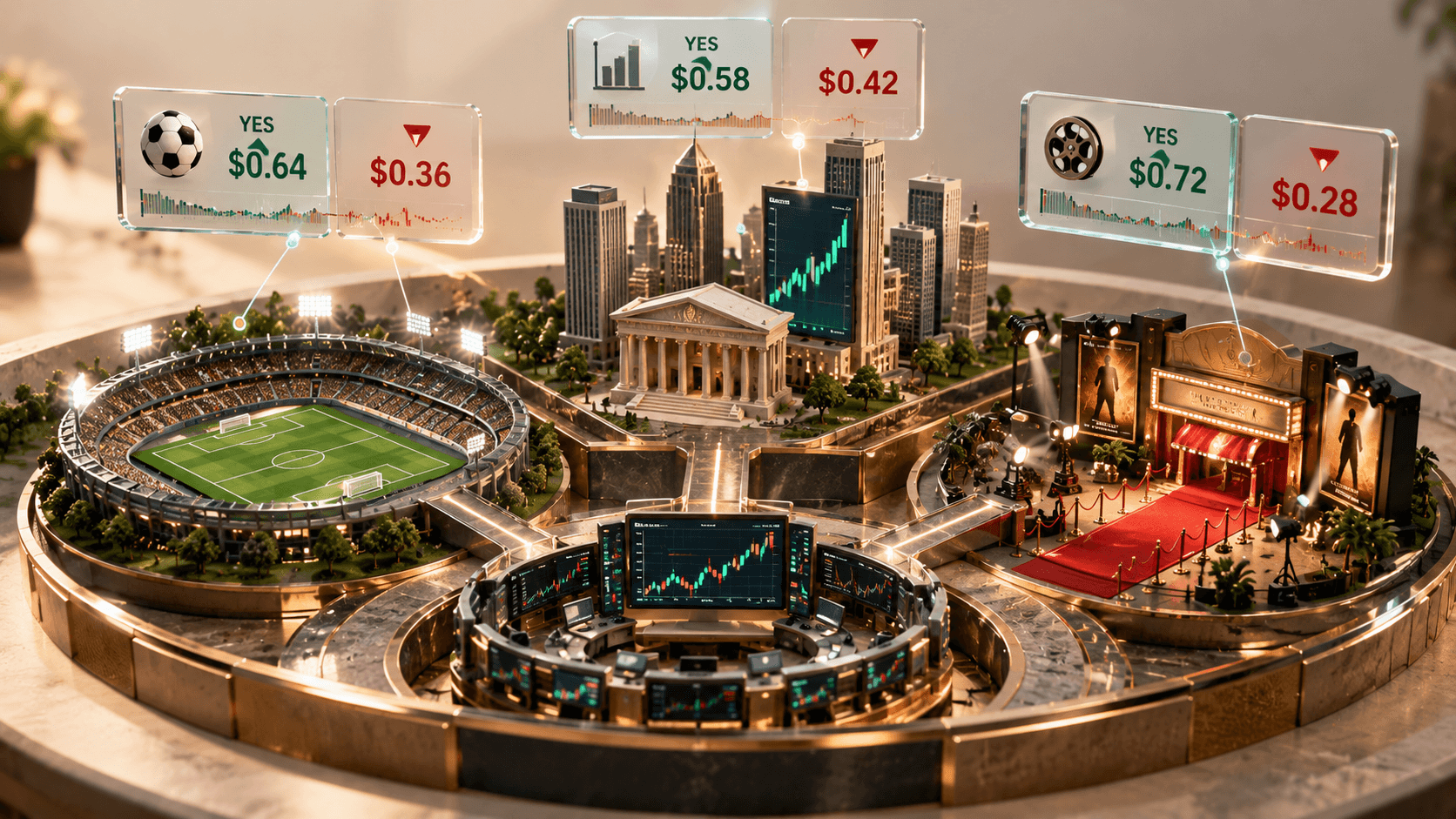
A football match is approaching, and two people believe the same team will win.
One opens a traditional sportsbook and places a bet at fixed odds.
The other opens a prediction market and purchases a contract that will pay out if the team wins.
Both are risking money on an uncertain sporting outcome. Both could receive a payout if their prediction is correct.
But the way their positions are priced, traded and settled can be surprisingly different.
Now imagine applying that same idea beyond sports.
Will inflation fall below a particular level next month? Will a movie reach a certain box-office milestone? Will a central bank change interest rates at its next meeting?
These are the kinds of questions that prediction markets can turn into tradable contracts.
Platforms such as Kalshi and Polymarket have helped bring event-based trading into mainstream conversations about finance, technology and gambling.
Their growing visibility raises an interesting question:
Are prediction markets a new form of financial trading, a different version of betting, or something that sits between the two?
The answer depends on how the contracts work, what people use them for and, increasingly, which jurisdiction is regulating them.
What Exactly Is a Prediction Market?
A prediction market is a marketplace where participants trade contracts tied to the outcome of future events.
The most recognizable format is a binary contract built around a yes-or-no question.
For example:
Will a particular economic report show inflation below 3%?
A market might offer two positions:
- Yes, the event will happen.
- No, the event will not happen.
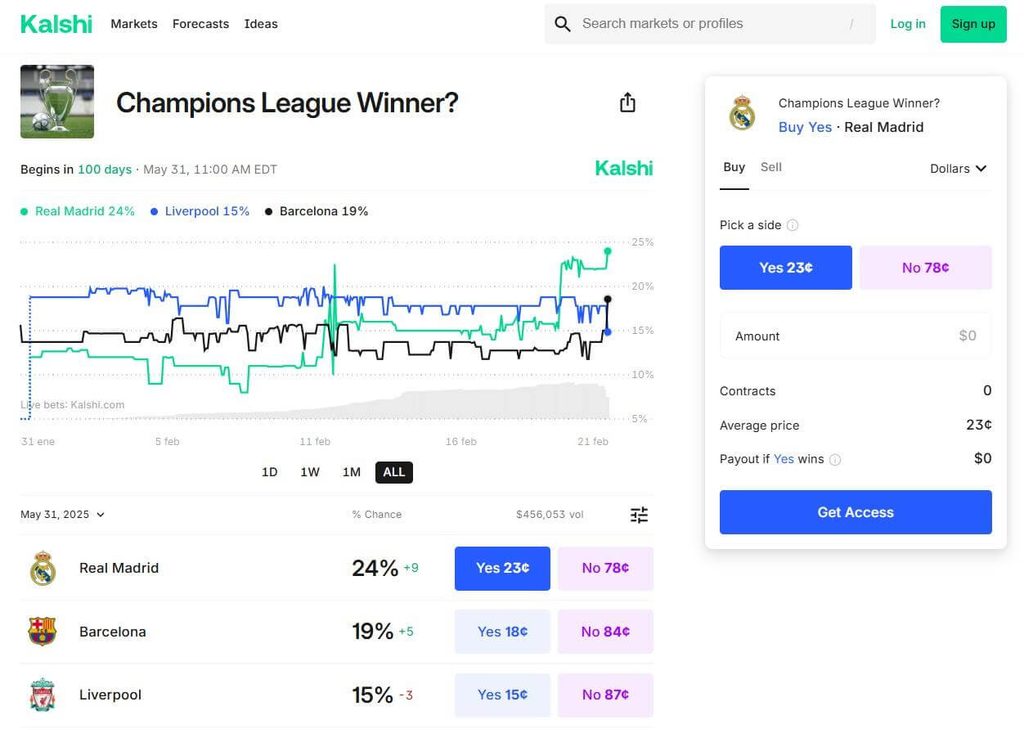
In a simplified market where each correct contract pays $1 and an incorrect contract pays $0, the Yes contract might trade at $0.65.
A buyer paying $0.65 would receive $1 if the event occurs, or nothing if it does not, assuming the contract is held until settlement and the stated resolution conditions are met.
That creates a potential $0.35 profit per contract before fees if the Yes outcome wins.
If the prediction is wrong, the buyer could lose the $0.65 purchase price.
The concept is easy to understand, even if the market infrastructure behind it can be more complicated.
Instead of purchasing a share in a company, participants purchase exposure to a specific future outcome.
How Are Prediction Market Prices Determined?
In traditional sports betting, a bookmaker generally publishes odds and accepts wagers according to its pricing and risk-management model.
Prediction markets can operate differently.
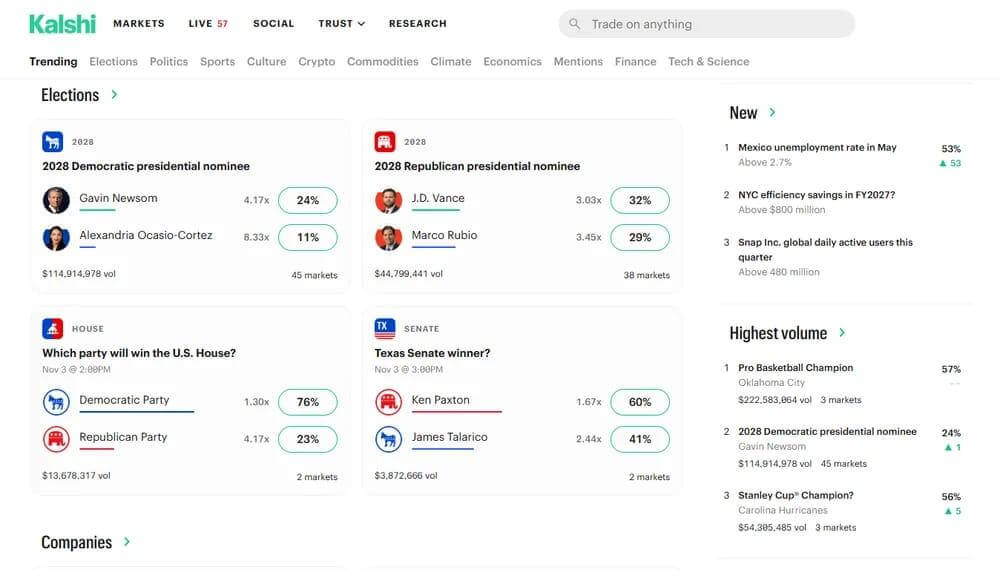
On an exchange-style prediction market, participants submit orders indicating the prices at which they are willing to buy or sell contracts.
Those orders interact through a trading system.
When buyers and sellers agree on a price, a transaction occurs.
Other prediction markets use automated market makers or liquidity mechanisms rather than relying entirely on a conventional order book.
In either case, prices respond to supply, demand, available liquidity and the information participants bring into the market.
If new information increases demand for Yes contracts, their price may rise.
If confidence in that outcome weakens, the price may fall.
This makes prediction markets resemble financial exchanges, even though the underlying contract may concern a football result or an entertainment event rather than a stock or commodity.
Why a Price of $0.70 Is Not a Guaranteed 70% Probability
Prediction market prices are often interpreted as implied probabilities.
A Yes contract trading at $0.70 may be described as indicating a roughly 70% market-implied chance of the event happening.
That interpretation can be useful, but it requires caution.
A contract price is not an objective measurement of the future.
It reflects trading activity under the conditions of that particular market.
Prices can be influenced by transaction costs, limited liquidity, market spreads, participant preferences, information gaps and temporary imbalances between buyers and sellers.
Some markets may also attract participants who want to hedge an existing exposure rather than express their best estimate of an event’s probability.
As a result, market-implied probability is a price-based estimate, not a promise that the event will happen with exactly that frequency.
Prediction markets can aggregate useful information, but they can also be wrong.
Prediction Markets vs Traditional Sportsbooks
The similarities between sportsbooks and prediction markets are obvious.
Both allow people to risk money on uncertain outcomes.
Both can cover sporting events.
Both offer the possibility of financial gain if an outcome unfolds favorably.
The differences become clearer when looking at pricing and trading.
| Feature | Traditional sportsbook | Prediction market |
| Main product | Wager at offered odds | Event-based contract |
| Pricing | Usually set and adjusted by bookmaker | Often formed through trading or automated liquidity |
| Position after entry | Usually held until settlement, unless cash-out is offered | May be tradable before resolution |
| Early exit | Depends on bookmaker cash-out availability | Depends on market liquidity and trading rules |
| Sports coverage | Core product | One of several possible categories |
| Economics and entertainment | Limited or jurisdiction-dependent | Common contract categories |
| Main risks | Losing stake, settlement rules, operator risk | Contract loss, price changes, liquidity, fees, settlement and platform risk |
| Regulation | Generally gambling or sports-wagering framework | May fall under derivatives, gambling or other rules depending on jurisdiction |
The table illustrates why prediction markets do not fit neatly into one familiar category.
Their contracts can resemble bets, while their market structure resembles trading.
A Football Match Can Look Different on Each Platform
Imagine a football match between Team A and Team B.
A sportsbook offers decimal odds of 2.00 for Team A to win.
A €10 winning wager would return €20, including the original stake.
A prediction market might instead offer a contract paying $1 if Team A wins.
If that contract costs $0.50, purchasing 20 contracts costs $10.
If Team A wins and the contracts settle at $1 each, the holder receives $20 before fees.
At first glance, the financial result looks similar.
But the prediction market position may be tradable before the match ends.
Suppose Team A scores early and the Yes contract rises from $0.50 to $0.78.
The holder may be able to sell the contracts at the new market price rather than waiting for the final result.
That possibility introduces a trading dimension.
However, a sale is not guaranteed at the displayed price. There must be sufficient liquidity, and fees or bid-ask spreads may reduce the proceeds.
There is also an important sports-specific detail: the contract must define exactly what counts as a win. A football market could refer to regulation time, extra time or qualification, and a draw may be handled differently across products.
You Can Be Right About an Event and Still Lose Money
This is one of the most important distinctions for beginners.
In a simple sportsbook wager held until settlement, the central question is whether the selected outcome wins under the betting rules.
Prediction markets introduce additional decisions.
A participant must consider not only what will happen, but also the price paid and whether the position will be sold before settlement.
Consider a hypothetical Yes contract that pays $1 if an event occurs.
Example: Buying 100 Yes contracts at $0.80 each
Initial cost
$80
Maximum payout if Yes wins
$100
Early sale price per contract
$0.99
$0.00$1.00
Profit or loss if sold early
Assumes all 100 contracts sell at the selected price, excluding fees
+$19.00
A participant might buy Yes at $0.80, watch the price fall to $0.60 and sell to limit further exposure.
If the event ultimately occurs, their original prediction was correct.
But because they sold at a lower price, they realized a loss.
Even a participant who correctly predicts an event can find that a position was unattractive at the price paid, particularly after fees.
The distinction between making informed decisions and actually improving financial outcomes also appears in traditional gambling, as explored in Skill Inflation in Gambling – Are Players Becoming More Strategic Over Time?, which examines how players increasingly approach gambling through research, statistics and strategy.
Predicting the outcome correctly and trading the contract profitably are related, but they are not identical skills.
Beyond Sports: Economics, Entertainment and Everyday Events
Sports contracts may be the most familiar entry point for people who already understand betting, but prediction markets extend far beyond matches and tournaments.
Economic markets might ask whether an inflation report will exceed a threshold, whether a central bank will change its benchmark rate, or whether an economic indicator will reach a specified level.
Entertainment markets can concern film releases, award ceremonies or measurable audience milestones.
Other markets may cover weather, technology launches or business announcements.
These categories help explain why prediction markets have attracted interest from people who would not normally describe themselves as sports bettors.
An economics enthusiast might follow inflation contracts because they are interested in monetary policy.
A film-industry analyst might observe box-office markets to understand changing expectations.
A business might theoretically use a relevant contract to offset part of an existing financial exposure.
These motivations can overlap with speculation, but they are not necessarily identical.
Why Are Prediction Markets Attracting So Much Attention?
One reason is that prediction markets turn opinions into prices.
Traditional polls, expert forecasts and public commentary communicate expectations in different ways.
Prediction markets provide another signal: what participants are willing to pay for exposure to a particular outcome.
The appeal is that prices can update continuously as new information emerges.
If an economic announcement changes expectations, a related contract can respond quickly.
Another reason is accessibility.
Modern platforms package contracts in interfaces that may feel familiar to users of trading applications, cryptocurrency exchanges or online sportsbooks.
The contract itself can also be simple to understand: Yes or No.
This combination of financial-market mechanics and familiar real-world questions has helped prediction markets move beyond specialist forecasting communities.
This growing interest in shared predictions and collective market activity also connects with The Next Frontier: Social Betting Communities & Player-to-Player Interaction, which explores how digital platforms are changing the relationship between betting, community participation and shared information.
Their expansion is measurable, although reported trading volume should not be confused with revenue, net investment or profit. A September 2026 analysis by DLA Piper cited substantial increases in trading volume alongside intensifying regulatory scrutiny.
Can Prediction Markets Produce Better Forecasts?
There is a reasonable argument for why they might sometimes provide useful information.
Participants who believe a contract is mispriced have an incentive to trade.
If enough informed participants enter the market, their transactions can move prices toward more accurate estimates.
But this process has limitations.
A market with only a handful of active traders may not aggregate much information.
A market dominated by participants with similar assumptions may overlook important possibilities.
Highly visible markets may also attract speculative enthusiasm unrelated to careful forecasting.
And even a well-functioning market cannot eliminate uncertainty about the future.
Prediction markets are therefore best understood as one potential source of forecasting information, rather than a replacement for economic analysis, scientific evidence or other reliable research.
Liquidity Matters More Than Beginners Might Expect
A prediction market can display an attractive price without guaranteeing that every participant can trade at it.
This is where liquidity becomes important.
Liquidity describes how easily contracts can be bought or sold without significantly changing their price.
Imagine a contract with a displayed Yes price of $0.60.
A participant wants to purchase 1,000 contracts.
If there are only 100 contracts available near $0.60, the remaining orders may need to execute at higher prices.
The average purchase cost could therefore exceed the initial displayed price.
The same problem can occur when selling.
A trader may see a market price increase but discover that there are not enough buyers willing to purchase the entire position at that level.
This creates an important distinction between a displayed valuation and money that can actually be realized.
Traditional sportsbooks also have limits and pricing constraints, but exchange-style prediction markets expose participants to order-book liquidity and bid-ask spreads in a particularly direct way.
What Happens When an Event Is Cancelled or Disputed?
Prediction markets depend on precise settlement rules.
Consider a contract asking:
Will a particular film be released before December 31?
What happens if the film receives a limited release in one country but is delayed everywhere else?
Or imagine a sports contract tied to a tournament that is abandoned before a winner is declared.
The platform needs rules defining exactly what counts as a valid outcome.
These rules may specify official data sources, deadlines, geographic definitions and procedures for ambiguous results.
Some systems use designated resolution authorities. Others incorporate oracle mechanisms or dispute processes.
If a contract is unclear, participants may disagree about whether the event occurred.
That means settlement risk exists separately from the risk of making an incorrect prediction.
A trader could accurately anticipate the real-world event but misunderstand the contract’s technical definition.
For beginners, the resolution criteria deserve as much attention as the displayed probability.
Are Prediction Markets Legal Everywhere?
No. Their legal treatment differs substantially across jurisdictions, and the rules continue to evolve.
United States: Federal derivatives regulation meets state gambling law
In the United States, the Commodity Futures Trading Commission, or CFTC, regulates designated contract markets and certain derivatives.
Some prediction market operators offer event contracts through federally regulated exchange structures.
However, that does not settle every legal question.
A major dispute concerns whether sports-related event contracts fall exclusively under federal derivatives regulation or can also be regulated under state gambling laws.
The CFTC has asserted federal jurisdiction over event-contract markets. Several states have argued that sports contracts function as gambling products subject to their own laws.
Courts have reached important decisions in this dispute, including rulings allowing certain state enforcement efforts to proceed.
As of October 2026, the broader legal landscape remains contested. It would be misleading to describe all prediction markets as universally legal across the United States merely because an exchange has federal registration.
Great Britain: A different regulatory approach
Great Britain has taken a more explicit position.
In February 2026, the UK Gambling Commission stated that prediction market operators entering Great Britain would not, in its view, be able to classify themselves as non-gambling products simply by using an event-contract structure.
The Commission said products meeting the legal definition of gambling require appropriate gambling licensing, while financial services products fall under the Financial Conduct Authority’s framework.
here’s what you need to know
This illustrates how the same commercial idea can be treated differently depending on local law.
Other jurisdictions
Outside these markets, regulation can depend on gambling legislation, financial-services rules, derivatives law and restrictions on particular contract categories.
Some jurisdictions may prohibit certain products. Others may permit them under specific licences or conditions.
A platform being accessible through a website does not necessarily mean its contracts are legally available to every visitor.
The Financial Risks Go Beyond Getting the Prediction Wrong
Prediction markets can create several overlapping risks.
The most obvious is losing the amount paid for a contract that settles unsuccessfully.
But participants may also face losses from price movements before settlement, limited liquidity, trading fees and misunderstood contract terms.
Some platforms introduce additional operational considerations, including custody arrangements, payment methods, technical failures and dispute-resolution mechanisms.
Blockchain-based platforms can add risks involving smart contracts, wallet security, stablecoins or the systems used to verify real-world outcomes.
The relevant protections vary by product and jurisdiction.
Importantly, trading a contract through a regulated exchange does not make the position risk-free.
Regulatory oversight, where applicable, does not guarantee that a participant will make a profit or avoid financial loss.
Insider Information and Market Manipulation
Prediction markets also raise questions about who knows what, and when.
Imagine a contract concerning a company announcement.
An employee who knows the announcement before the public may possess information that other traders cannot access.
Or consider a sports contract involving an outcome that a participant could directly influence.
These situations create potential conflicts involving nonpublic information, manipulation and market integrity.
In February 2026, the CFTC published an enforcement advisory discussing cases involving misuse of nonpublic information and improper trading activity on prediction markets.
This matters because prediction markets are sometimes promoted as systems that reward accurate information.
But information advantages can become problematic when they arise from prohibited conduct rather than legitimate research.
The rules governing these situations are not necessarily identical across platforms or jurisdictions.
Are Prediction Markets Gambling or Investing?
There is no universally accepted answer that applies to every product.
From an economic perspective, many event contracts share characteristics with wagering.
Participants risk money on uncertain outcomes and may receive a payout if those outcomes occur.
From a market-structure perspective, exchange-traded event contracts can resemble financial derivatives.
They may be bought, sold, priced continuously and used for speculation or hedging.
The distinction becomes even more complicated when the underlying event is not a sporting contest.
A contract tied to inflation could potentially serve a different economic purpose from a contract tied to a football result.
But changing the subject of the contract does not automatically determine its legal classification.
Ultimately, legal status depends on the relevant legislation, regulatory interpretation, contract design and jurisdiction.
That is why describing prediction markets as simply “sports betting with a new name” misses part of the picture.
Calling every prediction market a conventional investment product would be equally misleading.
What Does the Rise of Prediction Markets Mean for Sportsbooks?
Prediction markets introduce another way for consumers to express views about sporting outcomes.
Their exchange-style pricing and tradable contracts create a different user experience from conventional fixed-odds betting.
This could encourage established sportsbooks to examine how customers interact with live prices, early exits and market-based information.
However, prediction markets also face regulatory and operational challenges that traditional licensed sportsbooks have spent years addressing.
These include consumer protection, sports integrity, age restrictions, market surveillance and dispute resolution.
Whether the two industries converge or remain more clearly separated will depend partly on how these questions are resolved.
What Should Beginners Understand Before Participating?
The most important starting point is to understand the contract itself.
A Yes-or-No interface can look simple, but the financial product behind it may not be.
Before risking money, a participant should understand what event is being measured, what counts as a successful outcome, how the contract settles, what fees apply and whether an early exit is realistically available.
They should also understand the maximum potential loss and whether the platform is legally permitted to offer the product in their jurisdiction.
The displayed probability should not be treated as certainty.
And an apparently correct prediction should not be confused with a guaranteed profitable trade.
For someone interested primarily in following forecasts, observing market prices without purchasing contracts can provide information without taking on direct trading exposure.
The Future of Prediction Markets
Prediction markets sit at an unusual intersection of gambling, finance, technology and public information.
Their appeal is partly based on the idea that uncertain real-world events can be translated into continuously changing prices.
That creates opportunities for forecasting, speculation and, in some circumstances, risk management.
But the same characteristics also introduce questions about consumer protection, market manipulation, financial literacy and regulation.
The next stage of the industry’s development may depend less on creating additional contract categories and more on resolving those underlying questions.
Can platforms provide reliable and transparent settlement rules?
Can regulators establish clearer boundaries between gambling and financial derivatives?
Can market operators prevent manipulation while maintaining accessible trading?
And can ordinary users distinguish a market-implied probability from a genuinely profitable opportunity?
These questions will shape whether prediction markets become a lasting part of mainstream financial infrastructure, a specialized forecasting tool or an increasingly competitive alternative to traditional betting products.
Final Thoughts
Prediction markets are not entirely new in concept, but their modern presentation has made event-based trading far more visible.
They allow participants to buy and sell contracts connected to sports, economic indicators, entertainment and other measurable outcomes.
Unlike a conventional fixed-odds sportsbook wager, a prediction market position may change in value and be traded before the event is resolved.
That introduces a second layer of decision-making.
Participants must consider not only what they believe will happen, but also what price they are paying for that belief.
A correct prediction does not always produce a profit. A market price does not guarantee a probability. And a financial-style trading interface does not automatically remove the risks associated with gambling on uncertain outcomes.
Prediction markets may sit between trading and betting, but understanding their prices, contracts and risks matters more than deciding which label sounds most appropriate.
This article is ready for the next Kamateli editorial workflow: internal links, verified external references, two inline image placements, a distinctive featured-image concept and category recommendations.
Because prediction-market regulation is changing rapidly, the legal section should be rechecked immediately before publication, particularly the U.S. federal-versus-state dispute.
I can also monitor major regulatory developments affecting prediction markets and flag changes that would require updating the article.
Sources: