Online casino gaming has traditionally revolved around familiar formats. Roulette players choose numbers or colors, blackjack players make decisions against a dealer, and slot enthusiasts spin reels in search of winning combinations.
But a different type of casino experience is attracting attention, one that looks less like a conventional casino table and more like a television game show.
Colorful studios, energetic presenters, oversized prize wheels, animated bonus rounds, and dramatic multiplier reveals have become defining features of live casino game shows.
Titles such as Crazy Time, MONOPOLY Live and Dream Catcher demonstrate how casino developers are combining familiar gambling mechanics with entertainment-focused presentation.
Instead of simply waiting for a roulette ball to stop or a blackjack dealer to reveal a card, players watch a live event unfold, sometimes involving multiple stages, bonus features, and substantial potential multipliers.
The appeal is easy to understand. These games are designed to be visually engaging, accessible to newcomers, and entertaining even for people who are unfamiliar with traditional casino rules.
However, their colorful presentation can also make the underlying mathematics harder to recognize.
Are live casino game shows genuinely different from traditional table games, or are they familiar games of chance presented through a new entertainment format?
Understanding their mechanics, probabilities, and volatility provides a clearer answer.
What Are Online Casino Game Shows?
Online casino game shows are live-streamed gambling games that combine casino betting with the presentation style of television entertainment.
They usually feature a professional presenter hosting a game from a purpose-built studio.
Players participate remotely through a casino website or mobile application, placing wagers before each round begins.
The presenter may spin a physical wheel, reveal a result, or guide participants through a bonus feature.
Depending on the title, outcomes may be determined by physical gaming equipment, certified random-number generation, or a combination of mechanisms.
The most recognizable features include:
- Live presenters who explain rounds and interact with the audience.
- Large physical or virtual prize wheels.
- Multiple betting options, often represented by numbers, colors, or symbols.
- Bonus rounds with animated features or additional prize opportunities.
- Multipliers that can increase potential payouts.
- Real-time broadcasts shared by multiple participants.
Unlike conventional live roulette or blackjack, game shows are not necessarily built around established casino-table rules.
They often introduce original formats designed specifically for online audiences.
The result is a category that sits between live dealer gambling, interactive digital entertainment, and television-style game shows.
How Do Live Casino Game Shows Work?
Although individual titles have different rules, many game shows follow a similar structure.
First, participants select their preferred betting options.
These might include numbered wheel segments, specific symbols, or bonus features.
Once the betting period closes, the presenter initiates the round.
A wheel spins, an outcome is revealed, or a game feature begins.
If the result matches a player’s wager, the game pays according to its rules.
Some results end the round immediately.
Others activate a bonus stage in which multipliers or additional random outcomes determine the final payout.
A simple example
Imagine a hypothetical game-show wheel containing several numbered sections and a special bonus segment.
A player places a $5 wager on the bonus segment.
If the wheel lands on a numbered section instead, the wager loses.
If it lands on the selected bonus segment, the player enters a bonus feature.
That feature might award a multiplier that determines the final return.
The important distinction is that the bonus feature is not necessarily an additional free opportunity.
Its potential value is already reflected in the mathematical design of the original wager.
A large advertised multiplier does not automatically mean the wager offers favorable odds.
To understand the actual value of a bet, players need to consider both the size of possible payouts and the probability of receiving them.
Crazy Time: The Game Show Built Around Bonus Rounds
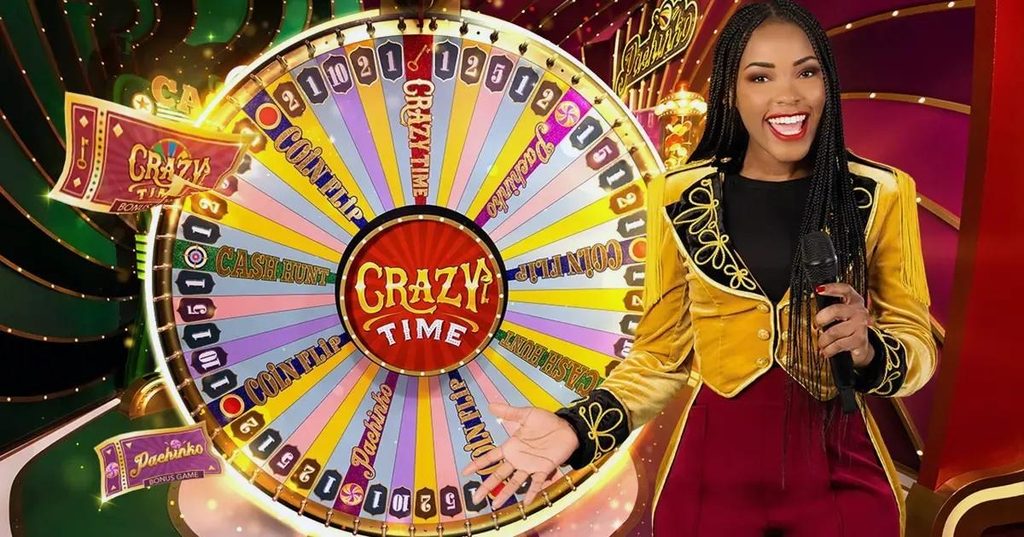
Crazy Time is one of the best-known examples of entertainment-driven live casino gaming.
Developed by Evolution, the game centers on a large wheel containing numbered segments and special bonus-game symbols.
Players can wager on the numbered outcomes or on the bonus features.
When a numbered result appears, qualifying wagers receive the corresponding payout.
When a bonus segment is selected, the game moves into a separate feature.
Crazy Time is particularly recognizable for its four bonus games:
- Coin Flip: A feature involving two colored sides and randomly determined multipliers.
- Cash Hunt: A shooting-gallery-style feature in which players select targets concealing multipliers.
- Pachinko: A virtual ball-drop feature that determines a multiplier.
- Crazy Time: A large bonus wheel featuring multipliers and special enhancement possibilities.
The exact rules and available enhancements should always be checked in the game’s current paytable.
Why does Crazy Time feel different from roulette?
In traditional roulette, a single wheel spin determines the result.
Crazy Time can introduce additional stages after the initial wheel stops.
A player may first wait for a bonus symbol, then watch an animated sequence, make a selection, and finally receive the resulting multiplier.
This creates a more elaborate entertainment experience.
The game is not simply about whether a selected segment wins.
It is also about what happens after a bonus feature begins.
That structure can make a round feel more dramatic than a conventional table-game result.
However, the additional stages do not necessarily improve the player’s mathematical position.
The probability of reaching a bonus feature and the distribution of its possible payouts remain central to the game’s expected return.
MONOPOLY Live: A Familiar Board Game Becomes a Casino Show
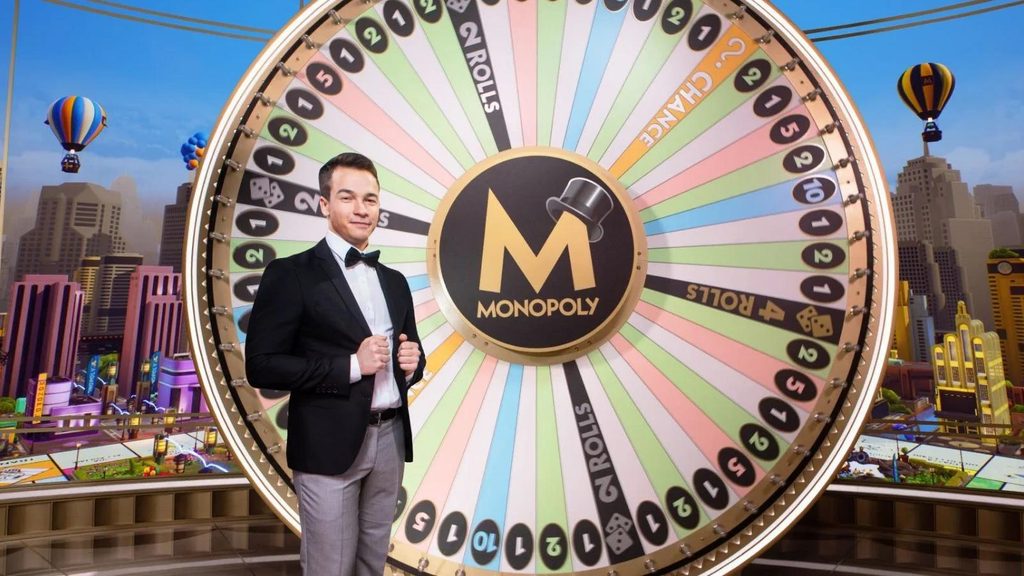
MONOPOLY Live demonstrates another approach: combining an internationally recognizable board-game theme with live casino mechanics.
The game features a large money wheel with numbered segments and special bonus options.
Players select their wagers before the wheel spins.
Depending on the result, they may receive a numbered payout or enter a themed bonus round.
The most distinctive part of the experience is the Monopoly-inspired 3D board-game feature.
A virtual character moves around a digital board, with the resulting movement and landing positions determining bonus outcomes.
This adds a narrative element that is largely absent from conventional roulette.
Instead of watching a single number appear, participants follow a sequence of events.
Familiarity makes the game easier to approach
One reason themed game shows can appeal to broader audiences is that they borrow recognizable entertainment concepts.
Someone who has played Monopoly may already understand the basic idea of moving around a board and landing on different spaces.
That familiarity can make the presentation feel approachable.
But understanding the theme is not the same as understanding the betting mathematics.
The casino version does not follow the same strategic rules as the traditional board game.
Players are wagering on outcomes determined by the game’s specific mechanics, not making property purchases or negotiating with opponents.
The familiar branding makes the experience recognizable, but it does not change the importance of checking the actual game rules.
Dream Catcher: A Simpler Version of the Game-Show Format
While Crazy Time and MONOPOLY Live emphasize elaborate bonus features, Dream Catcher offers a more straightforward experience.
The game is based on a large vertical money wheel.
Players place wagers on numbered segments before the wheel spins.
When the wheel stops, the selected segment determines the result.
Dream Catcher also includes special multiplier segments that can increase subsequent winning payouts under the game’s rules.
The basic experience is easier to follow than a game involving several different bonus environments.
Players choose a number, watch the wheel, and see whether their selection wins.
Why simplicity still matters
Not every player wants complex bonus mechanics.
Some prefer games where the relationship between the wager and the result is immediately visible.
Dream Catcher illustrates how game-show presentation can be applied to relatively simple gambling mechanics.
The entertainment comes from the presenter, the oversized wheel, the shared live event, and the anticipation of the result.
This shows that game-show gambling is not defined solely by elaborate graphics or multiple bonus rounds.
Sometimes the presentation itself is the main difference.
Live Casino Game Shows vs Traditional Roulette and Blackjack
At first glance, game shows and traditional table games share several characteristics.
Both involve wagering money on uncertain outcomes.
Both can feature live presenters or dealers.
Both provide predefined payout rules.
But the experience can be significantly different.
| Feature | Live casino game shows | Traditional roulette | Traditional blackjack |
| Main mechanic | Wheels, symbols, bonus events | Numbered wheel and ball | Cards and player decisions |
| Presentation | Television-style entertainment | Traditional casino table | Traditional casino table |
| Player decisions | Primarily wager selection, sometimes bonus choices | Wager selection | Wager selection and strategic play decisions |
| Bonus rounds | Common in many titles | Generally absent | Generally absent |
| Multipliers | Often central to gameplay | Usually fixed payouts | Usually fixed payouts |
| Complexity | Varies considerably | Relatively straightforward | Requires understanding playing decisions |
| Volatility | Often varies substantially by betting option | Depends on wager type | Depends on rules and player decisions |
| Role of skill | Usually limited | No predictive skill advantage in a fair game | Strategy can affect expected losses |
The most important difference is not necessarily the use of live video.
Traditional live dealer games already offer that.
The bigger distinction is how the outcome is presented and how many entertainment features are built around it.
A game show may turn one wager into a sequence of reveals, animations, and multiplier calculations.
Traditional roulette usually resolves the wager through one wheel result.
Blackjack introduces a different type of involvement because decisions such as hitting, standing, doubling, or splitting can affect expected returns.
Game shows generally emphasize entertainment and anticipation rather than strategic decision-making.
Why Are Casino Game Shows So Entertaining?
Game-show casinos borrow several techniques from television production.
Bright studio lighting, recognizable hosts, sound effects, dramatic pauses, and visual transitions are designed to make each round feel like an event.
This is particularly noticeable when a bonus feature is triggered.
The presentation may shift from the main studio to an animated environment.
Music changes.
The presenter announces the feature.
A multiplier or selection process begins.
The outcome is then revealed with additional visual effects.
These elements create a stronger sense of progression than a simple result appearing on a screen.
The appeal of dramatic reveals, bonus anticipation, and interactive features also connects with The Psychology of Gambling Design – What Keeps Players Coming Back?, which explores how casino game mechanics and presentation can influence player engagement.
The importance of anticipation
Anticipation is one of the central features of gambling entertainment.
In roulette, it occurs while the ball circles the wheel.
In blackjack, it can occur before the dealer reveals a final card.
Game shows extend this anticipation through additional stages.
A player might wait for the initial wheel result, then follow a bonus feature, then wait for a final multiplier.
This can make the experience feel longer and more involved.
However, greater anticipation should not be confused with greater winning potential.
A visually dramatic sequence can still lead to a relatively small payout or a losing result.
The entertainment value and the mathematical value of a wager are separate questions.
Understanding Odds in Casino Game Shows
One of the biggest challenges for beginners is understanding how the probability of winning relates to the displayed payout.
A wheel might contain many segments, but those segments are not necessarily distributed equally among the available betting options.
For example, a low-paying number may appear on the wheel more frequently than a high-paying bonus symbol.
This is a common design principle in wheel-based games.
More frequent outcomes generally offer smaller payouts, while less frequent outcomes may offer larger potential returns.
A hypothetical wheel example
Imagine a wheel with 50 equally likely segments.
Suppose 20 segments display the number 1, while only 2 segments activate a special bonus.
The probability of landing on number 1 is:
\[ \frac{20}{50}=40\% \]
The probability of activating the bonus is:
\[ \frac{2}{50}=4\% \]
The bonus may offer much larger potential payouts, but it occurs less frequently.
This simplified example does not represent the exact segment distribution of Crazy Time, MONOPOLY Live, or Dream Catcher.
It illustrates why the number of visible betting options does not tell the full story.
Players need to understand how frequently each outcome can occur and what it pays when it does.
Multipliers: Why Bigger Numbers Do Not Always Mean Better Bets
Multipliers are among the most recognizable features of modern casino game shows.
A multiplier may increase the payout of a winning wager by a specified amount.
For example, a 10x multiplier might turn a qualifying $5 wager into a $50 total return, depending on the game’s payout convention.
But multipliers can be presented differently across products.
Some apply to the entire payout.
Others apply to a base prize or to winnings calculated through a specific formula.
Players should check whether the displayed multiplier includes the original stake.
The difference between potential and probability
Imagine two hypothetical betting options.
Option A has a relatively high probability of winning but offers a small payout.
Option B has a low probability of winning but offers the possibility of a 100x return.
Option B may appear more exciting because its maximum prize is larger.
However, the multiplier alone does not indicate whether the wager is mathematically attractive.
A useful concept here is expected value.
Expected value considers the probability of each possible result and the financial return associated with it.
For a simplified wager with a single winning outcome:
\[ EV=P(\text{win})\times\text{net win}-P(\text{loss})\times\text{stake} \]
If a hypothetical $1 wager has a 1% chance of returning $90 in total and a 99% chance of returning nothing, its expected net result is:
\[ EV=0.01\times89-0.99\times1=-\$0.10 \]
That represents an average expected loss of $0.10 per $1 wager, or 10% of the stake.
The possibility of a large payout does not eliminate the house advantage.
This is why advertised maximum multipliers should never be treated as a substitute for understanding the actual probabilities.
What Is Volatility, and Why Does It Matter?
Volatility describes how widely gambling results can vary.
A lower-volatility betting option generally produces smaller, more frequent payouts.
A higher-volatility option may produce long sequences of losses interrupted by occasional larger wins.
In live casino game shows, different betting options within the same title can have very different volatility characteristics.
A frequently occurring numbered segment may produce relatively regular but modest returns.
A rare bonus feature may offer a much larger potential payout but trigger infrequently.
The experience can therefore change significantly depending on which option a player selects.
High volatility does not mean higher profitability
This is a common misunderstanding.
A high-volatility game may occasionally produce spectacular results.
But those results can be separated by many losing rounds.
Volatility describes the distribution of outcomes, not whether a game is favorable to the player.
Two betting options can have similar expected returns while producing very different short-term experiences.
One might pay smaller amounts frequently.
The other might produce rare, substantial payouts.
Neither structure guarantees a better financial outcome.
What Does RTP Mean in a Game Show?
Return to Player, usually abbreviated as RTP, is another important concept.
RTP represents the theoretical proportion of total wagers a game is designed to return to players over a very large number of rounds.
For example, a hypothetical game with a 96% RTP is mathematically designed to return an average of $96 for every $100 wagered across a sufficiently large volume of play.
That does not mean an individual who wagers $100 will receive $96 back.
A short session might produce a much larger win, a complete loss, or something in between.
RTP is a long-run mathematical measure, not a short-term prediction.
Game shows may have different RTP values for different bets
Unlike some games that display one headline RTP, live casino game shows may offer multiple betting options with different theoretical returns.
Numbered segments, bonus features, and special wagers may not all have identical RTP values.
This means players should examine the paytable for the specific option they intend to select.
A game advertised with a particular RTP does not necessarily offer that exact return on every available wager.
Understanding the relationship between RTP and volatility is especially important in games where rare bonus rounds dominate the visual presentation.
Are Bonus Rounds Actually Better Than Regular Bets?
Bonus rounds are often the most memorable part of casino game shows.
They can feature elaborate animations, special multipliers, and additional interactive elements.
But whether a bonus wager is mathematically better than a regular numbered wager depends on its rules.
A bonus feature may offer a higher maximum payout.
It may also have a much lower probability of being triggered.
Even after the bonus begins, the possible results may vary considerably.
Some bonus outcomes may produce modest returns.
Others may award much larger multipliers.
The overall value of the wager depends on the combined probabilities of reaching the feature and receiving each possible payout.
Why the biggest win gets the most attention
Large multipliers are naturally memorable.
A player who sees a 500x result may remember that event far more clearly than dozens of ordinary rounds.
Game interfaces may also emphasize exceptional wins through animations, sound effects, or public announcements.
This can make rare outcomes feel more common than they actually are.
A useful approach is to distinguish between three different figures:
- The maximum advertised multiplier.
- The probability of receiving a qualifying bonus.
- The theoretical return of the specific wager.
These numbers describe different aspects of the game.
A high maximum multiplier tells players what might be possible, not what they should expect.
Do Players Have Any Control Over the Outcome?
Casino game shows often include interactive elements.
Players select betting options, choose targets, or participate in bonus features.
These actions can make the game feel more involved than a conventional wheel spin.
But interaction does not necessarily create a skill advantage.
In many game shows, the outcome is determined by random processes.
A selection during a bonus feature may reveal a predetermined or randomly assigned prize.
The player’s choice can affect which outcome is revealed, but it does not necessarily provide a way to improve the expected return.
This is different from blackjack, where decisions based on the player’s cards and the dealer’s visible card can influence expected losses.
The illusion of control
When a game allows someone to choose a target, select a color, or activate an animated feature, the participant may feel more responsible for the result.
That feeling can be entertaining.
However, the ability to interact with a game is not proof that the outcome can be predicted or controlled.
Players should look for explicit information in the rules about whether choices affect probabilities or simply determine how a random outcome is displayed.
The Role of Live Presenters
One feature that distinguishes live casino game shows from ordinary digital gambling is the presenter.
A live host introduces rounds, explains features, announces outcomes, and maintains the pace of the broadcast.
This creates a sense of continuity.
Rather than interacting only with software, players experience a live production led by a recognizable person.
Presenters may also respond to chat messages or acknowledge participants, depending on the platform’s communication features.
The result can feel closer to watching an interactive television program.
Entertainment and trust are not the same thing
A professional presenter can make a game easier to follow.
However, the host’s personality or the quality of the studio does not establish that a game is fair.
Fairness depends on the underlying game rules, outcome-generation systems, testing, and regulatory requirements.
A polished broadcast can improve presentation, but it should not replace clear information about probabilities and payouts.
Are Game Shows Replacing Traditional Table Games?
Despite their growing visibility, there is little reason to assume that game shows will completely replace roulette, blackjack, or baccarat.
These formats serve different preferences.
Traditional roulette offers familiar rules and straightforward betting structures.
Blackjack appeals to players who enjoy making strategic decisions within established rules.
Game shows emphasize entertainment, visual variety, and bonus-driven anticipation.
Some players may enjoy switching between these formats.
Others may strongly prefer one over another.
The more plausible development is a broader live casino category in which traditional tables and entertainment-focused games coexist.
This would give players more ways to experience live gambling rather than forcing one format to replace another.
The Technology Behind Live Casino Game Shows
Producing a live game show requires several technologies working together.
The physical studio must capture the presenter and game equipment through professional video systems.
The platform must synchronize the broadcast with betting windows, player interfaces, and outcome settlement.
Animated features may also need to integrate with the live game.
For players, this should appear seamless.
A wager is placed, the round begins, the result appears, and the appropriate payout is calculated.
Behind the scenes, however, the system must manage timing, communication, and data accuracy.
What happens if the stream freezes?
Connection problems are particularly important in live games.
A player may experience a delay while the actual game continues.
The rules should explain when betting closes, how wagers are accepted, and how results are recorded.
In general, the authoritative game result is determined by the platform’s approved systems, not by the exact moment an animation becomes visible on an individual device.
Players should also understand the procedure for disputed rounds or interrupted connections.
These details are less visually exciting than a bonus wheel, but they are essential to a reliable gaming experience.
The Responsible Gambling Challenges of Game-Show Design
The same features that make casino game shows entertaining can also create challenges.
Bright visuals, frequent rounds, energetic presenters, and dramatic multiplier reveals may encourage players to remain engaged.
A bonus feature can make a session feel as though something special is about to happen.
A countdown to the next round can create urgency.
A large win announcement can draw attention to exceptional outcomes.
These elements do not automatically make a game harmful.
But they can influence how people perceive time, probability, and financial risk.
Three risks worth understanding
1. Chasing bonus features
A player may continue wagering because a particular bonus has not appeared recently.
However, in a game with independent random outcomes, previous rounds do not make the bonus due to occur.
2. Overestimating large wins
Spectacular multipliers can dominate the player’s memory, while ordinary losing rounds receive less attention.
This can distort expectations.
3. Losing track of total spending
When each round feels like a short entertainment event, players may focus on individual wagers rather than the total amount spent across a session.
A useful safeguard is to decide on a spending limit before starting and avoid increasing it in response to losses or the expectation of a bonus.
What Should Beginners Check Before Playing a Live Casino Game Show?
The first thing to examine is the game’s paytable.
Players should understand what each betting option pays and how often its outcome can occur.
Next, they should check the rules for multipliers and bonus features.
It is important to know whether a multiplier includes the original stake and whether additional conditions apply.
The RTP of the chosen wager also matters.
If different betting options have different theoretical returns, those differences should be clearly understood.
Players should also examine the game’s volatility.
A bonus-heavy wager may produce a very different experience from a frequently occurring numbered outcome.
Finally, the platform’s licensing, game testing, and procedures for interrupted rounds should be considered.
The goal is not to remove the entertainment from the experience.
It is to understand the financial mechanics behind the presentation.
What Could the Next Generation of Casino Game Shows Look Like?
The game-show category gives developers considerable creative flexibility.
Traditional table games are built around established rules, but game shows can experiment with original environments, themes, and bonus structures.
Future formats could introduce more elaborate studio productions, additional interactive elements, and different ways of combining physical equipment with digital animation.
This evolution is part of a broader shift toward more interactive casino experiences, explored in Beyond the Spin: The Game Mechanics Hooking Players in 2025, which examines how developers are experimenting with new ways to structure and present gameplay.
Some may resemble television competitions.
Others may incorporate recognizable entertainment themes or shared multiplayer events.
Developers may also experiment with personalized viewing experiences, although any customization affecting gambling outcomes would require careful consideration of fairness and transparency.
The biggest opportunity lies in making live casino entertainment more accessible without making the underlying mathematics less understandable.
A game can be visually complex while still providing clear rules.
And an entertaining bonus feature can coexist with transparent probability information.
Final Thoughts
Online casino game shows represent a noticeable evolution in how live gambling is presented.
Crazy Time transforms a money wheel into a sequence of bonus-driven events.
MONOPOLY Live uses a familiar board-game theme to create a more narrative experience.
Dream Catcher demonstrates that even a relatively simple wheel can feel different when presented as a live television-style show.
Together, these games illustrate how casino developers are moving beyond traditional table layouts and exploring entertainment-focused formats.
But the underlying financial principles remain familiar.
Every wager has probabilities.
Every payout follows specific rules.
Multipliers must be considered alongside the likelihood of receiving them.
And even the most elaborate bonus feature cannot eliminate the house advantage built into a game’s mathematics.
The real innovation of casino game shows is not that they change the fundamental nature of gambling. It is that they transform the way gambling is experienced, turning individual wagers into live entertainment events.
For players, the most useful distinction is simple: enjoy the presentation for what it is, but evaluate the wager according to its actual rules, odds, and financial risk.
Sources: