
Opening an online gambling account has become faster, smoother, and more mobile-friendly over the years. Yet one part of the experience can still feel surprisingly traditional: identity verification.
A player creates an account, enters personal information, uploads identification documents, waits for verification, and may later be asked to repeat parts of the process when withdrawing funds or joining another platform.
Know Your Customer, or KYC, requirements serve an important purpose. They help regulated operators verify identities, meet legal obligations, prevent certain forms of fraud, and support safer gambling controls. But from a user experience perspective, verification can create friction at exactly the moment when players expect digital services to feel instant.
That could change significantly over the next few years.
Biometric authentication, digital identity wallets, reusable credentials, and privacy-focused verification technologies could transform KYC from a visible process into something that happens almost entirely in the background.
The future may not eliminate verification. Instead, it may make verification feel almost invisible.
Why Online Gambling Needs Identity Verification
Online gambling platforms operate in a highly regulated environment.
Depending on the jurisdiction, operators may need to verify information such as:
- identity
- age
- address
- payment ownership
- source of funds in certain situations
These checks help platforms comply with anti-money laundering requirements, prevent underage gambling, reduce identity fraud, and manage regulatory obligations.
The problem is not necessarily verification itself.
The problem is how verification is experienced.
A player who has already proven their identity to one regulated service may need to repeat a similar process somewhere else. Documents can expire, images may be rejected because of poor quality, and differences between databases can trigger additional checks.
For users accustomed to biometric banking apps and one-tap payments, repeated document uploads can feel increasingly outdated.

The Shift From Documents to Digital Identity
Traditional identity verification relies heavily on documents.
A user proves who they are by presenting a passport, national identity card, driving licence, or another accepted document.
Digital identity changes the model.
Instead of repeatedly presenting the original document, a trusted system could verify the person’s identity once and create reusable digital credentials.
Imagine a player completing a verified identity process through an approved provider. Rather than uploading their passport every time they register with a new gambling platform, they could authorize the provider to confirm specific facts.
For example:
- the user is over 18
- their identity has been verified
- their name matches the account
- the credential remains valid
The casino receives the information it needs without necessarily receiving every piece of information contained in the original document.
This could fundamentally change the relationship between identity, privacy, and online gambling.
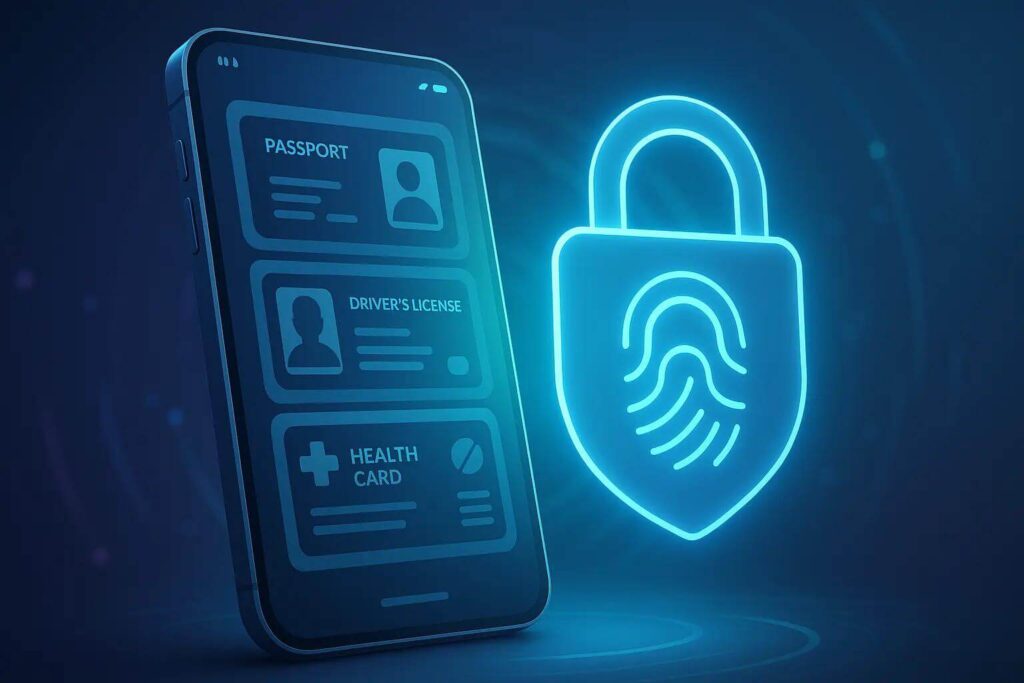
Digital Identity Wallets Could Become the New Passport
One possible future involves digital identity wallets.
These are applications or systems designed to store verified digital credentials that users can present to different services.
The concept is similar to a digital wallet for payments, except the wallet contains identity credentials rather than money.
A user might store verified information related to:
- age
- identity
- residency
- payment details
- account ownership
When registering with a casino, the player could choose which verified information to share.
Instead of:
Upload passport → upload proof of address → wait for review
the process could become:
Select verified identity → approve sharing → continue
For players, this could make onboarding significantly faster.
For operators, it could reduce repetitive verification work and potentially improve data quality.
Biometrics Could Make Authentication Almost Invisible
Biometric technology is another major piece of the digital identity puzzle.
Millions of consumers already use:
- facial recognition
- fingerprint authentication
- device biometrics
to access banking applications, approve payments, unlock phones, and protect sensitive accounts.
Online gambling could increasingly adopt similar systems.
A returning player might confirm their identity through facial recognition rather than entering another password.
A high-risk account action could require biometric confirmation.
Withdrawals could potentially include an additional biometric authentication step to reduce account takeover fraud.
The key distinction is between identification and authentication.
A biometric scan does not automatically replace the entire KYC process. But once an identity has been properly established, biometrics can help confirm that the person accessing the account is the same verified user.
That could make repeated authentication much faster.
Reusable KYC Could Change Casino Registration
One of the biggest opportunities is reusable verification.
Today, verification is often platform-specific.
A player may complete KYC at Casino A and then repeat a similar process at Casino B.
In a reusable model, a trusted identity provider could verify the player once. Participating operators could then request validated credentials from that provider, subject to regulation and player consent.
This could create a more portable identity ecosystem.
The benefits are obvious:
- faster registration
- fewer repeated document uploads
- reduced verification fatigue
- potentially more consistent information
- easier switching between regulated platforms
This does not mean casinos would stop conducting compliance checks.
Different operators and jurisdictions may require different information, and additional verification may still be necessary in some circumstances.
But the basic identity layer could become reusable.
Verification Could Move Into the Background
The ultimate goal may be something similar to modern digital payments.
When contactless payments work well, users barely think about the infrastructure behind them.
Identity verification could evolve in the same direction.
A future registration journey might look like this:
A player chooses “Verify with Digital ID.”
The platform requests confirmation that the person is an adult with a valid verified identity.
The player approves the request using a fingerprint or face scan.
The required credentials are securely transmitted.
The account is verified almost immediately.
From the player’s perspective, the process takes seconds.
Behind the scenes, however, complex identity, security, and compliance systems are still operating.
Invisible verification does not mean no verification.
It means removing unnecessary friction from the visible user journey.
Faster Verification Could Improve Player Experience
The clearest benefit is convenience.
Lengthy verification processes can interrupt registration and withdrawals.
Digital identity could reduce:
- waiting periods
- manual document checks
- repeated data entry
- rejected photographs
- account verification delays
This could be particularly valuable for mobile users.
Taking photographs of documents, uploading files, and completing long forms on a small screen is rarely an ideal experience.
A verified digital credential could turn a multi-step process into a few taps.
Security Could Improve Too
Convenience is only part of the argument.
Digital identity could potentially improve security.
Traditional identity documents create sensitive data that must be transmitted, processed, and stored.
Every additional copy creates another potential point of exposure.
A credential-based system could reduce the amount of raw identity information shared between services.
Instead of sending an entire passport scan to prove age, for example, a trusted identity system could potentially confirm that the user meets the required age threshold.
Biometric authentication could also make stolen passwords less useful.
Account takeover becomes more difficult when sensitive actions require confirmation tied to the legitimate user’s device or biometric credentials.
Privacy Could Become Better, or Worse
Digital identity creates an interesting contradiction.
It could significantly improve privacy.
It could also create new privacy risks.
The positive scenario involves data minimisation.
The tension between identity requirements and player privacy is already shaping the industry, as explored in The Rise of Anonymous Gambling – Privacy-First Platforms in a Regulated World, where privacy-first experiences collide with the compliance requirements of regulated gambling.
Casinos receive only the information necessary for a particular verification purpose rather than collecting unnecessary personal details.
Users gain greater visibility into:
- what information is requested
- who receives it
- why it is required
- when permission was granted
But centralized identity infrastructure could also become extremely sensitive.
If one digital identity connects multiple gambling accounts, payment relationships, personal details, and behavioral information, the consequences of misuse or a security failure could be significant.
The question becomes:
Who controls the identity?
The casino?
A government?
A private identity provider?
The player?
That governance question may ultimately be more important than the technology itself.
Consent Must Be Meaningful
A future digital identity system should not turn consent into another button users automatically press.
Players should understand what information they are sharing.
Ideally, identity systems would make permissions granular.
A casino may need confirmation that a player is above the legal gambling age.
It does not necessarily need every detail contained in the credential used to establish that fact.
This concept, sharing only what is necessary, could become central to privacy-focused KYC.
It would represent a significant shift from document collection toward credential verification.
What Happens When Technology Gets It Wrong?
No identity system is perfect.
Biometric systems can fail.
Databases can contain errors.
Credentials can expire.
Accounts can be incorrectly flagged.
Devices can be lost or stolen.
The smoother verification becomes, the more important recovery systems become.
Players need clear alternatives when automated verification fails.
A fully automated system that works for 99% of users may still create serious frustration for the remaining 1% if there is no effective human support.
Invisible KYC should therefore reduce friction without making the process impossible to challenge.
Digital Identity Could Help Responsible Gambling Systems
Reusable identity could also influence player protection.
Today, gambling activity can be fragmented across multiple operators.
Depending on the regulatory model and legal permissions, interoperable identity systems could potentially make certain protections more consistent across platforms.
For example, identity technology could support stronger enforcement of:
- age restrictions
- self-exclusion
- duplicate account controls
- identity-based restrictions
However, this area requires particularly careful privacy safeguards.
A system designed for player protection should not automatically become a mechanism for excessive surveillance.
The balance between safety and privacy will remain central.
Regulation Will Determine How Fast Adoption Happens
The technology for smoother identity verification already exists in many forms.
The harder challenge is creating trusted frameworks around it.
Regulators must consider:
- accepted identity providers
- security standards
- biometric processing
- data retention
- cross-border recognition
- user consent
- liability when verification fails
Gambling makes these questions particularly important because operators handle both financial transactions and regulated access.
Different jurisdictions may adopt digital identity at different speeds.
As a result, operators may still need multiple verification systems for different markets.
Will Passwords Eventually Disappear?
Digital identity is part of a broader movement away from traditional passwords.
Passkeys, device authentication, and biometrics increasingly allow users to access services without remembering complex credentials.
Online casinos could follow this trend.
Future accounts may rely on combinations of:
- digital identity credentials
- trusted devices
- biometrics
- passkeys
instead of passwords.
This could reduce phishing risks while making account access easier.
For players, logging into a casino could eventually feel similar to opening a banking application.
Could Verification Become a Competitive Advantage?
Historically, KYC was viewed primarily as a compliance obligation.
That perception may change.
If one casino verifies users in seconds while another requires multiple document uploads and lengthy waits, verification quality becomes part of the customer experience.
Operators may begin competing on:
- onboarding speed
- verification simplicity
- privacy controls
- withdrawal authentication
- account security
Trust and convenience could become closely connected.
This push toward frictionless verification mirrors the wider move toward instant digital experiences explored in The Rise of Instant-Play Casinos – Are Downloads Becoming Obsolete?, where reducing unnecessary steps is becoming central to the modern casino experience.
The best verification system may be the one players barely notice.
The Future Is Not No-KYC
Privacy-focused gambling has created demand for platforms advertising limited or simplified verification.
But the long-term evolution of regulated online gambling is unlikely to mean removing identity checks entirely.
Instead, the more realistic future is better KYC.
Verification could become:
- faster
- reusable
- privacy-conscious
- automated
- interoperable
- easier to understand
Players would still prove who they are.
They simply would not need to repeat the same cumbersome process every time.
Final Thoughts
Digital identity could fundamentally change one of the most frustrating parts of online gambling.
Biometric authentication, reusable verification, digital identity wallets, and privacy-focused credentials have the potential to transform KYC from a visible administrative hurdle into a nearly invisible layer of the player experience.
The benefits could be significant:
- faster onboarding
- fewer repeated document uploads
- stronger authentication
- better fraud prevention
- improved privacy through data minimisation
- smoother cross-platform experiences
But convenience cannot come at the expense of control.
Digital identity systems will handle extremely sensitive information, making security, consent, transparency, and governance essential.
The future of casino verification is therefore unlikely to be about eliminating KYC.
It will be about redesigning it.
If the industry gets that balance right, players may still be verified just as thoroughly as they are today, perhaps even more securely, while barely noticing the process happening at all.
Sources: