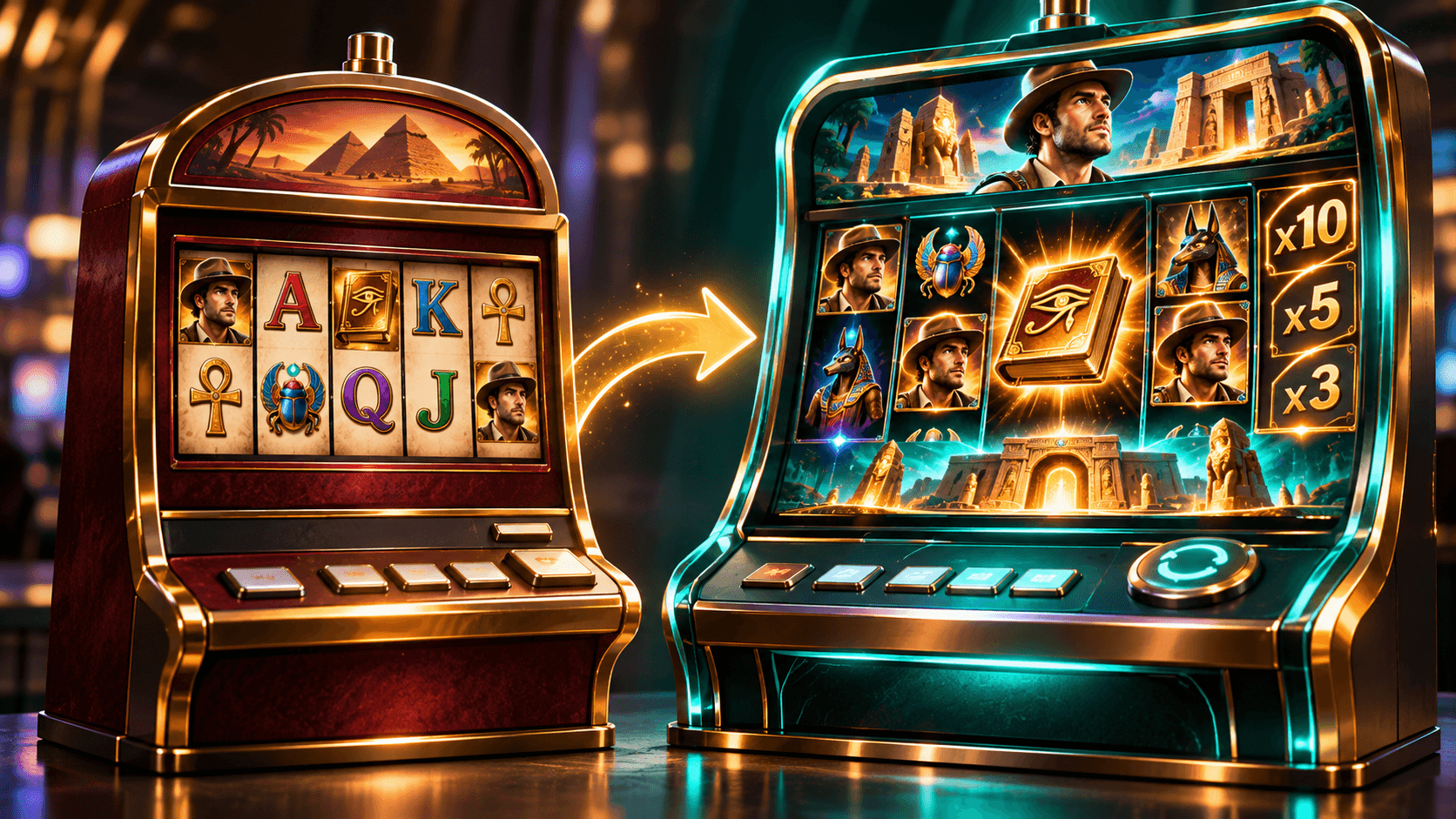
In the world of online slots, a successful game rarely has to remain a standalone title.
A popular slot can return years later with updated graphics, a different reel layout, new bonus mechanics, or a completely redesigned mathematical model. Sometimes the sequel looks almost identical to the original. Other times, it shares little more than a familiar name, character, or theme.
This trend is visible across some of the industry’s most recognizable slot franchises, including Book of Dead, Gonzo’s Quest and Big Bass Bonanza.
For developers, revisiting a successful title offers an obvious advantage: players may already recognize the game.
For players, however, the situation is more complicated.
Does a sequel genuinely improve the original experience, or does it simply repackage familiar gameplay under a recognizable name?
The answer depends on what actually changes between versions. New graphics may make a game look more modern, but revised bonus mechanics, volatility, and payout structures can fundamentally change how it plays.
Understanding those differences is becoming increasingly important as slot franchises expand beyond their original releases.
Why Are Slot Developers Creating More Sequels?
Slot sequels are not entirely new. Developers have been revisiting successful themes and mechanics for years.
What makes the trend interesting is the number of ways a familiar title can now be expanded.
A sequel might introduce a new bonus round, replace conventional reels with a different symbol system, add a multiplier feature, or adapt the original game to another mathematical structure.
This approach also reflects the wider evolution of slot development. Our article Next-Gen Slot Providers You Need to Know in 2025 explores the studios and innovations shaping modern online casino games.
Some releases preserve the original formula almost completely.
Others use the original game primarily as a recognizable starting point.
There are several reasons why this approach makes sense for developers.
Brand recognition reduces the need for introduction
When a completely new slot launches, players have to discover its name, theme, and gameplay.
A sequel starts with an existing identity.
Someone who recognizes the characters, symbols, or soundtrack of an earlier game may be more willing to explore a new version.
This does not guarantee that the sequel will succeed, but it gives developers a familiar concept to build upon.
Successful mechanics can be expanded
Sometimes the original game introduces a feature that players find particularly engaging.
Instead of abandoning that mechanic, developers can build additional variations around it.
A sequel might add more opportunities for multipliers, introduce different bonus conditions, or modify how special symbols interact.
The challenge is maintaining what made the original recognizable while offering a meaningful reason to try the new version.
Sequels allow developers to experiment
A familiar franchise can also provide a framework for testing different gameplay approaches.
One version might use traditional paylines.
Another could introduce cluster wins, cascading symbols, or more complex bonus structures.
This allows the same visual identity to support several different experiences.
However, a familiar name does not mean the mathematical characteristics will remain the same.
Book of Dead: How a Familiar Slot Became a Franchise
Book of Dead is one of the most recognizable examples of a slot franchise built around a successful original.
Developed by Play’n GO, the original game follows explorer Rich Wilde through an ancient Egyptian setting.
Its central gameplay is relatively straightforward.
Players spin a five-reel slot featuring conventional paylines, Egyptian-themed symbols, and a free-spins bonus triggered by the Book symbol.
During the free-spins feature, a selected symbol can expand to cover entire reels, potentially creating winning combinations.
The mechanic became one of the defining characteristics of the game.
The recognizable character, Egyptian setting, and expanding-symbol bonus subsequently provided a foundation for related releases.
Rich Wilde and the Tome of Madness
One example is Rich Wilde and the Tome of Madness, which continues the adventures of the same protagonist but explores a different setting and gameplay structure.
Rather than simply reproducing Book of Dead’s Egyptian environment, the game moves into a supernatural theme inspired by cosmic horror.
This illustrates an important type of sequel development.
The connection is primarily the character and franchise identity, while the gameplay experience can change considerably.
A player who enjoys Book of Dead’s relatively direct reel structure should not automatically expect the same experience from every Rich Wilde title.
What players should compare
The most useful comparison is not whether the sequel has the same character.
It is whether the game retains the mechanics that made the original appealing.
Does it still use conventional paylines?
How does the bonus feature activate?
Are expanding symbols still central to the gameplay?
Has the volatility changed?
A familiar character can create continuity, but the answers to these questions determine whether the actual playing experience remains familiar.
Gonzo’s Quest: From Cascading Reels to New Variations
Gonzo’s Quest provides another interesting example of franchise evolution.
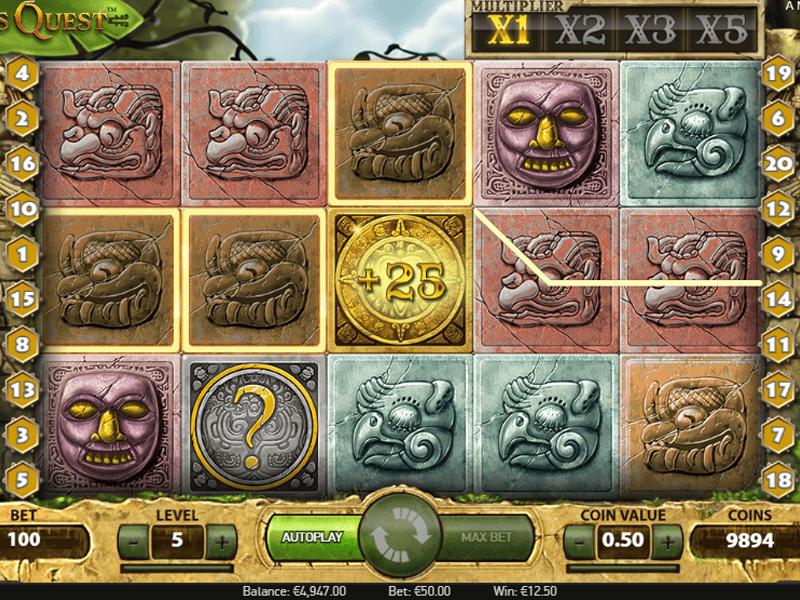
Originally released by NetEnt, the game became known for its distinctive stone-block symbols and Avalanche mechanic.
Instead of conventional spinning reels, symbols fall into place.
When a winning combination occurs, the winning symbols disappear and new ones fall into the empty positions.
This allows multiple wins to occur during a single paid round.
The original also uses increasing multipliers during consecutive Avalanche wins, adding another layer to the gameplay.
At the time of its introduction, this style of presentation helped distinguish Gonzo’s Quest from more conventional slot machines.
Gonzo’s Quest Megaways
Gonzo’s Quest Megaways revisits the recognizable franchise through a different reel system.
Megaways games use a variable number of symbols across the reels, creating a changing number of potential winning combinations.
This is more than a visual update.
It changes how wins are formed and how the reel structure behaves.
Although the sequel retains the recognizable explorer and adventurous setting, the mathematical framework differs from the original.
Is the sequel automatically better?
Not necessarily.
Some players may prefer the simpler structure of the original Gonzo’s Quest.
Others may enjoy the additional variation created by Megaways.
The newer game may offer a different rhythm, different win distributions, and a different bonus experience.
But those differences do not automatically make it more profitable or more enjoyable for every player.
A more complex mechanic is not necessarily an improvement. It is a different design choice.
Big Bass Bonanza: How One Theme Supports Multiple Games
The Big Bass Bonanza franchise demonstrates how a recognizable theme can support multiple variations.
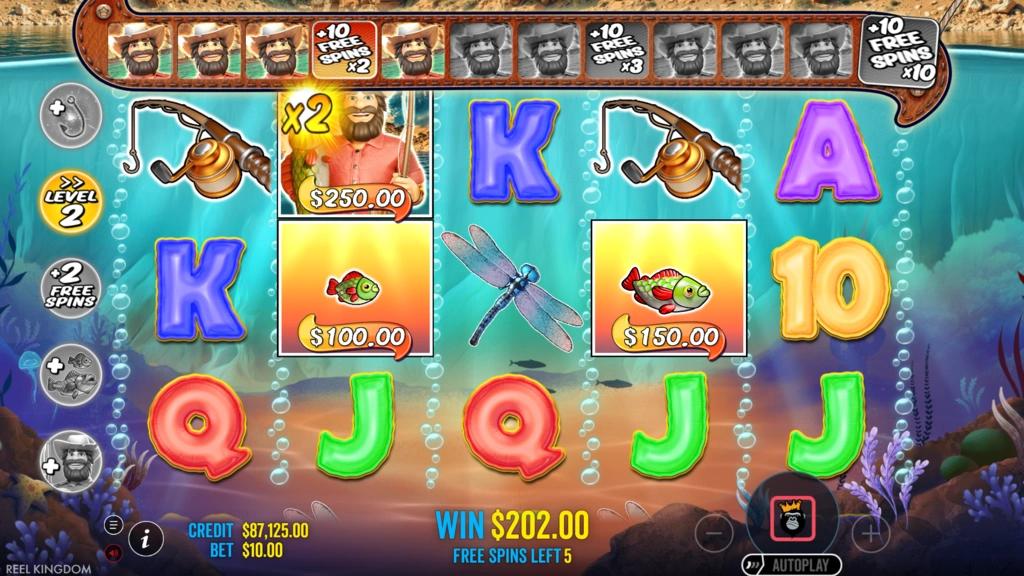
The original game, developed by Reel Kingdom and released through Pragmatic Play, uses a fishing theme with money symbols and a fisherman wild.
Its defining bonus feature involves free spins in which fisherman symbols collect qualifying money-symbol values.
This mechanic creates a recognizable relationship between the game’s visual theme and its bonus system.
Subsequent titles in the wider Big Bass family have revisited that concept through different environments, reel structures, and bonus arrangements.
Examples include Big Bass Splash and Big Bass Hold & Spinner.
Why does the franchise keep returning?
The fishing theme is easy to recognize.
The central mechanic is also relatively easy to communicate: money symbols appear, and special fisherman symbols can collect them during qualifying features.
That gives developers a repeatable concept.
New releases can modify the surrounding gameplay while preserving enough of the original identity to remain recognizable.
However, not every Big Bass title uses the same bonus mechanics.
Some introduce additional features or different ways of generating payouts.
This means a player familiar with the original should still examine the rules of each new version.
Familiar visuals can hide different mathematics
Two games may use similar fish symbols, sound effects, and characters while producing very different payout patterns.
One may offer more frequent smaller wins.
Another may place greater emphasis on rare bonus outcomes.
The theme alone provides little information about these differences.
This is why players should avoid assuming that every title in a familiar franchise behaves like the original.
What Actually Changes Between an Original Slot and Its Sequel?
Not every sequel is a complete redesign.
Some are relatively conservative updates.
Others fundamentally change how the game works.
The differences generally fall into several categories.
| Element | Original game | Possible sequel changes |
| Graphics | Original visual style | Updated animation, lighting, and interface |
| Reel layout | Fixed structure | Different reels, rows, or variable symbol counts |
| Bonus features | Original free spins or special symbols | Additional bonus rounds, multipliers, or collection mechanics |
| Volatility | Original payout distribution | More frequent smaller wins or rarer larger outcomes |
| Maximum payout | Original advertised limit | Higher, lower, or unchanged maximum |
| RTP | Original theoretical return | Different RTP or multiple configured versions |
| Theme | Original setting and characters | New environments with familiar branding |
| Game pace | Original animation and feature frequency | Faster rounds or longer bonus sequences |
A sequel can change several of these elements simultaneously.
That makes direct comparison more useful than relying on the game’s title or release date.
Updated Graphics: The Most Visible Change
Graphics are often the first difference players notice.
A sequel may introduce sharper symbols, more detailed backgrounds, smoother animation, and improved visual effects.
Characters may be redesigned.
Bonus features may use more elaborate transitions.
The interface may also be adapted for mobile screens.
These changes can improve the presentation without altering the underlying probabilities.
For example, a game with modern 3D graphics could theoretically use the same reel mathematics as a much older title.
Likewise, a visually simple slot could offer a more complex payout structure than a newer, more elaborate game.
Better graphics do not mean better odds
This is an important distinction.
Visual quality and mathematical return are separate characteristics.
A sequel can look significantly more sophisticated while offering a lower theoretical RTP than the original.
It can also preserve similar mathematics while presenting outcomes through more elaborate animations.
Players should therefore treat graphics as an entertainment feature, not as evidence of improved winning potential.
Bonus Mechanics: Where Sequels Can Become Truly Different
The most meaningful changes often occur in bonus mechanics.
Traditional slots might rely on free spins, wild symbols, and scatter triggers.
Newer versions can combine these familiar elements with additional systems.
For a closer look at the features behind these changes, explore Beyond the Spin: The Game Mechanics Hooking Players in 2025, which examines how developers are expanding traditional slot gameplay through new mechanics and interactive features.
Examples include cascading wins, symbol collection, expanding multipliers, persistent wilds, and variable reel structures.
Some games also allow players to purchase direct access to particular bonus features where regulations permit.
These changes can substantially alter the experience.
More features do not always mean more value
Imagine a hypothetical original slot with one free-spins feature.
Its sequel introduces three different bonus modes.
At first glance, the sequel appears to offer more opportunities.
However, each bonus mode has its own triggering conditions and payout distribution.
The addition of more features does not automatically increase the game’s expected return.
The developer can distribute the game’s theoretical payout across the new features while maintaining a similar overall house advantage.
In some cases, a sequel may offer a higher maximum win while making the largest outcomes substantially less frequent.
The number of bonus features tells players how varied the experience might be, not how favorable the game is mathematically.
Volatility: Why the Sequel Might Feel Completely Different
Volatility is one of the most important characteristics to compare between slot versions.
It describes how widely results can vary over time.
A lower-volatility game generally distributes returns through more frequent smaller wins.
A higher-volatility game may produce longer sequences without substantial payouts, interrupted by occasional larger results.
Two games in the same franchise can have different volatility profiles.
This can make the sequel feel very different even when the symbols and theme remain similar.
A hypothetical comparison
Consider two fictional slots belonging to the same franchise.
ORIGINAL SLOT
Lower volatility
More frequent smaller returns, with fewer extreme outcomes.
SEQUEL
Higher volatility
Less frequent significant wins, with a greater emphasis on rare large payouts.
Illustrative comparison only. These are not statistics from a specific slot franchise.
Both games could theoretically have the same RTP.
Yet the experience of playing them could be substantially different.
One might feel relatively steady.
The other might involve greater fluctuations.
Neither volatility profile guarantees better financial results.
RTP: Does a Newer Slot Offer a Better Return?
Return to Player, or RTP, describes the theoretical proportion of total wagers a game is designed to return over a very large number of rounds.
A hypothetical slot with a 96% RTP has an expected return of $96 per $100 wagered over the long run, corresponding to a 4% theoretical house advantage.
This does not mean an individual player who spends $100 will receive $96 back.
Short-term results can vary substantially.
When comparing an original game with its sequel, RTP deserves particular attention.
A sequel can have a different RTP
Developers may design sequels with different mathematical models.
Even when a sequel preserves much of the original gameplay, the theoretical return can change.
Some online slots are also supplied in multiple RTP configurations, meaning the same title can have different theoretical returns depending on the version offered by a particular operator.
This creates an important complication.
A player cannot always rely on an RTP figure found in a review of another casino.
The most relevant information is the RTP displayed in the rules or information section of the exact game version being played.
Higher RTP does not guarantee a better session
A higher theoretical RTP generally means a lower expected house advantage, assuming the figures are comparable.
However, it does not predict an individual’s short-term outcome.
A high-volatility game with a relatively high RTP can still produce a long losing session.
A lower-RTP game can occasionally produce a substantial win.
RTP describes the long-run mathematical expectation.
Volatility describes how results are distributed around that expectation.
Both matter when comparing different versions.
Maximum Win: Why Bigger Numbers Attract Attention
Another common feature of modern slot marketing is the advertised maximum win.
A sequel may promote a larger potential payout than its predecessor.
For example, a hypothetical original game might advertise a maximum win of 5,000 times the stake, while its successor offers a maximum of 20,000 times.
The second figure looks more impressive.
But it does not reveal how likely the maximum payout is.
A very large advertised maximum may be associated with an extremely rare combination of events.
It might require a specific bonus feature, multiple multipliers, or an unusual sequence of symbols.
Maximum potential is not expected performance
A game with a 20,000x maximum win is not automatically better than one with a 5,000x maximum.
Players should consider how the game distributes its returns.
A larger maximum payout can coexist with a lower frequency of significant wins.
It can also coexist with a lower RTP.
The maximum win is useful for understanding the game’s possible extremes, but it should not be treated as a measure of profitability.
Are Some Sequels Mostly Rebrands?
Not every new edition introduces substantial gameplay innovation.
Sometimes developers release a visually updated game that preserves much of the original structure.
The background may change.
The characters may receive new costumes.
Symbols may be redesigned.
The soundtrack may be replaced.
But the core betting experience remains familiar.
These releases can still appeal to players who enjoy the original format.
A refreshed presentation is not inherently a problem.
The more interesting question is whether the sequel is being presented as a major gameplay evolution when the actual differences are relatively small.
How can players recognize a minor redesign?
The easiest method is to compare the rules rather than the promotional material.
If both games have the same reel layout, paylines, bonus triggers, and payout structure, the differences may be largely cosmetic.
If the sequel introduces a different reel system, new symbol interactions, or a revised bonus structure, the gameplay change is more substantial.
Players should also compare RTP and volatility.
Two games that look nearly identical may still have different mathematics.
Conversely, two games with very different visual themes may use similar underlying systems.
Why Familiar Slot Characters Keep Returning
Successful slot franchises often develop recognizable identities.
These can include recurring characters, distinctive symbols, memorable music, or familiar bonus animations.
Rich Wilde is associated with adventure-themed Play’n GO releases.
Gonzo is recognizable through his exploration theme and distinctive visual style.
The fisherman character is central to the Big Bass franchise.
These identities make new releases easier to recognize.
They can also create expectations.
A player who enjoyed a particular bonus mechanic may assume that the next game featuring the same character will offer a similar experience.
Sometimes that assumption is correct.
Other times, the sequel uses the familiar character to introduce a completely different game.
This is why brand recognition can be both helpful and misleading.
It helps players identify a franchise, but it does not necessarily explain how the new game works.
The Role of Nostalgia in Slot Sequels
Nostalgia is another reason established franchises can remain attractive.
A familiar soundtrack or symbol design may remind players of a game they enjoyed previously.
The sequel can recreate some of that familiarity while introducing new features.
This approach is common across entertainment industries.
Video games, films, and television series frequently revisit successful concepts because audiences recognize them.
Casino games follow a similar pattern, although the financial risks make the comparison more complicated.
In gambling, familiarity should not be mistaken for predictability.
A player who remembers winning on an earlier slot may feel more confident trying its sequel.
But previous outcomes on the original game do not influence the random results of the new title.
The emotional connection may carry over.
The mathematical advantage does not.
Could Slot Sequels Make Games More Complicated?
As developers add features, some sequels become more difficult to understand.
A traditional slot may have one main bonus round.
A newer version could introduce several interacting features, different multiplier types, special symbol collections, and multiple bonus-entry options.
For experienced players, this variety may be entertaining.
For beginners, it can make the game harder to evaluate.
A player may understand what a feature looks like without understanding how it affects payouts.
For example, a multiplier might apply only to certain symbols.
A special wild might activate under limited conditions.
A collection feature might require several specific events before awarding a prize.
These details matter.
The more complicated a game becomes, the more important its paytable and rules become.
A good sequel should not require players to guess how their wagers are settled.
Do Sequels Replace the Original Games?
Not necessarily.
In some cases, original games remain available alongside their successors.
This gives players a choice between familiar mechanics and newer variations.
An older slot may continue appealing to people who prefer its simpler structure.
A sequel may attract those who want updated visuals or more elaborate features.
However, availability depends on individual casino operators, licensing agreements, technical compatibility, and regulatory requirements.
Some older games may eventually disappear from certain platforms.
Others may remain available for many years.
A sequel’s release does not automatically mean the original has become obsolete.
How to Compare a Slot Sequel With the Original
Before trying a new version of a familiar game, players can compare several practical details.
Slot sequel comparison checklist
0 of 8 checked
Reel structure
Does the sequel use the same paylines, reel layout, or ways-to-win system?
Bonus mechanics
Are the free spins, wild symbols, and multipliers genuinely different?
RTP
What theoretical return is displayed in the exact game version?
Volatility
Are payouts expected to be distributed differently?
Maximum win
Has the advertised maximum changed, and what conditions apply?
Betting limits
Does the sequel support the same minimum and maximum stakes?
Bonus purchases
Are optional feature purchases available, and how do they affect cost and risk?
Gameplay clarity
Are the rules understandable without relying on promotional descriptions?
Copy checklist
This approach makes it easier to separate meaningful gameplay changes from cosmetic improvements.
It also helps players identify whether a sequel matches their preferences without assuming that newer automatically means better.
What Does the Growth of Slot Franchises Mean for the Industry?
The expansion of established slot franchises reflects a broader pattern in digital entertainment.
Recognizable intellectual property can support multiple products.
Developers can revisit familiar concepts while introducing different mechanics, themes, and presentation styles.
For casino operators, sequels can provide recognizable additions to game libraries.
For developers, they offer opportunities to build on established designs.
For players, they create more choice within familiar franchises.
However, there is also a potential downside.
If too many new releases rely on existing names without meaningful innovation, game libraries may begin to feel repetitive.
Players may encounter numerous versions of similar titles without immediately understanding what distinguishes them.
This makes clear game information increasingly valuable.
A sequel should ideally communicate what is new, not simply rely on the reputation of the original.
Will the Future of Slots Be Built Around Franchises?
Established slot franchises are likely to remain part of the industry, although it is difficult to predict how dominant they will become.
Developers have incentives to revisit recognizable titles, particularly when those titles support distinctive mechanics or characters.
At the same time, entirely new games remain important.
Without original concepts, there would be no successful franchises to expand in the first place.
The most interesting future may involve a combination of both approaches.
Developers may continue releasing original titles while using sequels to experiment with different mathematical structures and bonus systems.
Some franchises could become collections of games that share a theme but offer substantially different experiences.
Others may preserve one recognizable formula across multiple editions.
For players, the distinction will remain important.
A familiar name can suggest what a game looks like.
It cannot reliably tell someone how the game will behave.
Final Thoughts
Casino game sequels demonstrate how successful slot titles can evolve beyond their original releases.
Book of Dead established a recognizable character and bonus mechanic that helped support a wider family of related games.
Gonzo’s Quest showed how a distinctive reel system could become the foundation for new variations.
Big Bass Bonanza illustrates how a memorable theme and collection mechanic can be revisited across multiple releases.
These franchises show that sequels can serve different purposes.
Some introduce meaningful gameplay changes.
Others refine familiar features or update the presentation.
And some primarily benefit from the recognition built by earlier titles.
The most important lesson for players is that a sequel should be evaluated as a separate game, not simply as an improved version of its predecessor.
Graphics, bonus features, RTP, volatility, and payout structures can all change, even when the name and characters remain familiar.
A newer release may be more visually impressive or mechanically complex.
But that does not automatically make it more enjoyable, easier to understand, or mathematically more favorable.
Ultimately, the best way to judge a slot sequel is to look beyond the branding and examine what has actually changed.
A familiar title may bring players back, but it is the actual gameplay, not the sequel’s name, that determines whether the new version offers something different.
Sources: