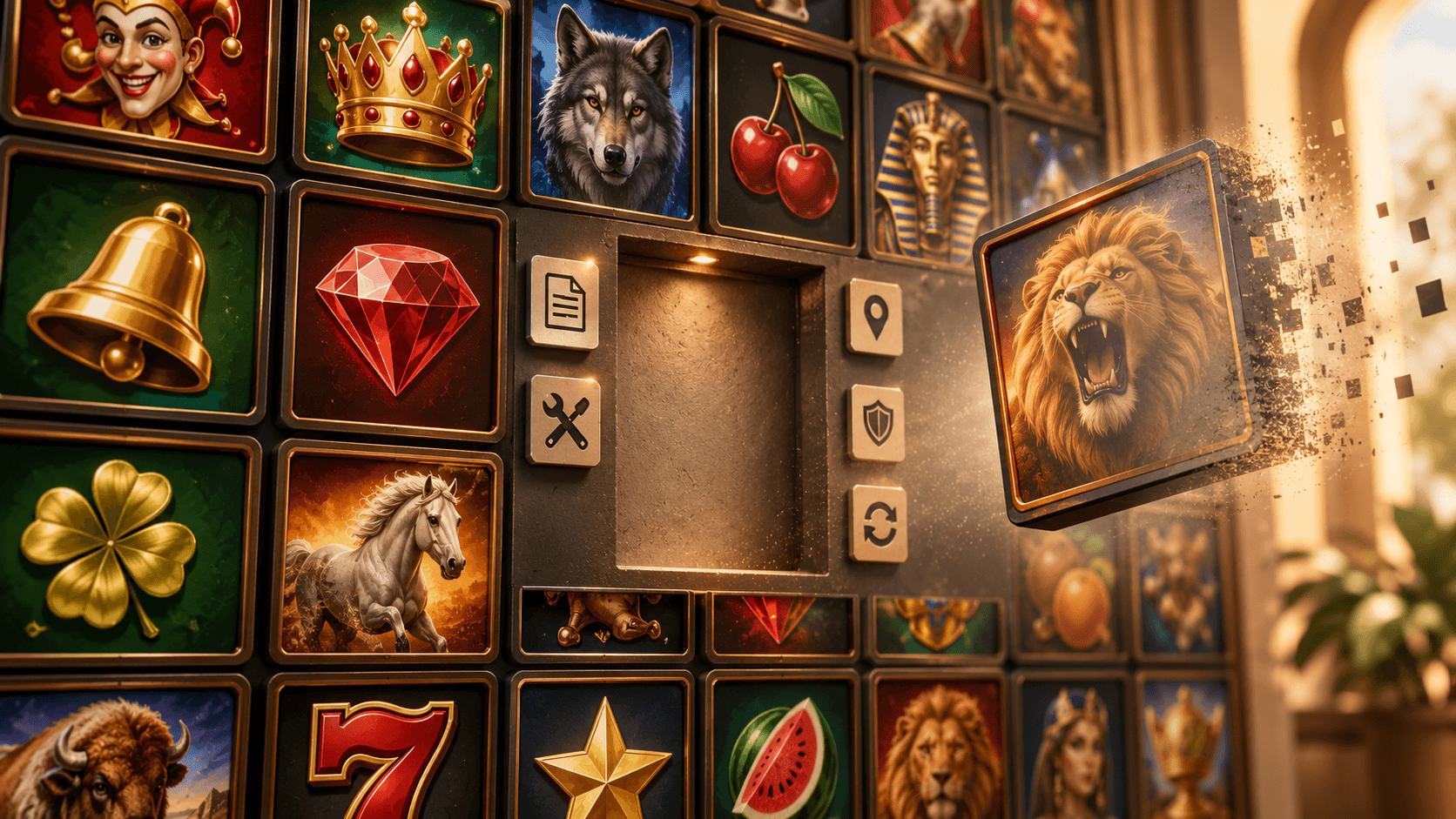
You find a slot you enjoy, play it regularly, and eventually learn exactly how it works.
Then one day, it is gone.
You search the casino lobby. Nothing. You check the provider section. Still nothing. Perhaps the game appears on another casino, or maybe it seems to have disappeared everywhere.
For players, this can feel surprisingly random. Online casino libraries often contain thousands of titles, so it is easy to assume that once a game has been added, it will remain available indefinitely.
That is not how casino libraries work.
The games displayed inside an online casino are part of a constantly changing network of operators, software providers, aggregators, licensing agreements, technical systems, and regulatory requirements. Games can be added, restricted, temporarily disabled, updated, or permanently removed.
Sometimes the reason is commercial.
Sometimes it is technical.
Sometimes an entire provider leaves a particular market.
And sometimes regulators introduce requirements that make an existing version of a game unsuitable for continued distribution.
So what actually happens when a slot disappears, and what does it mean for players who were already using it?
Casino Libraries Are More Dynamic Than They Look
A casino lobby can appear to be one enormous permanent collection.
Behind the interface, however, games may come from dozens or even hundreds of separate suppliers.
The casino itself usually does not develop every slot in its library. Instead, operators integrate content from external game studios, directly or through aggregation platforms.
To understand how those relationships work behind the scenes, Casino Aggregators Explained – Why Thousands of Games Can Sit Under One Roof looks at how a single integration can connect an operator with games from dozens of different providers.
This is how a single casino can offer thousands of titles from many different developers.
It also means the operator does not necessarily have permanent control over every game it displays.
Access depends on agreements between different companies and, importantly, on whether a particular title is permitted in the player’s market.
When one part of that relationship changes, the game can disappear from the lobby.
Licensing Agreements Can Expire
One of the simplest explanations is a commercial agreement ending.
Casino operators and software suppliers operate under contracts that determine where and how games can be distributed.
Those arrangements can change.
A casino might decide not to renew its relationship with a particular provider. A provider might change its distribution strategy. An aggregator might alter the content available through its platform.
If the relevant agreement ends, games associated with it may be removed.
This does not necessarily mean anything was wrong with the game.
It can simply be a business decision.
The same thing happens across digital entertainment. Movies disappear from streaming services when distribution rights change, and games can disappear from online stores when licensing agreements expire.
Casino content is similarly dependent on commercial relationships.
An Entire Provider Can Leave a Market
Sometimes players do not lose one game.
They lose dozens.
If multiple titles from the same studio disappear at approximately the same time, the change may be happening at provider level rather than game level.
A supplier can stop operating in a particular jurisdiction for several reasons.
Regulatory requirements may change.
The provider may decide that maintaining certification in the market is no longer commercially worthwhile.
Its relationship with local operators may end.
The company may also change which countries it considers strategically important.
When this happens, an entire catalog can disappear from casinos serving that market.
This helps explain why a game may still be available to players in one country while being completely inaccessible in another.
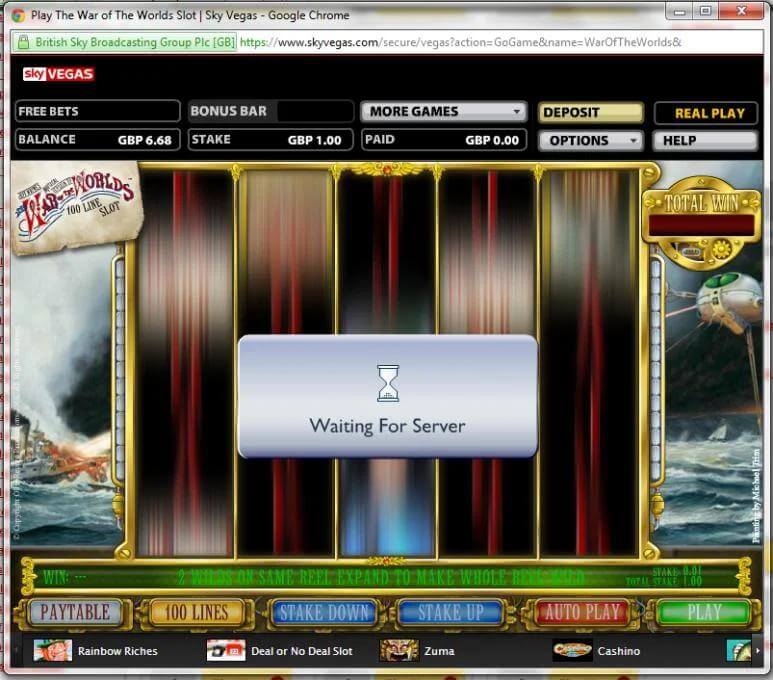
Regulation Can Remove Games From Particular Markets
Online gambling rules are not identical around the world.
A game that complies with requirements in one jurisdiction may need modifications before it can be offered somewhere else.
Regulators can establish rules concerning areas such as:
- game speed
- autoplay
- interface design
- result presentation
- responsible gambling features
- technical standards
- game functionality
A clear example comes from Great Britain.
The UK Gambling Commission’s Remote Gambling and Software Technical Standards include specific requirements for online game design. For slots, these include a minimum game cycle of 2.5 seconds and restrictions on features such as autoplay and functionality designed to speed up play.
When regulations change, providers may need to update existing games.
If they do not, those versions may no longer be suitable for the regulated market.
From the player’s perspective, the result can look simple:
The game disappeared.
Behind the scenes, however, the reason may be regulatory compliance rather than a casino choosing to remove a popular title.
Games Sometimes Need Technical Updates
Not every disappearance is permanent.
A game may temporarily become unavailable because its provider is performing maintenance or deploying an update.
Casino games depend on software infrastructure.
They communicate with provider servers, casino systems, wallets, session management tools, and sometimes aggregation platforms.
Changes to any of these systems can require maintenance.
Providers may update games to:
- fix bugs
- improve compatibility
- update graphics
- change interfaces
- address security issues
- meet new technical standards
- improve mobile performance
During this process, a game might temporarily disappear or display an unavailable message.
Once the work is completed, it can return.
This is why players should not automatically assume that a missing game has been permanently discontinued.
Older Games Can Become Technically Outdated
Online casino technology changes quickly.
One of the biggest historical transitions was the move away from Adobe Flash toward HTML5.
Older games built around obsolete technology eventually became difficult or impossible to support across modern browsers and mobile devices.
Providers faced a choice.
They could rebuild older titles using newer technology or retire them.
Popular games were more likely to justify redevelopment.
Less successful titles could simply disappear.
Similar decisions continue today, even though the technologies involved are different.
Maintaining old software costs money.
If very few people are playing a particular game, updating it for new devices, regulations, APIs, or platform requirements may not make commercial sense.
Sometimes a New Game Replaces an Old One
Game providers regularly revisit successful concepts.
Instead of maintaining an older title indefinitely, a studio might release:
- a sequel
- a remastered version
- an updated mobile version
- a redesigned edition
- a game using similar mechanics with newer features
The replacement may use better graphics, improved performance, or a newer mathematical model.
From a provider’s perspective, directing players toward the newer version can make more sense than maintaining two similar products.
For players, however, a replacement is not necessarily identical.
Even when two games share the same theme, differences in volatility, features, paylines, bonus mechanics, or presentation can change the experience considerably.
A newer version is therefore not always a direct substitute for a discontinued favorite.
Why Can I Play the Game at Another Casino?
This is where things become confusing.
Suppose your favorite slot disappears from Casino A.
You search online and discover that Casino B still offers it.
What happened?
Several explanations are possible.
Casino A may have ended its commercial relationship with the provider.
Casino B may use a different aggregator.
The two casinos may operate under different licenses.
They may serve different geographic markets.
One operator may have temporarily disabled the game while another has not.
Game availability is therefore not universal.
A title existing somewhere on the internet does not necessarily mean every casino has the right or technical ability to offer it.
Why Can My Friend Still See the Game?
Location can create another strange situation.
Two players may use the same casino and see different game libraries.
Providers and operators can apply geographic restrictions.
A title might be available in Finland but unavailable in Great Britain, for example, depending on licensing, certification, commercial agreements, and local regulation.
Casino platforms can therefore customize game availability based on jurisdiction.
Regional differences go much further than availability alone. How Casino Games Are Designed for Global Audiences – One Game, Different Markets explores how regulation, localization, betting preferences, themes, and technical requirements can change how the same casino content is offered across different countries.
The lobby you see is not necessarily the same lobby every other player sees.
This is becoming increasingly important as online gambling markets develop more country-specific rules.
What Happens to a Game That Is Already Open?
Usually, withdrawing a game from a lobby is not as simple as instantly deleting it while players are using it.
Operators and providers need procedures for active game sessions.
Exactly what happens depends on the game, provider, platform, and circumstances surrounding the withdrawal.
A planned removal may be handled differently from an emergency technical shutdown.
In some cases, existing sessions can be allowed to conclude before access is disabled.
In others, the game may stop accepting new wagers while existing transactions are resolved.
The important distinction is between removing access to a game and resolving financial activity that has already occurred.
A disappearing game should not simply make a legitimate completed transaction disappear with it.
What Happens to an Unfinished Bonus Round?
This is one of the most important questions for players.
Imagine triggering a bonus feature and leaving the game before completing it.
You return later, but the title has been removed.
What happens?
There is no universal answer because implementations differ between providers.
Many modern casino games maintain game-state information on provider or platform systems rather than relying entirely on what appears on the player’s screen.
That can allow interrupted rounds to be restored or resolved.
But players should not assume that every unfinished feature will remain accessible forever.
If a game has been permanently withdrawn, the provider and operator may need to determine how outstanding sessions or unsettled rounds are handled.
This is one reason transaction histories and game-round records matter.
Your Balance Is Usually Separate From the Game
Players sometimes worry that money associated with a game will disappear when the title is removed.
In most conventional casino architectures, the player’s overall account balance is managed separately from an individual game’s availability.
The slot requests wagers and communicates results to the casino’s systems.
Removing the game from the lobby does not normally mean deleting the player’s casino account or wallet.
However, unresolved transactions can require investigation.
If a player believes money is missing after a game becomes unavailable, the useful information to provide customer support can include:
- game name
- provider
- approximate time of play
- wager amount
- round or transaction ID
- screenshots, if available
The more specific the information, the easier it may be for the operator and provider to investigate the relevant game round.
What About Free Spins Tied to That Specific Slot?
Promotional rewards create another complication.
Some casinos award free spins that can only be used on a particular game.
If that game is withdrawn before the promotion expires, the operator may need to change the offer.
Possible outcomes can include replacing the eligible game, converting the promotion, cancelling the unused reward under applicable terms, or providing another solution.
The exact treatment depends on the promotion’s conditions and the operator’s rules.
This is one reason players should check whether free spins are linked to one specific title or can be used across multiple games.
A promotion tied to a single third-party game naturally depends on that game remaining available.
Can a Casino Remove a Game Because Players Are Winning Too Much?
This is an understandable suspicion when a game suddenly disappears.
But a title being removed is not evidence that players were winning too much.
Casino games are normally built around predefined mathematical models, including RTP and house edge characteristics where applicable.
Operators and providers already expect short-term variation in results.
A game can produce periods where individual players win without becoming mathematically broken.
If a title disappears, commercial, regulatory, technical, or provider-level explanations are generally more plausible than assuming the casino removed it because somebody won.
That said, a game can be suspended if an actual technical problem is discovered.
What Happens If a Game Has a Fault?
Game faults are a separate issue from ordinary retirement.
Software can malfunction.
If a provider discovers that a game is behaving incorrectly, it may suspend the title while investigating.
This can involve problems with:
- incorrect payouts
- game-state errors
- display issues
- mathematical implementation
- communication between systems
A casino may therefore remove a title quickly rather than waiting for a planned update.
Players who were affected may need their game rounds reviewed.
How wagers are handled will depend on the circumstances, applicable rules, the operator’s terms, and regulatory requirements.

Casinos Also Remove Games Because Nobody Plays Them
Not every explanation is complicated.
Sometimes a game is simply unpopular.
Huge libraries create maintenance and navigation costs.
A casino with thousands of titles does not necessarily benefit from keeping every old release visible forever.
Removing poorly performing games can make the library easier to manage and leave more space for newer content.
Providers face similar decisions.
Supporting a game indefinitely requires infrastructure, testing, updates, and technical resources.
If usage becomes extremely low, retirement can make commercial sense.
This resembles software products in other industries.
Not every application, game, or digital service remains supported forever.
Why Players Rarely Receive an Explanation
One reason disappearing games feel mysterious is that casinos rarely announce every library change.
Imagine a platform offering 5,000 titles from dozens of providers.
Games may be added and removed constantly.
Publishing an announcement for every adjustment would create an enormous amount of information that most users would never read.
Major provider exits or regulatory changes may receive communication.
A single older slot disappearing may not.
As a result, players often notice the change before they understand the reason.
How to Find Out What Happened
If a favorite game disappears, there are several useful things a player can check.
First, search for the exact title inside the casino rather than relying on the category where it previously appeared.
The game may simply have moved.
Next, search by provider.
If many games from the same studio are missing, the issue may involve the supplier rather than one particular title.
Players can also check whether the provider still lists the game in its official catalog.
If the title exists elsewhere but not at the casino, the removal may be operator-specific or market-specific.
Finally, customer support may be able to confirm whether the game is temporarily unavailable or permanently removed.
Could Better Casino Libraries Explain This More Clearly?
Probably.
Casino discovery systems have improved significantly, but disappearing content remains poorly communicated on many platforms.
A more transparent lobby could label games as:
Leaving Soon
Temporarily Unavailable
Under Maintenance
Replaced by New Version
Unavailable in Your Region
Streaming platforms already use similar communication around expiring content.
Casino platforms could potentially do the same.
This would reduce confusion and help players understand that game libraries are dynamic rather than permanent.
Game Removal Shows How Complex Casino Platforms Have Become
A disappearing slot may seem like a small issue.
But it reveals how many systems sit behind a modern casino lobby.
A single game can depend on:
Provider → Aggregator → Casino Operator → License → Market → Technical Infrastructure → Player
Change one part of that chain and availability can change.
This is also why two casinos with apparently similar libraries can suddenly move in different directions.
One may retain a provider.
Another may lose access.
One jurisdiction may permit a particular version.
Another may require modifications.
The visible lobby is only the final layer of a much larger distribution system.
Final Thoughts
Casino games disappear for many reasons, and most have little to do with the individual player.
A commercial agreement can expire.
A provider can leave a market.
Regulation can require a game to be modified.
Technical maintenance can temporarily disable it.
Older software can become difficult to support.
A provider can replace an aging title with a newer version.
Or the game may simply no longer attract enough players to justify keeping it active.
For players, the most important distinction is between losing access to a game and losing legitimate account or transaction information.
If a game disappears while a round, bonus feature, or transaction appears unresolved, players should keep relevant records and contact the operator rather than assuming the money has disappeared with the game.
Ultimately, online casino libraries are not permanent archives.
They are constantly changing catalogs shaped by providers, technology, commercial agreements, regulation, and player demand.
That may be disappointing when a favorite slot disappears.
But understanding what happens behind the lobby makes the disappearance considerably less mysterious.
Sources: